Amino Acid Derivatives

Amino acid derivatives range from free amino acids to protected amino acids and chiral amine building blocks. Free amino acids include L-Serine and L-Homocysteine, a non-proteinogenic intermediate of methionine metabolism. Racemic forms such as DL-Serine sit alongside single enantiomers for comparisons of stereochemistry. Many protected compounds carry tert-butoxycarbonyl (Boc), fluorenylmethoxycarbonyl (Fmoc) or benzyloxycarbonyl (Cbz) groups that mask reactive sites during synthesis. D-Boc Valine methyl ester, for example, combines an N-Boc group with a methyl ester on a D-amino acid. Cyclic amines such as (S)-1-Boc-3-aminopiperidine serve as chiral scaffolds in medicinal chemistry. These derivatives support peptide synthesis, studies of amino acid metabolism and the preparation of modified peptides.

17 Items

  • H-D-cis-Hyp-OH
    Cat. No.
    A72136

    H-D-cis-Hyp-OH

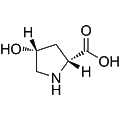
    H-D-cis-Hyp-OH, or cis-4-Hydroxy-D-proline, is an amino acid derivative that serves as a substrate for the enzyme cis-4-hydroxy-D-proline dehydrogenase, playing a role in bacterial metabolism. This compound is utilized in the synthesis of conformationally constrained peptide nucleic acid (PNA) adenine monomers, facilitating studies on enzyme specificity and kinetics, particularly with D-alanine dehydrogenase. Its applications extend to various biochemical research areas, enhancing our understanding of proline metabolism and enzyme interactions.

    1 g
    $20.00
    5 g
    $25.00
    All 7 sizes
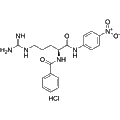
  • Nα-Benzoyl-L-arginine 4-nitroanilide hydrochloride
    Cat. No.
    A85680

    Nα-Benzoyl-L-arginine 4-nitroanilide hydrochloride

    Nα-Benzoyl-L-arginine 4-nitroanilide hydrochloride is an arginine derivative that serves as a chromogenic substrate for various arginase enzymes. It demonstrates specific biological activity in the cleavage of the amide bond, facilitating the quantification of enzymatic activity. This compound is valuable for research applications in enzymology, particularly in studying metabolic pathways involving arginine and related amino acids.

    50 mg
    $25.00
    100 mg
    $35.00
    All 5 sizes
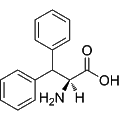
  • (S)-2-Amino-3,3-diphenylpropanoic acid
    Cat. No.
    A85857

    (S)-2-Amino-3,3-diphenylpropanoic acid

    (S)-2-Amino-3,3-diphenylpropanoic acid is an amino acid derivative that acts as an antagonist of NMDA receptors. This compound exhibits significant biological activity by modulating neurotransmission and has applications in neurological research. Its potential use in studies related to neurodegenerative diseases and synaptic plasticity makes it a valuable tool for investigators in the field of neuroscience.

    1 g
    $25.00
    5 g
    $85.00
    All 4 sizes
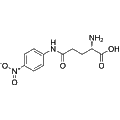
  • L-γ-Glutamyl-p-nitroanilide
    Cat. No.
    A85872

    L-γ-Glutamyl-p-nitroanilide

    L-γ-Glutamyl-p-nitroanilide is an amino acid derivative that serves as a substrate for enzymatic studies involving glutamyl transferases. This compound exhibits utility in biochemical assays to monitor enzymatic activity and investigate metabolic pathways involving glutamate. Its application extends to research in areas such as neurobiology and enzymology, facilitating insights into the role of glutamylation in physiological and pathological processes.

    5 mg
    $20.00
    10 mg
    $35.00
    All 3 sizes
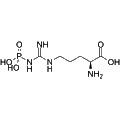
  • Phospho-L-arginine
    Cat. No.
    A86011

    Phospho-L-arginine

    Phospho-L-arginine is a phosphorylated derivative of L-arginine that serves as a substrate in various biochemical pathways. Its primary function involves modulation of nitric oxide synthesis and regulation of cellular signaling processes. This compound is utilized in research applications focused on cardiovascular studies, neurobiology, and cancer research, where understanding arginine metabolism and its derivatives' effects on cell behavior is essential.

    1 mg
    $370.00
    2.5 mg
    $605.00
    All 3 sizes
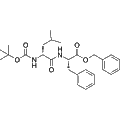
  • L-Phenylalanine, N-[N-[(1,1-dimethylethoxy)carbonyl]-D-leucyl]-, phenylmethyl ester
    Cat. No.
    A86083

    L-Phenylalanine, N-[N-[(1,1-dimethylethoxy)carbonyl]-D-leucyl]-, phenylmethyl ester

    L-Phenylalanine, N-[N-[(1,1-dimethylethoxy)carbonyl]-D-leucyl]-, phenylmethyl ester is an amino acid derivative that serves as a substrate in various biochemical assays. This compound is designed for use in research applications focused on peptide synthesis and protein engineering. Its structural modifications enhance its utility in the exploration of phenylalanine's role in metabolic pathways and the development of therapeutic peptides.

    50 mg
    $55.00
    100 mg
    $90.00
    All 3 sizes
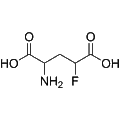
  • 4-Fluoro-DL-glutamic acid
    Cat. No.
    A86090

    4-Fluoro-DL-glutamic acid

    4-Fluoro-DL-glutamic acid is an amino acid derivative that serves as a potent competitive antagonist of glutamate receptors. It exhibits key biological activity by modulating neurotransmission pathways and influencing synaptic plasticity. This reagent is valuable for research applications in neurobiology, particularly in studies of excitatory signaling and related neurological disorders.

    Out of stock

    All 3 sizes
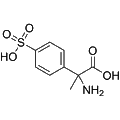
  • (±)-α-Methyl-(4-sulfonophenyl)glycine
    Cat. No.
    A86134

    (±)-α-Methyl-(4-sulfonophenyl)glycine

    (±)-α-Methyl-(4-sulfonophenyl)glycine is an amino acid derivative that functions as a glycine receptor antagonist. It exhibits notable inhibitory effects on excitatory neurotransmission and is utilized in research to explore neurological disorders and synaptic function. This compound serves as a valuable tool for studying glycine receptor modulation and its implications in neuropharmacology.

    25 mg
    $1,275.00
    50 mg
    $1,625.00
    All 3 sizes
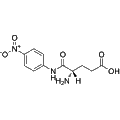
  • H-Glu-pNA
    Cat. No.
    A86249

    H-Glu-pNA

    H-Glu-pNA is a glutamic acid derivative that serves as a chromogenic substrate for the enzymatic activity of glutamate-specific proteases. Its hydrolysis results in the release of para-nitroaniline, which can be quantified spectrophotometrically, making it a useful tool in the study of enzyme kinetics and protein assays. H-Glu-pNA is valuable in biochemical research aimed at understanding protein metabolism and related pathways.

    Out of stock

    All 3 sizes
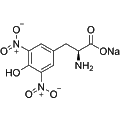
  • 3,5-Dinitro-L-tyrosine sodium
    Cat. No.
    A86252

    3,5-Dinitro-L-tyrosine sodium

    3,5-Dinitro-L-tyrosine sodium is a tyrosine derivative that serves as an artificial substrate in biochemical assays. It does not exhibit activity as a substrate for tyrosine aminotransferase, making it useful for studies that require the differentiation of enzymatic reactions involving tyrosine. This compound is significant in research applications aimed at understanding enzyme specificity and substrate interactions in metabolic pathways.

    Out of stock

    All 3 sizes
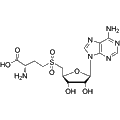
  • SAHO2
    Cat. No.
    A86263

    SAHO2

    Synonyms: S-Adenosyl-L-homocysteine sulfone

    SAHO2 is a sulfone derivative of S-(5'-adenosyl)-L-methionine chloride (SAM) that functions as a substrate for radical SAM enzymes. This compound plays a critical role in various enzymatic processes that involve radical-mediated methylation and sulfur insertion, making it valuable for research in enzymology and metabolic pathways. Its use can provide insights into the mechanisms of SAM-dependent enzymes and their biological significance.

    1 mg
    $155.00
    5 mg
    $470.00
    All 2 sizes
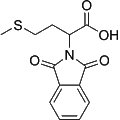
  • N-Phthaloyl-DL-methionine
    Cat. No.
    A86269

    N-Phthaloyl-DL-methionine

    N-Phthaloyl-DL-methionine is an amino acid derivative of methionine known for its role as a substrate in various biochemical studies. This compound exhibits potential in drug design and metabolic research, offering insights into protein modifications and interactions. Its unique chemical structure allows for applications in studying enzymatic processes and cellular responses involving methionine metabolism.

    Out of stock

    All 3 sizes
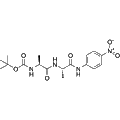
  • Boc-Ala-Ala-pNA
    Cat. No.
    A86290

    Boc-Ala-Ala-pNA

    Boc-Ala-Ala-pNA is a synthetic substrate for serine peptidases. This compound is utilized in biochemical assays to study enzyme kinetics and substrate specificity. Its use can enhance the understanding of peptidase function and facilitate research in proteolytic enzyme inhibition and related signaling pathways.

    Out of stock

    All 3 sizes
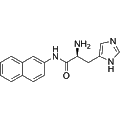
  • L-Histidine β-naphthylamide
    Cat. No.
    A86292

    L-Histidine β-naphthylamide

    L-Histidine β-naphthylamide is a derivative of the amino acid histidine, known for its role as a substrate in enzymatic reactions. This compound can be utilized in studies investigating histidine metabolism and its involvement in protein synthesis. Additionally, it serves as a valuable tool in assessing enzyme activity related to histidine residues, making it relevant for research in biochemistry and molecular biology.

    100 mg
    $280.00
    250 mg
    $550.00
    All 2 sizes
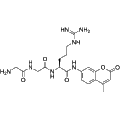
  • H-Gly-Gly-Arg-AMC
    Cat. No.
    A86302

    H-Gly-Gly-Arg-AMC

    H-Gly-Gly-Arg-AMC is a fluorogenic substrate designed for the continuous assessment of thrombin generation. This compound features a C-terminal 7-amino-4-methylcoumarin (AMC) moiety, which fluoresces upon cleavage. It is employed in research applications focusing on coagulation pathways and thrombin activity, enabling precise monitoring of thrombin dynamics in biological samples.

    Out of stock

    All 3 sizes
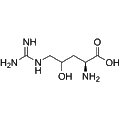
  • 4-Hydroxy-L-arginine
    Cat. No.
    A86341

    4-Hydroxy-L-arginine

    4-Hydroxy-L-arginine is an arginine derivative that acts as a nitric oxide synthase substrate. This compound is involved in the regulation of nitric oxide production, playing a crucial role in vascular function and neuroprotection. It is widely used in research focused on cardiovascular health, metabolism, and neurobiology, enabling studies on nitric oxide signaling pathways and their implications in various physiological and pathological conditions.

    Out of stock

    All 3 sizes
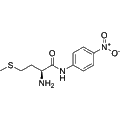
  • L-Methionine p-nitroanilide
    Cat. No.
    A86350

    L-Methionine p-nitroanilide

    L-Methionine p-nitroanilide is an amino acid derivative of methionine known for its role as a substrate in enzymatic assays. This compound provides valuable insights into methionine metabolism and protein synthesis pathways. It is commonly used in biochemical research to study enzyme activity, specifically in the context of methionine-related enzymes.

    500 mg
    $55.00
    1 g
    $85.00
    All 3 sizes

17 Items

Added to your cart

View Cart Checkout

    Loading...