- Cat. No.
- A19266
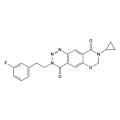
Tulrampator
Synonyms: CX-1632
Tulrampator (CX-1632) is an orally bioavailable positive AMPAR (allosteric modulator of AMPA receptor). Antidepressant.
Search by product name, CAS, target or catalog number. Press Down Arrow to reach product suggestions, Tab to move between links, and Escape to close suggestions.
Mechanistic target of rapamycin (mTOR) inhibitors act on a kinase that links nutrient signals to cell growth. In 1994 mTOR was identified as the mammalian protein targeted by rapamycin bound to its receptor. The kinase forms a nutrient-sensitive complex with raptor, known as mTOR complex 1 (mTORC1), and a second complex, mTOR complex 2 (mTORC2). Sirolimus and its derivative everolimus act through FK506-binding protein 12 (FKBP12) and mainly inhibit mTORC1. Catalytic-site inhibitors such as Torin 1 and AZD8055 block both complexes. With Torin 1, rapamycin-resistant functions of mTORC1 were revealed in 2009. Dual phosphoinositide 3-kinase (PI3K)/mTOR inhibitors such as dactolisib are also listed here.
Synonyms: CX-1632
Tulrampator (CX-1632) is an orally bioavailable positive AMPAR (allosteric modulator of AMPA receptor). Antidepressant.
AR420626 is a selective agonist of free fatty acid receptor 3 (FFAR3, also known as GPR41), with an IC₅₀ of 117 nM. It demonstrates anti-inflammatory, antitumor, and antidiabetic activities. AR420626 improves neurogenic diarrhea by modulating neural pathways mediated by nicotinic acetylcholine receptors (nAChRs). In cancer models, it suppresses the growth of HepG2 xenografts and inhibits hepatoma cell proliferation through apoptosis induction. Additionally, AR420626 mitigates allergic asthma and eczema and enhances glucose uptake by activating FFAR3-mediated Ca²⁺ signaling, offering potential therapeutic benefits in metabolic disorders such as diabetes.
Anticancer agent 235 is a modulator of the PI3K/AKT/mTOR signaling pathway. It promotes reactive oxygen species (ROS) generation and decreases mitochondrial membrane potential, leading to reduced proliferation of cancer cell lines including HCT116, Caco-2, AGS, and SMMC-772 with IC50 values ranging from 0.35 to 26.9 μM. Furthermore, Anticancer agent 235 effectively induces G2/M cell cycle arrest and apoptosis in HCT116 cells, making it a valuable tool for cancer research applications.
Synonyms: PTI-125 hydrochloride
Simufilam hydrochloride is an orally active modulator of filamin A (FLNA) that targets neuronal signaling pathways. This compound restores NMDAR signaling and Arc expression while inhibiting dysregulated mTOR activity. Additionally, it enhances insulin sensitivity and mitigates Aβ42-induced neuroinflammation and tau protein hyperphosphorylation. Simufilam hydrochloride is applicable in research related to Alzheimer's disease, particularly in understanding the underlying mechanisms of neurodegeneration.
Synonyms: PTI-125
Simufilam is an orally active modulator of filamin A (FLNA) that restores NMDA receptor (NMDAR) signaling and Arc expression. It effectively inhibits overactive mTOR signaling by restoring the normal conformation of FLNA, which results in improved insulin sensitivity and a reduction in Aβ42-induced neuroinflammation and tau protein hyperphosphorylation. This compound is particularly valuable for research applications focused on Alzheimer's disease and related neurodegenerative disorders.
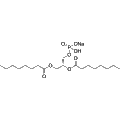
Dioctanoylphosphatidic acid sodium acts as a modulator of the mammalian target of rapamycin (mTOR) signaling pathway. This compound enhances phagocyte respiratory burst, serves as a precursor for diacylglycerol and lysophosphatidic acid, and improves the viability of gallbladder carcinoma cells when used in conjunction with histone deacetylase inhibitors (HDACIs). Its unique biosynthetic origins from glycerophospholipid highlight its relevance in cellular signaling research and cancer studies.
C24-Ceramide is a competitive binding agonist of PIP4K2C, a key regulator of the mTOR signaling pathway. This compound facilitates cellular processes such as enhanced keratinocyte proliferation and migration, thereby promoting skin wound healing. Moreover, C24-Ceramide has been implicated in the proliferation and metastasis of gallbladder cancer cells, indicating its potential as a therapeutic target. Additionally, C24-Ceramide levels in serum may serve as a diagnostic marker for gallbladder cancer.