Thrombin

Thrombin inhibitors block the serine protease that converts fibrinogen into fibrin at the end of coagulation. Thrombin also activates platelets and other cells through protease-activated receptors (PARs). The receptor cloned in 1991 showed that thrombin cleaves the receptor N-terminus and unmasks a tethered ligand. Direct inhibitors bind the active site and are used in coagulation, platelet and vascular research. Dabigatran came from a structure-based design program reported in 2002, and dabigatran etexilate is its orally available prodrug. Argatroban, bivalirudin, inogatran and ximelagatran are further direct thrombin inhibitors. Atopaxar hydrobromide acts on the receptor side as a PAR-1 antagonist, whereas RWJ-445167 inhibits both thrombin and factor Xa.

2 Items

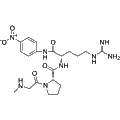
  • Sar-Pro-Arg-pNA
    Cat. No.
    A77913

    Sar-Pro-Arg-pNA

    Sar-Pro-Arg-pNA serves as a chromogenic substrate specifically for α-thrombin. It enables the assessment of α-thrombin activity through colorimetric measurements, making it a valuable tool in coagulation studies and thrombin activity assays. This substrate is suitable for research applications that investigate thrombin's role in hemostasis and related disorders.

    Out of stock

    All 3 sizes
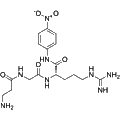
  • β-Ala-Gly-Arg-pNA
    Cat. No.
    B11028

    β-Ala-Gly-Arg-pNA

    β-Ala-Gly-Arg-pNA is a chromogenic substrate specifically designed for thrombin activity assays. It releases para-nitroaniline (pNA) upon cleavage, generating a measurable absorbance peak at 405 nm. This substrate is valuable in studies of thrombin activity and inhibition, enabling researchers to assess coagulation mechanisms and related pathological conditions accurately.

    1 mg
    $40.00
    5 mg
    $100.00
    All 3 sizes

2 Items

Added to your cart

View Cart Checkout

    Loading...