FAK

Focal adhesion kinase (FAK) is a non-receptor tyrosine kinase that relays signals from integrins at focal adhesions. FAK inhibitors are used to study how this kinase regulates cell adhesion, migration, survival and proliferation. FAK is phosphorylated when cells attach to extracellular matrix proteins such as fibronectin. Elevated FAK expression and activity in many tumor types have made the kinase a frequent subject of cancer and angiogenesis research. The category includes PF 573228, PF-562271, NVP-TAE 226 and defactinib. Several, including PF-562271 and NVP-TAE 226, also inhibit the related proline-rich tyrosine kinase 2 (PYK2).

2 Items

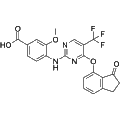
  • Defactinib analogue-1
    Cat. No.
    A34265

    Defactinib analogue-1

    Defactinib analogue-1 is a ligand that targets focal adhesion kinase (FAK), facilitating the development of proteolysis-targeting chimeras (PROTACs) like FAK degrader 1. This compound is essential for research applications focused on FAK modulation and its role in cellular signaling pathways related to cancer progression and metastasis. Its utility in synthesizing targeted protein degraders makes it a valuable tool for investigating FAK-associated biological processes.

    5 mg
    $330.00
    10 mg
    $565.00
    All 5 sizes
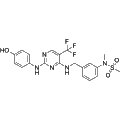
  • FAK ligand-5
    Cat. No.
    A34278

    FAK ligand-5

    FAK Ligand-5 functions as a FAK ligand, enabling the targeted modulation of focal adhesion kinase. This compound is essential for the synthesis of PROTAC molecules, particularly in the development of FAK degraders such as PROTAC FAK degrader 4. It serves as a valuable tool in cancer research, facilitating investigations into FAK signaling pathways and their implications in tumor progression.

    Out of stock

    All 3 sizes

2 Items

Added to your cart

View Cart Checkout

    Loading...