- Cat. No.
- A13742
TC-DAPK6
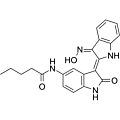
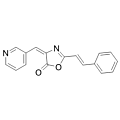
TC-DAPK6 is a potent and selective, ATP-competitive inhibitor of death-associated protein kinase 1 (DAPK1) (IC50 values are 69 and 225 nM for DAPK1 and DAPK3 respectively, when assayed with 10 uM ATP).
Search by product name, CAS, target or catalog number. Press Down Arrow to reach product suggestions, Tab to move between links, and Escape to close suggestions.
DAPK inhibitors target death-associated protein kinases, which couple stress signals to cell death. Death-associated protein kinase 1 (DAPK1) was cloned in 1995 from a screen for genes that mediate interferon-γ-induced cell death. DAPK1 is a calcium/calmodulin-regulated serine/threonine kinase with roles in apoptosis and autophagy. Its relatives include DAPK2, zipper-interacting protein kinase (ZIPK, also called DAPK3) and the DAPK-related apoptosis-inducing protein kinases (DRAK1, DRAK2). TC-DAPK6 and CK156 are listed as DAPK inhibitors, and HS38 acts on both DAPK1 and ZIPK. HS148 and HS94 are listed as DAPK3 inhibitors, while DRAK2-IN-1 targets DRAK2. PROTAC DAPK1 Degrader-1 is a proteolysis-targeting chimera (PROTAC) that induces DAPK1 degradation. DAPK Substrate Peptide serves as a phosphorylation substrate in kinase assays.
TC-DAPK6 is a potent and selective, ATP-competitive inhibitor of death-associated protein kinase 1 (DAPK1) (IC50 values are 69 and 225 nM for DAPK1 and DAPK3 respectively, when assayed with 10 uM ATP).
DRAK2-IN-1, compound 16, is a potent, selective and ATP-competitive DRAK2 inhibitor with IC50and Kivalues of 3 nM and 0.26 nM, respectively. DRAK2-IN-1 also has inbitory effect on DRAK1 (IC50=51 nM).
HS56 is an ATP-competitive dual inhibitor of Pim kinases and DAPK3, demonstrating Ki values of 0.26 μM for DAPK3, 0.208 μM for Pim-3, and over 100 μM for Pim-2 and Pim-1. This compound effectively inhibits LC20 phosphorylation and smooth muscle contraction, leading to a reduction in blood pressure in spontaneously hypertensive mouse models. HS56 is suitable for research investigating the mechanisms and potential treatments for hypertension.
HS38 is a selective ATP-competitive inhibitor targeting death-associated protein kinase 1 (DAPK1) and zipper-interacting protein kinase (ZIPK, also known as DAPK3), with Kds of 300 nM and 280 nM, respectively. Additionally, HS38 demonstrates inhibitory activity against PIM3 with an IC50 of 200 nM. This compound is valuable for research into smooth muscle-related disorders, aiding in the understanding of the underlying molecular mechanisms and potential therapeutic pathways.
HS148 is a selective inhibitor of Death-associated protein kinase 3 (DAPK3) with a Ki value of 119 nM. This compound effectively modulates DAPK3 activity, making it a valuable tool for studying its role in apoptosis and various signaling pathways. HS148 is suitable for applications in cancer research and investigations into neurodegenerative conditions where DAPK3 is implicated.
DAPK1-IN-1 is a selective inhibitor of death-associated protein kinase 1 (DAPK1) with a Kd value of 0.63 μM. This compound exhibits potential in modulating DAPK1 activity, making it a valuable tool for investigating pathways involved in neurodegenerative diseases, particularly Alzheimer’s disease. Researchers can utilize DAPK1-IN-1 to explore its effects on cell death and survival mechanisms in various cellular contexts.
CK156 is a selective inhibitor of death-associated protein kinase (DAPK), exhibiting an IC50 of 182 nM in the DRAK1 NanoBRET assay. Additionally, it shows inhibition of CK2a1 and CK2a2 at concentrations of 34 μM and 39 μM, respectively. This compound is valuable for investigating autoimmune and inflammatory diseases, providing insights into the regulation of cell death and survival pathways.
HS94 is a selective inhibitor of DAPK3 (Death-associated protein kinase 3), a serine/threonine kinase involved in various cellular processes, including apoptosis and inflammation. This compound has demonstrated significant biological activity by modulating DAPK3 signaling pathways, making it a valuable tool in hypertension research. Investigating HS94's effects may provide insights into the molecular mechanisms underlying cardiovascular diseases and potential therapeutic approaches.
DAPK-IN-2 is an inhibitor of Death-Associated Protein Kinase (DAPK), a key regulator involved in apoptosis and autophagy. This compound exhibits potential anti-apoptotic properties and is relevant in the study of cerebral infarction and ischemic diseases. Researchers can utilize DAPK-IN-2 to investigate the role of DAPK in cell death pathways and evaluate therapeutic approaches for neuroprotective strategies.