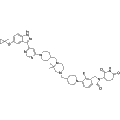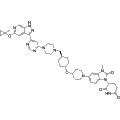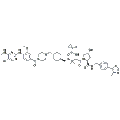
LRRK2

LRRK2 inhibitors act on leucine-rich repeat kinase 2 (LRRK2), a kinase linked to Parkinson's disease. In 2004 two groups identified mutations in the LRRK2 gene as the cause of an autosomal-dominant parkinsonism mapped to chromosome 12. LRRK2 is a large multidomain protein with GTPase and kinase domains, and the G2019S mutation raises its kinase activity. The kinase phosphorylates a subset of Rab GTPases and influences lysosomal function, vesicle trafficking and autophagy. LRRK2-IN-1, characterized in 2011, inhibits wild-type and G2019S LRRK2 and has served as a tool for cellular studies. GNE-7915, PF-06447475 and GSK2578215A are later LRRK2 inhibitors designed for selectivity and brain penetration.

7 Items

  • XL01126
    Cat. No.
    A23936

    XL01126

    XL01126 is a potent PROTAC degrader of LRRK2, with DC₅₀ values of 14 nM for the G2019S mutant and 32 nM for wild-type LRRK2. It is blood-brain barrier permeable, making it a valuable tool for Parkinson’s disease research. XL01126 enables investigation of both catalytic and non-catalytic functions of LRRK2.

    1 mg
    $558.00
    5 mg
    $1,480.00
    All 4 sizes
  • PROTAC LRRK2 Degrader-4
    Cat. No.
    A40936

    PROTAC LRRK2 Degrader-4

    PROTAC LRRK2 Degrader-4 is a potent PROTAC designed to target and degrade LRRK2 with a DC50 of 0.79 nM. It exhibits significant biological activity, making it a valuable tool for research into Parkinson's disease and associated inflammatory pathways. This compound enables studies into the modulation of LRRK2 levels, thereby facilitating deeper understanding of its role in neurodegeneration and inflammation.

    Out of stock

    All 3 sizes
  • PROTAC LRRK2 Degrader-1
    Cat. No.
    A40937

    PROTAC LRRK2 Degrader-1

    PROTAC LRRK2 Degrader-1 is a targeted protein degrader that selectively engages leucine-rich repeat kinase 2 (LRRK2), exhibiting an IC50 value of less than 10 nM. This compound is designed for the study of LRRK2-mediated pathways and offers significant potential for advancing research on Parkinson's disease. Its ability to induce targeted degradation makes it a valuable tool for investigating therapeutic strategies in neurodegenerative disorders associated with LRRK2 dysregulation.

    Out of stock

    All 3 sizes
  • JH-XII-03-02
    Cat. No.
    A40938

    JH-XII-03-02

    JH-XII-03-02 is a potent and selective LRRK2 PROTAC degrader. It induces targeted degradation of LRRK2 protein, making it a valuable tool for investigating the role of LRRK2 in Parkinson's disease. This compound is suitable for research applications focused on elucidating LRRK2 function and exploring therapeutic strategies for neurodegenerative disorders.

    1 mg
    $580.00
    5 mg
    $1,485.00
    All 4 sizes
  • PROTAC LRRK2 Degrader-3
    Cat. No.
    A40953

    PROTAC LRRK2 Degrader-3

    PROTAC LRRK2 Degrader-3 primarily targets the LRRK2 protein through a PROTAC mechanism, exhibiting a DC50 of 0.17 nM. This compound effectively promotes the degradation of LRRK2, making it a valuable tool for research in Parkinson’s disease and inflammation. Its unique structure comprises a specific LRRK2 ligand, a Cereblon ligand, and an optimized linker, facilitating targeted therapeutic investigations.

    Out of stock

    All 3 sizes
  • ROTAC LRRK2 degrader-1
    Cat. No.
    A40960

    ROTAC LRRK2 degrader-1

    ROTAC LRRK2 degrader-1 is a potent PROTAC degrader targeting LRRK2, a protein associated with neurodegenerative diseases. This compound facilitates the targeted degradation of LRRK2, which is implicated in the pathogenesis of Parkinson’s Disease. ROTAC LRRK2 degrader-1 can be utilized in research to investigate LRRK2-related biological pathways and therapeutic interventions for Parkinson’s Disease and other associated disorders.

    Out of stock

    All 3 sizes
  • PROTAC LRRK2 Degrader-2
    Cat. No.
    A40964

    PROTAC LRRK2 Degrader-2

    PROTAC LRRK2 Degrader-2 is designed to target LRRK2 through a PROTAC mechanism, exhibiting a DC50 of 0.14 nM. This compound effectively recruits LRRK2 or its mutants to the cereblon E3 ubiquitin ligase, facilitating targeted ubiquitination and subsequent proteasomal degradation of LRRK2. It serves as a valuable tool for research focused on Parkinson's disease and the study of LRRK2-related pathways.

    Out of stock

    All 3 sizes

7 Items

Added to your cart

View Cart Checkout

    Loading...