- Cat. No.
- A13627
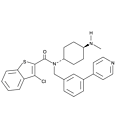
SAG
Synonyms: Smoothened Agonist
SAG is a chlorobenzothiophene-containing compound which acts as a SMO agonist (EC50 = 3 nM) but inhibits hedgehog signaling at high concentrations (>1 uM).
Search by product name, CAS, target or catalog number. Press Down Arrow to reach product suggestions, Tab to move between links, and Escape to close suggestions.
Stem cell reprogramming and differentiation reagents are small molecules that steer cell identity in culture. Chemical cocktails can replace or support transcription factors when somatic cells are reprogrammed into induced pluripotent stem cells (iPSCs). Frequent components include the histone deacetylase (HDAC) inhibitor valproic acid and the lysine-specific demethylase 1 (LSD1) inhibitor tranylcypromine. RepSox blocks the transforming growth factor beta (TGF-β) type I receptor and can replace the transcription factor Sox2. Inhibition of glycogen synthase kinase 3 (GSK-3) with CHIR-99021 and of MAP kinase kinase (MEK) with PD0325901 keeps mouse embryonic stem cells in the ground state. Differentiation protocols use retinoic acid, the Hedgehog pathway agonists SAG and purmorphamine, and IDE1 for definitive endoderm.
Synonyms: Smoothened Agonist
SAG is a chlorobenzothiophene-containing compound which acts as a SMO agonist (EC50 = 3 nM) but inhibits hedgehog signaling at high concentrations (>1 uM).
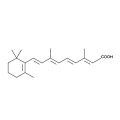
Synonyms: Retinoic Acid; ATRA; Vitamin A Acid
Tretinoin is an endogenous agonist for retinoic acid receptors with IC50 value of 14 nM for RAR-alpha, RAR-beta and RAR-gamma receptors).
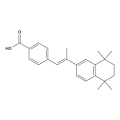
Synonyms: Arotinoid acid; Ro 13-7410
TTNPB enhances reprogramming efficiency in chemically induced pluripotent stem cells (CiPSCs).
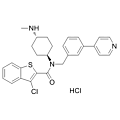
SAG (hydrochloride) is a potent Smo receptor agonist, and activates the Hedgehog signaling pathway, with a Kd of 59 nM.
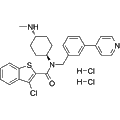
SAG dihydrochloride is a potent Smoothened (Smo) receptor agonist, with an EC50 of 3 nM and a Kd of 59 nM. This compound effectively activates the Hedgehog signaling pathway, providing a robust mechanism to counteract the inhibitory effects of Cyclopamine. SAG dihydrochloride is valuable for research in developmental biology, cancer biology, and therapeutic strategies targeting Hedgehog-related pathways.