- Cat. No.
- A22034
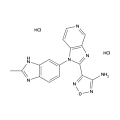
Trilaciclib hydrochloride
Synonyms: G1T28 hydrochloride
Trilaciclib hydrochloride is a CDK4/6 inhibitor with IC50s of 1 nM and 4 nM for CDK4 and CDK6, respectively.
Search by product name, CAS, target or catalog number. Press Down Arrow to reach product suggestions, Tab to move between links, and Escape to close suggestions.
CDK inhibitors block cyclin-dependent kinases (CDKs), the serine/threonine kinases that drive the cell cycle. Each CDK becomes active only when bound to a cyclin partner, and successive cyclin-CDK complexes order DNA replication and mitosis. CDK4 and CDK6 pair with D-type cyclins to control progression through G1, while CDK1 governs entry into mitosis. Palbociclib and abemaciclib are selective CDK4/6 inhibitors used to study G1 arrest and retinoblastoma protein phosphorylation. Dinaciclib and seliciclib act on several family members, including CDK2, CDK5 and CDK9, which also links them to transcription research. Ro 3306 inhibits CDK1 and is used to hold cells reversibly at the G2/M boundary for synchronization experiments.
Synonyms: G1T28 hydrochloride
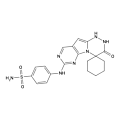
Trilaciclib hydrochloride is a CDK4/6 inhibitor with IC50s of 1 nM and 4 nM for CDK4 and CDK6, respectively.
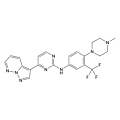
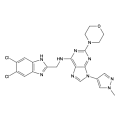
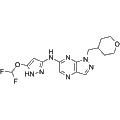
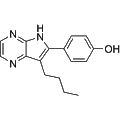
GW779439X is an inhibitor of cyclin dependent kinase.
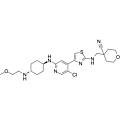
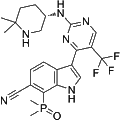
JSH-150 is a highly selective and potent CDK9 inhibitor with an IC50 of 1 nM.
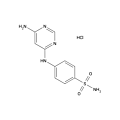
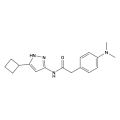
PNU112455A hydrochloride is an ATP-competitive CDK2 and CDK5 inhibitor.
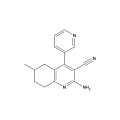
BRD6989 is a selective inhibitor of CDK8 and CDK19. BRD6989 upregulates IL-10. BRD6989 is an analog of the natural product cortistatin A (dCA).
SR-4835 is a potent, highly selective and ATP competitive dual inhibitor of CDK12/CDK13 (CDK12: IC50=99 nM, Kd=98 nM; CDK13: Kd=4.9 nM).
AS2863619 is a potent, orally active cyclin-dependent kinase 8 (CDK8) and CDK19 inhibitor with IC50s of 0.61 nM and 4.28 nM, respectively.
Synonyms: 6-Dimethylaminopurine
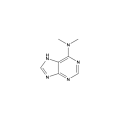
6-(Dimethylamino)purine is a dual inhibitor of protein kinase and CDK.
Synonyms: MS140
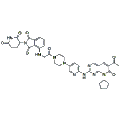
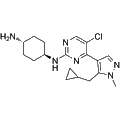
XY028-140 (MS140) is a highly potent and selective dual-function compound that acts as both a CDK4/6 kinase inhibitor and a PROTAC degrader. By combining kinase inhibition with targeted protein degradation, MS140 provides an effective approach for disrupting CDK4/6-mediated cell cycle regulation, making it a valuable tool for cancer research.
BTX-A51 (Casein Kinase Inhibitor A51) is a potent, orally bioavailable inhibitor of casein kinase 1α (CK1α). It effectively induces apoptosis in leukemia cells and demonstrates strong anti-leukemic activity in preclinical models, making it a promising therapeutic candidate for hematologic malignancies.
SRX3177 is a potent triple inhibitor targeting CDK4/6, PI3K, and BRD4, with IC50 values of
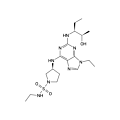
AZD8421 is a selective CDK2 inhibitor with an IC50 of 9 nM and demonstrated selectivity over CDK1, CDK4, and CDK6. It inhibits cancer cell proliferation by blocking pRB phosphorylation, leading to cell cycle arrest and senescence. AZD8421 shows strong single-agent efficacy and synergistic effects when combined with CDK4/6 inhibitors such as Palbociclib in in vivo models of breast and ovarian cancer. Additionally, it exhibits potent activity against drug-resistant breast cancer cells, making it a promising candidate for overcoming resistance in cancer therapy.
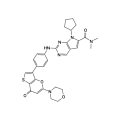
Inixaciclib is a potent cyclin-dependent kinase (CDK) inhibitor with potential applications in anticancer research. By targeting CDKs involved in cell cycle regulation, Inixaciclib can inhibit tumor cell proliferation and is being explored as a therapeutic candidate in cancer treatment.
Cirtociclib (BLU-222) is an orally active and highly selective CDK2 inhibitor. It disrupts retinoblastoma (Rb) signaling, leading to G1 cell cycle arrest and apoptosis, particularly in CCNE1-amplified endometrial cancer cells. Cirtociclib is a promising candidate for targeted therapy in CDK2-driven malignancies.
Synonyms: SNX2-1-165; BCD-115
Senexin B (SNX2-1-165; BCD-115) is a potent, highly water-soluble, and orally bioavailable inhibitor of CDK8 and CDK19, with Kd values of 140 nM for CDK8 and 80 nM for CDK19. It is a valuable tool for studying transcriptional regulation and has potential applications in cancer and inflammatory disease research.
INX-315 is an orally active and selective CDK2 inhibitor that induces G1 phase cell cycle arrest by reducing phosphorylation of CDK2 substrates. It exhibits dose-dependent tumor growth inhibition in xenograft mouse models and holds promise as a therapeutic candidate for cancer research targeting CDK2-driven malignancies.
CP681301 is a potent CDK5 inhibitor with demonstrated antiproliferative activity. It reduces the expression of key stemness and proliferation markers—including CD133, OLIG2, SOX2, KI67, and phosphorylated CDK5—in glioma stem cells (GSCs). CP681301 also impairs self-renewal capacity in mouse glioma xenograft models and exhibits anti-tumor activity in *Drosophila*, making it a promising compound for glioma and cancer stem cell research.
Synonyms: CDK7-IN-3
SY-5609 (CDK7-IN-3) is an orally active, highly selective, and noncovalent inhibitor of CDK7, with a Kd of 0.065 nM. It demonstrates minimal activity against CDK2 (Ki = 2600 nM), CDK9 (Ki = 960 nM), and CDK12 (Ki = 870 nM), confirming its selectivity. SY-5609 induces apoptosis in tumor cells and exhibits potent antitumor activity, making it a promising candidate for targeted cancer therapy.
Synonyms: TQB3616
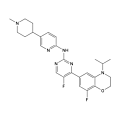
Culmerciclib (TQB3616) is a potent cyclin-dependent kinase (CDK)4/6 inhibitor with strong antineoplastic activity. It demonstrates significant synergistic antitumor effects in estrogen receptor (ER)-positive/HER2-negative and HER2-positive breast cancer models when combined with endocrine therapy or HER2-targeted treatments, supporting its potential for combination cancer therapy.
Synonyms: CR8; (R)-Isomer
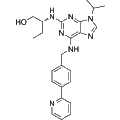
(R)-CR8 is a second-generation analog of Roscovitine and a potent inhibitor of CDK1, CDK2, CDK5, CDK7, and CDK9. It inhibits CDK1/cyclin B (IC₅₀ = 0.09 μM), CDK2/cyclin A (0.072 μM), CDK2/cyclin E (0.041 μM), CDK5/p25 (0.11 μM), CDK7/cyclin H (1.1 μM), CDK9/cyclin T (0.18 μM), and CK1δ/ε (0.4 μM). (R)-CR8 induces apoptosis, exhibits neuroprotective effects, and functions as a molecular glue degrader that promotes the degradation of cyclin K.
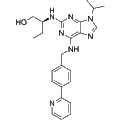
(S)-CR8 is a selective inhibitor of cyclin-dependent kinases (CDKs), demonstrating potent inhibitory activity with IC50 values of 0.060 μM for CDK2/cyclin E, 0.080 μM for CDK2/cyclin A, 0.11 μM for CDK9/cyclin T, 0.12 μM for CDK5/p25, and 0.15 μM for CDK1/cyclin B. This compound effectively reduces the survival of SH-SY5Y cells, with an IC50 of 0.40 μM, making it a valuable tool for studying cell cycle regulation and potential therapeutic strategies in cancer research.
Synonyms: RP107
Aloisine A is a potent cyclin-dependent kinase (CDK) inhibitor, exhibiting IC50 values of 0.15 μM for CDK1/cyclin B, 0.12 μM for CDK2/cyclin A, 0.4 μM for CDK2/cyclin E, and 0.16 μM for CDK5/p35. In addition to its CDK inhibitory effects, Aloisine A also inhibits GSK-3α and GSK-3β with IC50 values of 0.5 μM and 1.5 μM, respectively. Notably, it enhances the activity of wild-type and mutant CFTR with submicromolar affinity through a cAMP-independent mechanism, making it a valuable tool for research related to cystic fibrosis and CFTR-related disorders.
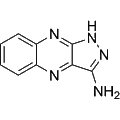
NSC693868 is a selective inhibitor of cyclin-dependent kinases CDK1 and CDK5, demonstrating IC50 values of 600 nM and 400 nM, respectively. This compound also exhibits weaker inhibition of GSK3β with an IC50 of 1 µM and does not affect CDC25 activity. NSC693868 is employed in research to elucidate the functions of CDK1 and CDK5 within various cellular signaling pathways.
Synonyms: GSK-3 Inhibitor X
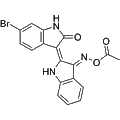
(E/Z)-BIO-acetoxime is a potent and selective inhibitor of GSK-3α/β, exhibiting an IC50 of 10 nM. This compound demonstrates exceptional selectivity with over 200-fold preference against CDK5/p25, CDK2/cyclin A, and CDK1/cyclin B, with IC50 values of 2.4, 4.3, and 63 μM, respectively. Its strong inhibitory activity makes it a valuable tool for research focused on signaling pathways involved in cell proliferation, differentiation, and apoptosis.
Synonyms: GFH009; JSH-009; SLS009
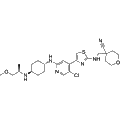
Tambiciclib is a potent and selective CDK9 inhibitor with an IC50 of 1 nM, exhibiting over 200-fold selectivity against other cyclin-dependent kinases and significant selectivity over DYRK1A/B and a wide range of kinases. This compound has demonstrated effective in vitro and in vivo antileukemic activity in acute myeloid leukemia (AML) models by inhibiting RNA Polymerase II phosphorylation, leading to downregulation of MCL1 and MYC, and subsequent induction of apoptosis. Tambiciclib is suitable for research applications focused on AML and related oncological studies.