PLK

PLK inhibitors act on polo-like kinases (PLKs), serine/threonine kinases that coordinate mitosis and cytokinesis. The founding gene, polo, was described in Drosophila in 1991 as a protein kinase homolog required for mitosis. In PLK1, the most widely studied human member, a C-terminal polo-box domain (PBD) binds phosphorylated partner proteins and directs the kinase to its sites of action. BI 2536, reported in 2007, competes with adenosine triphosphate (ATP) and arrests cells in prometaphase. Volasertib, GSK461364 and TAK-960 are further ATP-competitive inhibitors used to study PLK1 in mitosis. Poloxin, described in 2008, works differently by blocking protein interactions that depend on the PBD.

2 Items

  • SP27
    Cat. No.
    A56892

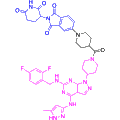
    SP27

    SP27 is a PROTAC that selectively degrades Polo-like kinase 4 (PLK4), exhibiting a DC50 of 19.5 nM. This compound is valuable for investigating the role of PLK4 in cellular processes and is particularly relevant in breast cancer research, enabling studies on potential therapeutic applications and mechanisms of action related to oncogenesis.

    5 mg
    $680.00
    10 mg
    $1,185.00
    All 3 sizes
  • PROTAC PLK1 Degrader-3
    Cat. No.
    A56898

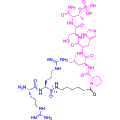
    PROTAC PLK1 Degrader-3

    PROTAC PLK1 Degrader-3 is a PLK1-targeted PROTAC that facilitates the degradation of the Polo-like kinase 1 (PLK1) protein through the N-deglycosylation pathway, exhibiting a dissociation constant (Kd) of 2.2 μM. This compound is primarily utilized in research related to non-small cell lung cancer, enabling investigations into targeted protein degradation mechanisms. While the compound shows limited cell penetration, higher concentrations may be necessary to achieve effective degradation outcomes, making it suitable for various biological studies in oncological contexts.

    Out of stock

    All 3 sizes

2 Items

Added to your cart

View Cart Checkout

    Loading...