Amylases

Amylase compounds include the starch-digesting enzyme, oligosaccharide substrates and glycosidase inhibitors. Alpha-amylases cleave internal α-1,4-glycosidic bonds of starch and glycogen and release maltose and short dextrins. Salivary and pancreatic amylases start starch digestion, and the structure of human salivary amylase was solved at 1.6 Å resolution in 1996. In 2007, copy number of the salivary amylase gene (AMY1) was found to be higher in populations with high-starch diets. The list holds the enzyme itself as Amylase and the defined substrate maltotetraose for activity assays. Deoxynojirimycin, an iminosugar that inhibits glucosidases I and II, represents the glycosidase inhibitors. Other entries are mixed, such as proglumide sodium salt and the stilbene gnetol.

8 Items

  • Maltotetraose
    Cat. No.
    A26271

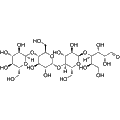
    Maltotetraose

    Synonyms: Amylotetraose; Fujioligo 450; α-1,4-Tetraglucose

    Maltotetraose is a carbohydrate compound that serves as a substrate for enzyme-linked assays to measure amylase activity in biological fluids. Its primary biological activity includes the reduction of TNF-α-induced inflammatory responses through inhibition of NF-κB activity and decreased expression of ICAM-1. Additionally, maltotetraose inhibits PDGF-induced vascular smooth muscle cell migration and neovascularization. Its derivatives can also be utilized as probes for detecting bacterial infections by targeting the maltodextrin transporter, making maltotetraose a valuable tool in research related to atherosclerosis and inflammatory diseases.

    5 mg
    $30.00
    10 mg
    $50.00
    All 5 sizes
  • Maltopentaose
    Cat. No.
    A69472

    Maltopentaose

    Synonyms: Maltopentose

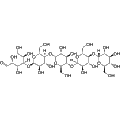
    Maltopentaose is a substrate for α-amylases, serving as the shortest chain oligosaccharide. This compound is classified as maltodextrin and is instrumental in studies examining glycation and phosphorylation of α-lactalbumin. Additionally, maltopentaose facilitates the investigation of inhibition kinetics in human pancreatic α-amylase by compounds such as dehydrodieugenol B, making it valuable for enzyme kinetics and carbohydrate-related research.

    5 mg
    $30.00
    10 mg
    $55.00
    All 5 sizes
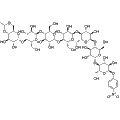
  • Ethylidene-4-nitrophenyl-a-D-Maltoheptaoside
    Cat. No.
    A69475

    Ethylidene-4-nitrophenyl-a-D-Maltoheptaoside

    Synonyms: pNP-G7

    Ethylidene-4-nitrophenyl-α-D-maltoheptaoside serves as a substrate for α-amylase, facilitating the assessment of enzyme activity. Upon degradation by α-amylase, along with auxiliary enzymes like α-glucosidase, it releases a chromophore that enables quantification of amylase activity. This reagent is particularly valuable in the diagnosis of pancreatitis and other related disorders.

    25 mg
    $35.00
    50 mg
    $40.00
    All 3 sizes
  • Maltogenic amylase
    Cat. No.
    A74066

    Maltogenic amylase

    Maltogenic amylase is an enzyme that targets maltoamylase, facilitating the hydrolysis of starch into shorter oligosaccharides. It exhibits significant biological activity in starch degradation and is instrumental in various biotechnological applications, including the food industry and biofuel production. Innovations in enzyme engineering enhance its reaction kinetics and substrate selectivity while allowing for activity modulation under varying pH conditions, enabling precise control in dynamic environments.

    Out of stock

    All 3 sizes
  • oligo-α-1,6-Glucosidase, Bacillus cereus ATCC7064
    Cat. No.
    A75132

    oligo-α-1,6-Glucosidase, Bacillus cereus ATCC7064

    Oligo-α-1,6-Glucosidase from Bacillus cereus ATCC7064 is a hydrolase enzyme that specifically targets and hydrolyzes oligosaccharides containing α-1,6-glycosidic bonds. This enzyme catalyzes the exo hydrolysis of α-1,6-glucoside linkages from nonreducing ends of substrates such as panose, palatinose, α-limit dextrins, and isomaltooligosaccharides. Oligo-α-1,6-Glucosidase plays a crucial role in the degradation of starch and glycogen, complementing the activity of α-amylase in the complete hydrolysis of amylopectin. Its applications include studies of carbohydrate metabolism and enzymatic processes involved in starch breakdown.

    Out of stock

    All 3 sizes
  • G3-CNP
    Cat. No.
    A87089

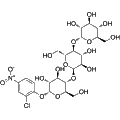
    G3-CNP

    G3-CNP is a substrate for α-amylase, specifically designed to facilitate the monitoring of enzyme activity. Upon cleavage by α-amylase, G3-CNP generates 2-chloro-4-nitrophenol, which can be quantitatively measured at an absorbance of 405 nm. This compound serves as a valuable tool in enzymatic assays for the assessment of carbohydrate metabolism and related biochemical research applications.

    10 mg
    $25.00
    25 mg
    $40.00
    All 5 sizes
  • Gal-G2-CNP
    Cat. No.
    A90556

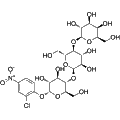
    Gal-G2-CNP

    Gal-G2-CNP serves as a substrate specifically for the quantitative determination of novel amylase and pancreatic amylase activities. This galactopyranosylmaltoside compound provides a valuable tool for enzyme characterization and kinetic studies, enhancing the understanding of carbohydrate metabolism. Its application is crucial in the study of digestive enzymes, facilitating advancements in biochemical and clinical research.

    50 mg
    $60.00
    100 mg
    $100.00
    All 3 sizes
  • 2-Chloro-4-nitrophenyl-β-D-maltotrioside
    Cat. No.
    A92771

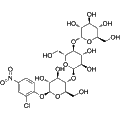
    2-Chloro-4-nitrophenyl-β-D-maltotrioside

    2-Chloro-4-nitrophenyl-β-D-maltotrioside is a chromogenic substrate that specifically targets α-amylase activity. It is utilized in bioluminescent and fluorescent assays, providing a valuable tool for the detection and quantification of α-amylase in various biological samples. This reagent is essential for studies involving carbohydrate metabolism and enzyme activity assays.

    Out of stock

    All 3 sizes

8 Items

Added to your cart

View Cart Checkout

    Loading...