Cathepsin

Cathepsin inhibitors act on lysosomal proteases, mainly the papain-like cysteine cathepsins B, C, K, L and S. Cysteine cathepsins degrade proteins in the endolysosomal system and, after secretion, also remodel the extracellular matrix. In 1996 loss of cathepsin K was shown to cause pycnodysostosis, a lysosomal disease with dense, brittle bones. Cathepsin K is the main collagen-degrading protease of osteoclasts, which makes it a target in bone resorption studies. Odanacatib and balicatib inhibit cathepsin K, petesicatib targets cathepsin S, and CA-074 is selective for cathepsin B. CA-074 methyl ester is a membrane-permeable form for work in intact cells. Gly-Phe-beta-naphthylamide, a cathepsin C substrate, is used to rupture lysosomes in live cells.

21 Items

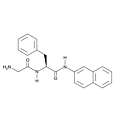
  • Gly-Phe-beta-naphthylamide
    Cat. No.
    A13611

    Gly-Phe-beta-naphthylamide

    Synonyms: H-Gly-Phe-BNA

    Gly-Phe-beta-naphthylamide is a cathepsin C substrate. The compound is described to accumulate inside lysosomes leading to their destruction.

    5 mg
    $35.00
    10 mg
    $50.00
    All 5 sizes
  • H-Arg-4MβNA
    Cat. No.
    A19686

    H-Arg-4MβNA

    H-Arg-4MβNA is a substrate for cathepsin H, used for the detection of enzyme activity in gel electrophoresis.

    5 mg
    $25.00
    10 mg
    $40.00
    All 5 sizes
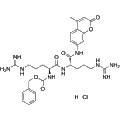
  • Z-Arg-Arg-AMC hydrochloride
    Cat. No.
    A39776

    Z-Arg-Arg-AMC hydrochloride

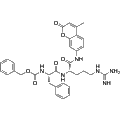
    Z-Arg-Arg-AMC hydrochloride is a selective substrate for the cysteine protease cathepsin B. This compound is utilized in biochemical assays to monitor cathepsin B activity, making it essential for studying cellular processes such as protein degradation and apoptosis. Its application extends to cancer research and investigations into various diseases where cathepsin B is implicated.

    5 mg
    $65.00
    10 mg
    $110.00
    All 3 sizes
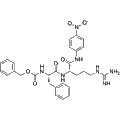
  • Z-Phe-Arg-pNA
    Cat. No.
    A39793

    Z-Phe-Arg-pNA

    Z-Phe-Arg-pNA is a selective substrate for Cathepsin L, facilitating the study of this cysteine protease's enzymatic activity. Upon cleavage by Cathepsin L, Z-Phe-Arg-pNA releases the chromogenic p-nitroaniline, allowing for quantification and real-time monitoring of protease activity. This compound is valuable for investigating the biochemical roles of Cathepsin L in various physiological processes and disease states.

    5 mg
    $70.00
    10 mg
    $115.00
    All 3 sizes
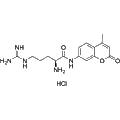
  • L-Arginine-7-amido-4-methylcoumarin hydrochloride
    Cat. No.
    A39794

    L-Arginine-7-amido-4-methylcoumarin hydrochloride

    Synonyms: Arginine 4-methyl-7-coumarylamide hydrochloride

    L-Arginine-7-amido-4-methylcoumarin hydrochloride is a specific substrate for cathepsin H, enabling studies into the enzyme's proteolytic activity. This compound does not serve as a substrate for cathepsins L and B, highlighting its selectivity. Its utility in biochemical assays facilitates research in fields such as cancer biology and lysosomal function, providing insights into cathepsin H's role in various physiological and pathological processes.

    1 mg
    $25.00
    5 mg
    $60.00
    All 7 sizes
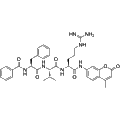
  • Bz-FVR-AMC
    Cat. No.
    A39795

    Bz-FVR-AMC

    Bz-FVR-AMC is a fluorogenic substrate specifically designed for the assay of procathepsin activity. With a kcat/Km value of 1070 mM^-1s^-1, it provides a robust tool for measuring cathepsin enzyme activity in various biological samples. Bz-FVR-AMC is particularly useful for studying proteolytic processes and understanding cysteine protease functions in both physiological and pathological contexts. However, at high concentrations, this substrate may exhibit inhibitory effects.

    5 mg
    $45.00
    10 mg
    $80.00
    All 3 sizes
  • Cathepsin G
    Cat. No.
    A39806

    Cathepsin G

    Cathepsin G is a potent agonist that targets human platelets, stimulating their activation and promoting aggregation. This enzyme plays a crucial role in hemostasis and inflammatory responses. It is valuable for research applications involving platelet biology and can be utilized in the screening of potential inhibitors that modulate platelet function.

    Out of stock

    All 3 sizes
  • N-CBZ-Phe-Arg-AMC
    Cat. No.
    A39807

    N-CBZ-Phe-Arg-AMC

    Synonyms: Z-FR-AMC

    N-CBZ-Phe-Arg-AMC is a specific substrate for lysosomal cathepsin enzymes, primarily utilized for assessing cathepsin activity. This compound exhibits fluorescent properties upon substrate cleavage, making it suitable for monitoring lysosomal protease activity in various biological samples. Its applications extend to studies on proteolytic processing and the role of cathepsins in cellular functions and disease states.

    5 mg
    $100.00
    10 mg
    $165.00
    All 2 sizes
  • Z-Arg-Arg-βNA acetate
    Cat. No.
    A39812

    Z-Arg-Arg-βNA acetate

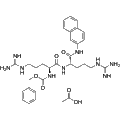
    Z-Arg-Arg-βNA acetate is a selective dipeptide substrate for the protease Cathepsin B, exhibiting resistance to proteases H and L. This compound plays a crucial role in differentiating Cathepsin B from other proteases, making it a valuable tool for research focused on protease activity and function. Its sensitivity allows for precise monitoring of Cathepsin B activity in various biological assays.

    1 mg
    $40.00
    5 mg
    $80.00
    All 3 sizes
  • Arg-Arg-AMC
    Cat. No.
    A39820

    Arg-Arg-AMC

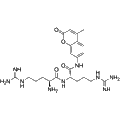
    Arg-Arg-AMC is a selective substrate for Cathepsin B, an enzyme implicated in various cancer progression pathways. This reagent is valuable for assessing Cathepsin B activity in cancer cell models, where its expression is associated with invasive and metastatic characteristics. Its application in research can facilitate the investigation of tumor biology and potential therapeutic targets related to Cathepsin B.

    Out of stock

    All 3 sizes
  • Cathepsin D and E FRET Substrate
    Cat. No.
    A39833

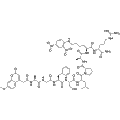
    Cathepsin D and E FRET Substrate

    Cathepsin D and E FRET Substrate is a fluorogenic substrate specifically designed for the selective detection of cathepsins D and E, avoiding interaction with cathepsins B, H, and L. Cleavage occurs at the Phe-Phe amide bond, releasing a fluorescent signal that can be quantitatively measured. This substrate is ideal for routine assays and mechanistic studies, facilitating the investigation of cathepsin activity in various biological contexts.

    1 mg
    $660.00
    5 mg
    $2,715.00
    All 2 sizes
  • Ac-Glu-Asp(EDANS)-Lys-Pro-Ile-Leu-Phe-Phe-Arg-Leu-Gly-Lys(DABCYL)-Glu-NH2
    Cat. No.
    A39835

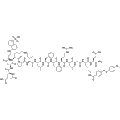
    Ac-Glu-Asp(EDANS)-Lys-Pro-Ile-Leu-Phe-Phe-Arg-Leu-Gly-Lys(DABCYL)-Glu-NH2

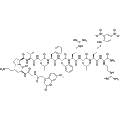
    Ac-Glu-Asp(EDANS)-Lys-Pro-Ile-Leu-Phe-Phe-Arg-Leu-Gly-Lys(DABCYL)-Glu-NH2 is a specific substrate for cathepsin D, designed for use in fluorescence resonance energy transfer (FRET) assays. This compound exhibits key biological activity by releasing a detectable fluorescence signal upon cathepsin D cleavage, facilitating the study of proteolytic activity. It is valuable for investigating the role of cathepsin D in various biological processes and for screening potential inhibitors in drug development.

    Out of stock

    All 3 sizes
  • Suc-Val-Pro-Phe-pNA
    Cat. No.
    A39842

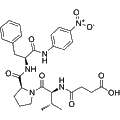
    Suc-Val-Pro-Phe-pNA

    Suc-Val-Pro-Phe-pNA functions as a substrate specifically for cathepsin G. This compound allows for the quantitative assessment of cathepsin G activity, which is crucial for understanding its role in various physiological and pathological processes. Its application includes enzyme activity assays in research focused on inflammation, immune response, and other related biological pathways.

    Out of stock

    All 3 sizes
  • Z-Arg-Arg-4MβNA triacetate
    Cat. No.
    A39853

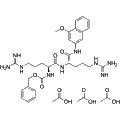
    Z-Arg-Arg-4MβNA triacetate

    Z-Arg-Arg-4MβNA triacetate is a specific substrate for cathepsin B, designed to facilitate the study of this cysteine protease. Upon cleavage by cathepsin B, it generates the fluorescent product 4MβNA, which exhibits excitation and emission maxima at 355 nm and 430 nm, respectively. This reagent is useful for investigating enzyme activity and dynamics in various biological research applications.

    Out of stock

    All 3 sizes
  • Z-Arg-Arg-AMC
    Cat. No.
    A39873

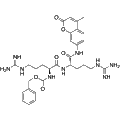
    Z-Arg-Arg-AMC

    Z-Arg-Arg-AMC is a selective substrate for cathepsin B, a cysteine protease involved in various physiological and pathological processes. This compound facilitates the measurement of cathepsin B activity through the release of a freely diffusible fluorophore. It is commonly utilized in biochemical assays to study protease activity, including research on cancer, inflammation, and other diseases associated with altered cathepsin levels.

    Out of stock

    All 3 sizes
  • Cathepsin E substrate e
    Cat. No.
    A39880

    Cathepsin E substrate e

    Cathepsin E substrate e is a selective substrate for the enzyme Cathepsin E, designed to facilitate monitoring of its proteolytic activity. This substrate employs a close proximity of a Mca donor and a Dnp acceptor to create a near-complete intramolecular quenching effect in its intact form. Upon cleavage by Cathepsin E, the spatial separation of Mca and Dnp generates a significant increase in fluorescence, making it an effective tool for studying Cathepsin E activity and its role in various biological processes.

    Out of stock

    All 3 sizes
  • S2160
    Cat. No.
    A39887

    S2160

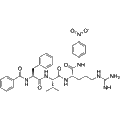
    Synonyms: Bz-Phe-Val-Arg-pNA

    S2160 is a specific substrate for Cathepsin B, designed for use in calorimetric assays. This compound enables the accurate measurement of Cathepsin B activity in various biological samples. Researchers can utilize S2160 to study proteolytic processes and explore the role of Cathepsin B in physiological and pathological conditions.

    25 mg
    $1,275.00
    50 mg
    $1,625.00
    All 3 sizes
  • FA-Phe-Phe
    Cat. No.
    A42346

    FA-Phe-Phe

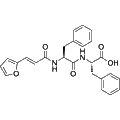
    FA-Phe-Phe is a furylacryloyl (fa)-amino acid derivative that serves as a specific substrate for Cathepsin A. This compound is valuable in elucidating the enzymatic activity and functional mechanisms of Cathepsin A, contributing to research on its role in physiological and pathological processes. FA-Phe-Phe is particularly useful in studies involving enzymatic assays and screening for potential inhibitors or modulators of Cathepsin A.

    Out of stock

    All 3 sizes
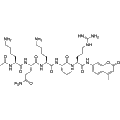
  • Ac-KQKLR-AMC TFA
    Cat. No.
    A77639

    Ac-KQKLR-AMC TFA

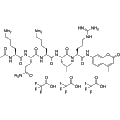
    Synonyms: Cathepsin S substrate TFA

    Ac-KQKLR-AMC TFA is a substrate peptide for Cathepsin S, conjugated with the fluorescent indicator AMC (Excitation/Emission = 354 nm/442 nm). This reagent facilitates the measurement of Cathepsin S activity, enabling researchers to study proteolytic processes and assess enzyme function in various biological contexts. Its application is crucial for investigations into the role of Cathepsin S in physiological and pathological conditions.

    5 mg
    $110.00
    10 mg
    $185.00
    All 4 sizes
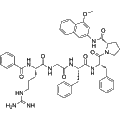
  • Bz-RGFFP-4MβNA
    Cat. No.
    A77728

    Bz-RGFFP-4MβNA

    Bz-RGFFP-4MβNA is a specific substrate for Cathepsin D, designed for use in either colorimetric or fluorometric assays. It enables the detection and quantification of Cathepsin D activity, making it a valuable tool for studying proteolytic processes and their implications in various biological conditions. This compound facilitates research in areas including cancer, neurodegenerative diseases, and other pathologies where Cathepsin D plays a critical role.

    Out of stock

    All 3 sizes
  • Ac-KQKLR-AMC
    Cat. No.
    A77730

    Ac-KQKLR-AMC

    Synonyms: Cathepsin S substrate

    Ac-KQKLR-AMC is a substrate peptide designed for the fluorescent monitoring of Cathepsin S activity. Labeled with AMC, this compound exhibits excitation and emission wavelengths of 354 nm and 442 nm, respectively. It is primarily utilized in biochemical assays to measure the enzymatic activity of Cathepsin S, providing valuable insights into its role in physiological and pathological processes.

    Out of stock

    All 3 sizes

21 Items

Added to your cart

View Cart Checkout

    Loading...