FXR

Farnesoid X receptor (FXR) agonists and antagonists act on a nuclear receptor that senses bile acids. In 1999 three groups identified bile acids such as chenodeoxycholic acid as endogenous FXR ligands. FXR is expressed mainly in liver, intestine and kidney, where it controls bile acid synthesis, transport and enterohepatic circulation. Activated FXR induces small heterodimer partner, which represses cholesterol 7α-hydroxylase, the rate-limiting enzyme of bile acid synthesis. FXR ligands are used to study bile acid, lipid and glucose metabolism and liver fibrosis models. Steroidal agonists include obeticholic acid, a semisynthetic bile acid analog. GW4064, cilofexor and tropifexor are nonsteroidal agonists, while DY 268 serves as an FXR antagonist.

2 Items

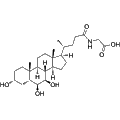
  • Gly-β-MCA
    Cat. No.
    A39335

    Gly-β-MCA

    Gly-β-MCA is a potent farnesoid X receptor (FXR) inhibitor, selectively acting within the intestine. This stable bile acid demonstrates significant biological activity, making it a promising candidate for research focused on metabolic disorders. Its oral bioavailability enhances its potential for therapeutic application and further investigation in related studies.

    1 mg
    $160.00
    5 mg
    $330.00
    All 6 sizes
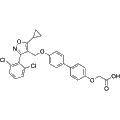
  • FXR/CES2 modulator 1
    Cat. No.
    A74905

    FXR/CES2 modulator 1

    FXR/CES2 modulator 1 is a dual modulator that functions as an FXR agonist and a CES2 inhibitor. This compound demonstrates significant potential in reducing the intestinal toxicity associated with irinotecan administration. Its unique mechanism of action makes it a valuable tool for research aimed at understanding FXR modulation and its implications in gastrointestinal safety during chemotherapy.

    25 mg
    $1,275.00
    50 mg
    $1,625.00
    All 3 sizes

2 Items

Added to your cart

View Cart Checkout

    Loading...