- Cat. No.
- A16309
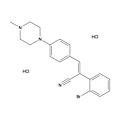
DG172 dihydrochloride
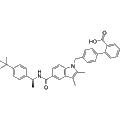
DG-172 is an orally active potent PPARβ/δ inverse agonist (IC50 = 26.9 nM). DG-172 inhibits Angptl4 gene expression in mouse myoblasts (IC50 = 9.5 nM) in vitro.
Search by product name, CAS, target or catalog number. Press Down Arrow to reach product suggestions, Tab to move between links, and Escape to close suggestions.
PPAR agonists and antagonists target peroxisome proliferator-activated receptors (PPARs), a nuclear receptor family. The first PPAR was identified in 1990 as a member of the steroid hormone receptor superfamily activated by peroxisome proliferators. The three subtypes, PPARα, PPARδ and PPARγ, act as ligand-activated transcription factors in tissues such as liver, muscle and fat. PPARγ promotes adipocyte differentiation, and thiazolidinediones were shown in 1995 to bind it with high affinity. Examples include rosiglitazone and troglitazone for PPARγ, fenofibrate for PPARα and GW 501516 for PPARδ. Elafibranor acts on PPARα and PPARδ, while T0070907 is a PPARγ antagonist for blocking studies.
DG-172 is an orally active potent PPARβ/δ inverse agonist (IC50 = 26.9 nM). DG-172 inhibits Angptl4 gene expression in mouse myoblasts (IC50 = 9.5 nM) in vitro.
FX-909 is a covalent inverse agonist of peroxisome proliferator-activated receptor gamma (PPARG), functioning through modulation of receptor activity. This compound exhibits promising biological activity by inhibiting PPARG-mediated signaling pathways, which are often implicated in cancer progression. FX-909 is utilized in cancer research to investigate the effects of PPARG inhibition on tumor growth and survival, providing insights into potential therapeutic targets.
BAY-4931 is a selective inverse agonist of PPARγ, exhibiting potent action with an IC50 of 0.17 nM. This compound effectively modulates PPARγ activity, making it a valuable tool for investigating metabolic disorders and insulin sensitivity. Its unique mechanism of action allows for detailed studies of PPARγ's role in various biological processes and therapeutic applications.
ST247 is a potent inverse agonist of the peroxisome proliferator-activated receptor beta/delta (PPARβ/δ). It exhibits a high affinity for this target and modulates the expression of the activation marker CCL2 in a manner contrary to typical agonist activity. ST247 effectively promotes the interaction with corepressors and inhibits agonist-induced transcriptional activity of PPARβ/δ. This compound is valuable for research into metabolic disorders and inflammation, offering insights into the regulatory mechanisms mediated by PPARβ/δ.
BAY-5516 is an inverse agonist of PPARG, exhibiting an IC50 value of 6.1 ± 3.6 nM. This compound demonstrates significant anti-tumor activity, making it a valuable tool for research into cancer therapeutics. It is suitable for studies focusing on the modulation of PPARG signaling pathways and their implications in various tumor models.
SR10221 is a noncovalent inverse agonist of peroxisome proliferator-activated receptor gamma (PPARγ). This compound exhibits significant biological activity by repressing downstream PPARγ target genes, which contributes to growth inhibition in bladder cancer cell lines. SR10221 is primarily utilized in research applications aimed at understanding PPARγ signaling pathways and developing potential therapeutic strategies for bladder cancer.
BAY-0069 is a selective inverse agonist of PPARγ, exhibiting potent inhibition with IC50 values of 6.3 nM for human PPARγ and 24 nM for mouse PPARγ. This compound serves as a valuable tool for investigating the roles of PPARγ in cancer research, providing insights into its regulatory mechanisms in tumorigenesis and potential therapeutic strategies. Its high selectivity enhances its utility in experimental settings.
BAY-5094 is an inverse agonist of the peroxisome proliferator-activated receptor gamma (PPARG). This compound exhibits oral bioactivity and has potential applications in the study of luminal bladder cancer. Its mode of action allows for investigation into the role of PPARG in tumorigenesis and cancer progression.
BAY-9683 is an orally active covalent inverse agonist of PPARG (Peroxisome Proliferator-Activated Receptor Gamma). It effectively inhibits the activity of overactive PPARG, making it a valuable tool for investigating diseases associated with PPARG dysregulation, including luminal bladder cancer. This compound is suitable for research applications focused on metabolic regulation and cancer biology.
SR2595 is an inverse agonist of peroxisome proliferator-activated receptor gamma (PPARγ), exhibiting an IC50 value of 30 nM. This compound functions by modulating PPARγ activity, leading to alterations in gene expression associated with lipid metabolism and insulin sensitivity. SR2595 is primarily used in research related to metabolic disorders, obesity, and diabetes, making it a valuable tool for studying PPARγ signaling pathways and their implications in various physiological processes.