PAK

PAK inhibitors act on p21-activated kinases (PAK), effector kinases of the small GTPases Rac and Cdc42. The first family member was described in 1994 as a brain serine/threonine kinase activated by Cdc42 and Rac1. Group I PAKs (PAK1 to PAK3) are held inactive by an autoinhibitory region, whereas group II PAKs (PAK4 to PAK6) are regulated differently. PAK signaling remodels the actin cytoskeleton and contributes to cell motility and neurite outgrowth. IPA-3, reported in 2008, blocks PAK1 activation by targeting this autoregulatory mechanism. NVS-PAK1-1 is a further allosteric PAK1 inhibitor, and FRAX486 and FRAX597 act mainly on group I PAKs. PF-3758309 was developed against PAK4, while KPT 9274 inhibits PAK4 and nicotinamide phosphoribosyltransferase (NAMPT).

3 Items

  • Gardenin A
    Cat. No.
    A24235

    Gardenin A

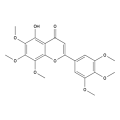
    Gardenin A is an orally active synthetic polymethoxyflavone (PMF) analogue with neurotrophic properties, promoting neurite outgrowth and neuronal differentiation. It enhances neuritogenesis through activation of the MAPK/ERK, PKC, and PKA pathways, independent of TrkA and CREB signaling. Additionally, Gardenin A exhibits sedative, anxiolytic, antidepressant, and anticonvulsant effects, making it a promising compound for neurological and neuropsychiatric research.

    1 mg
    $198.00
    5 mg
    $594.00
    All 4 sizes
  • BJG-05-039
    Cat. No.
    A56825

    BJG-05-039

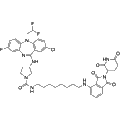
    BJG-05-039 is a selective degrader of PAK1, formed by the conjugation of NVS-PAK1-1 and Lenalidomide. This compound effectively induces degradation of PAK1, resulting in the inhibition of MEK S298 and ERK phosphorylation. BJG-05-039 demonstrates notable anti-proliferative effects in PAK1-dependent cell lines, making it a valuable tool for research applications focused on PAK1-related signaling pathways and cancer biology.

    Out of stock

    All 3 sizes
  • PAK4-IN-6
    Cat. No.
    A56835

    PAK4-IN-6

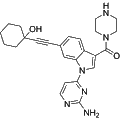
    PAK4-IN-6 is a selective degrader of PAK4 (p21-activated kinase 4), functioning through targeted protein degradation mechanisms. This compound serves as a valuable tool in the synthesis of proteolysis-targeting chimeras (PROTACs) and has potential applications in cancer research and therapeutic development. Its ability to modulate PAK4 levels makes it instrumental in studying signaling pathways and cellular processes involving this kinase.

    Out of stock

    All 3 sizes

3 Items

Added to your cart

View Cart Checkout

    Loading...