






-
RORγt Inhibitor
Vimirogant hydrochloride is a potent and selective RORγt inhibitor, displaying a Ki of 3.5 nM and an IC50 of 17 nM. This compound demonstrates over 1000-fold selectivity for RORγt compared to RORα and RORβ isotypes. Vimirogant hydrochloride effectively inhibits Th17 differentiation and IL-17A secretion from mouse splenocytes with an IC50 of 57 nM, while sparing Th1, Th2, and Treg cell differentiation. This specificity positions Vimirogant hydrochloride as a valuable reagent for research into autoimmune disorders. -
ROR Inhibitor
RORγt Inhibitor 1 is a potent allosteric inhibitor of RORγt, exhibiting an IC50 value of 1 nM. This compound effectively modulates RORγt activity, playing a crucial role in the regulation of immune responses. It is primarily utilized in research related to autoimmune diseases and metabolic disorders, providing valuable insights into the therapeutic potential of RORγt inhibition. -
ROR Agonist
RORγt agonist 1 is a potent agonist of the RORγt receptor, demonstrating an EC50 of 20.8 nM. This compound exhibits high metabolic stability, enhanced aqueous solubility, and favorable pharmacokinetics in murine models. RORγt agonist 1 is a promising candidate for cancer immunotherapy research applications, targeting immune modulation pathways to aid in therapeutic strategies. -
RORγ Antagonist
Retezorogant is a selective antagonist of the retinoid-related orphan receptor gamma (RORγ). This compound plays a significant role in modulating immune responses and has potential applications in the treatment of autoimmune diseases and inflammatory conditions. Retezorogant's ability to inhibit RORγ activity makes it a valuable tool for researchers investigating the mechanisms of Th17 cell differentiation and related pathways. -
ROR Agonist
RORγ Agonist 1 is a potent agonist of the RORγ nuclear receptor, exhibiting an EC50 of 21 nM. This compound demonstrates significant antitumor activity, making it a valuable tool in cancer research. Its oral bioavailability facilitates convenient administration in preclinical studies exploring RORγ's role in tumor progression and immune modulation. -
RORγt Inverse Agonist
RORγt inverse agonist 14 is a selective inverse agonist targeting the retinoic acid receptor-related orphan receptor gamma t (RORγt) with an EC50 of 2.5 nM. This compound exhibits significant anti-inflammatory properties, making it suitable for research into autoimmune conditions such as rheumatoid arthritis and psoriasis. Its oral bioavailability facilitates in vivo studies, contributing valuable insights into RORγt modulation in therapeutic contexts. -
RORγt Inverse Agonist
RORγt Inverse Agonist 6 is designed to inhibit the RORγt receptor, a key regulator in Th17-driven autoimmune diseases. This compound effectively suppresses IL-17A gene expression following IL-23 stimulation in vivo, making it a valuable tool for exploring therapeutic strategies against inflammatory conditions. Its application is essential for researchers investigating the role of Th17 cells in various autoimmune disorders. -
RORγt Inverse Agonist
FM26 is a potent allosteric inverse agonist of the retinoic acid receptor-related orphan receptor γt (RORγt), exhibiting an IC50 of 264 nM. This compound effectively downregulates IL-17a mRNA expression in EL4 cells, making it a valuable tool for studying Th17 cell differentiation and related immunological responses. FM26 is suitable for research applications focusing on autoimmune diseases and inflammation. -
ROR Antagonist
RORγt Inverse Agonist 3 is a selective and orally bioavailable inverse agonist of RORγ, exhibiting potent activity with EC50 values of 0.22 μM for human RORγ and 0.15 μM for RORγt in human IL-17 cells. This compound is useful for investigations into the regulation of immune responses and the role of RORγt in inflammatory diseases. Its ability to inhibit RORγt activity makes it a valuable tool for research into conditions such as autoimmune disorders and cancer. -
RORγt Inverse Agonist
RORγt inverse agonist 26 is a potent inverse agonist of the RORγt receptor, crucial for modulating Th17 cell differentiation. This compound effectively inhibits the production of interleukin-17 (IL-17), making it valuable for research into inflammation and autoimmune disorders. Delving into RORγt functionality, this reagent is instrumental in therapeutic development and understanding immune system regulation. -
RORγ inverse agonist
ARN-6039 is an orally active inverse agonist of RORγ, a transcription factor involved in the regulation of various immune responses. This compound demonstrates potential in modulating immune activity and may be effective in the treatment of autoimmune demyelinating diseases. It serves as a valuable tool for research aimed at understanding the role of RORγ in immune-related disorders and developing therapeutic strategies targeting these conditions. -
ROR Modulator
SHR168442 is a selective modulator of retinoid-related orphan receptor gamma (RORγ), exhibiting an IC50 value of 0.035 μM. This compound significantly influences RORγ activity, making it valuable for research applications related to immune response and inflammatory diseases. Its precise modulation of RORγ provides insights into pathways regulated by this receptor, facilitating studies in cellular signaling and potential therapeutic interventions. -
RORγt Inverse Agonist
RORγt Inverse Agonist 8 acts as a selective inverse agonist targeting the retinoic acid receptor-related orphan receptor gamma t (RORγt). With an IC50 of 19 nM for the human RORγt ligand-binding domain, this compound demonstrates significant potential in modulating RORγt activity. Its biological activity is relevant for research in autoimmune diseases and T helper 17 (Th17) cell differentiation, providing a valuable tool for investigators studying immune response pathways. -
RORγt Modulator
RORγt modulator 5 is a selective modulator of the RORγt nuclear receptor, exhibiting a Ki value of less than 100 nM. This compound has demonstrated potential in the study of inflammatory, metabolic, and autoimmune diseases that are mediated by RORγt. Its ability to influence RORγt signaling pathways makes it a valuable tool for researchers investigating these disease mechanisms. -
RORγ antagonist
RORγ antagonist 1 is a potent antagonist of the retinoic acid receptor-related orphan receptor gamma (RORγ) with a dissociation constant (KD) of 0.18 μM. This compound demonstrates significant anti-proliferative effects in HPAF-II pancreatic cancer xenograft models. Additionally, RORγ antagonist 1 inhibits key signaling pathways, including RAS/MAPK and AKT/mTORC1, and induces caspase-dependent apoptosis in pancreatic cancer cells, making it a valuable tool for cancer research and potential therapeutic applications. -
RORγt Inverse Agonist
TMP780 is an inverse agonist of the nuclear receptor RORγt, demonstrating an IC50 value of 13 nM. This compound exhibits potential for modulating immune responses and inflammation, making it a valuable tool for research related to cutaneous inflammatory disorders. Its ability to inhibit RORγt activity positions TMP780 as a promising candidate for studies aimed at uncovering therapeutic strategies in inflammatory diseases. -
RORγt Agonist
RORγt Agonist 2 is a selective agonist of the Retinoic acid receptor-related orphan receptor gamma t (RORγt), which plays a critical role in the differentiation of Th17 cells. This compound enhances the production of pro-inflammatory cytokines, thereby increasing lymphocyte cytotoxicity. Additionally, RORγt Agonist 2 inhibits the generation of regulatory T cells, ultimately promoting a more robust immune response. Its applications include research in autoimmune diseases and immunotherapy. -
RORγt Modulator
RORγt modulator 2 is a selective modulator of retinoid-related orphan receptor γt (RORγt), exhibiting an IC50 of less than 50 nM. This compound is valuable for investigating RORγt-mediated pathologies including pain, inflammation, chronic obstructive pulmonary disease (COPD), asthma, rheumatoid arthritis, colitis, multiple sclerosis, psoriasis, neurodegenerative disorders, and cancer. Research on RORγt modulator 2 can contribute to understanding therapeutic approaches targeting these conditions. -
RORγt Inverse Agonist
RORγt inverse agonist 28 is a potent inverse agonist targeting the retinoic acid receptor-related orphan receptor gamma t (RORγt). It effectively regulates the differentiation of T helper 17 (Th17) cells and inhibits interleukin-17 (IL-17) production. This compound is valuable for research into inflammation and autoimmune diseases, providing insights into potential therapeutic approaches. -
RORγt Modulator
RORγt modulator 4 is an effective modulator of the RORγt pathway. It has been shown to influence IL-17A production in cells derived from mouse spleen, thereby contributing to research in autoimmune diseases and inflammation. This compound is valuable for studies aimed at understanding the role of RORγt in T cell differentiation and related biological processes. -
RORγ Inverse Agonist
RORγ inverse agonist 2 is a potent inverse agonist targeting the retinoic acid receptor-related orphan receptor RORγ, exhibiting IC50 values of 0.4 μM and 0.9 μM for Gal4-RORγ and full-length RORγ, respectively. This compound is significant for research applications focused on autoimmune diseases, providing insights into RORγ's role in immune regulation and pathology. -
RORγ Inverse Agonist
JNJ-54119936 is an inverse agonist of the retinoic acid receptor-related orphan receptor gamma (RORγ) with a Kd of 5.3 nM. This compound exhibits significant modulation of RORγ activity, making it valuable for research into autoimmune diseases and inflammatory responses. Its specific targeting of RORγ allows for the exploration of downstream signaling pathways and therapeutic applications in related biological processes. -
RORγt Modulator
RORγt Modulator 3 is a selective modulator of the retinoic acid receptor-related orphan receptor gamma t (RORγt). This compound exhibits significant biological activity in the modulation of immune responses, making it valuable for research into RORγt-mediated diseases, including pain, inflammation, chronic obstructive pulmonary disease (COPD), asthma, rheumatoid arthritis, colitis, multiple sclerosis, psoriasis, neurodegenerative disorders, and various cancer types. Its application may facilitate the development of novel therapeutic strategies targeting RORγt pathways. -
RORγt Inhibitor
RORγt Inhibitor 4 is a potent inhibitor of the RORγt transcription factor, specifically designed for oral administration and capable of penetrating the central nervous system. This compound demonstrates significant efficacy in modulating immune responses, making it valuable for research into autoimmune conditions, particularly in the context of experimental autoimmune encephalomyelitis. Its ability to selectively inhibit RORγt activity positions it as a promising tool for investigating therapeutic strategies in autoimmune diseases. -
RORγt Reverse Agonist
TF-S14 is a reverse agonist of RORγt, a transcription factor critically involved in Th17 cell differentiation and cytokine production. By binding to RORγt, TF-S14 effectively inhibits the secretion of pro-inflammatory cytokines such as IL-17A, IL-21, and IL-22. This compound is valuable for research applications focused on autoimmune diseases and transplantation rejection mechanisms. -
RORγt Inverse Agonist
RORγt inverse agonist 34 is a selective inverse agonist of the retinoic acid receptor-related orphan receptor gamma t (RORγt), exhibiting an IC50 of 0.094 μM for the RORγt-LBD. This compound demonstrates significant biological activity in modulating RORγt signaling pathways, making it a valuable tool for research into psoriasis and related inflammatory conditions. Its use facilitates the exploration of therapeutic strategies targeting RORγt in the regulation of immune responses. -
RORγt Agonist
RORγt Agonist 4 is a potent and selective agonist of the retinoic acid receptor-related orphan receptor gamma t (RORγt). This compound enhances metabolic stability and demonstrates significant biological activity in preclinical models. Notably, RORγt Agonist 4 has shown therapeutic potential in tumor models, including mouse B16F10 melanoma and LLC lung adenocarcinoma, making it a valuable tool for investigating RORγt-mediated pathways in cancer research. -
RORγt Inverse Agonist
RORγt Inverse Agonist 32 is an orally active compound that targets the RORγt receptor as an inverse agonist. It plays a critical role in modulating inflammatory pathways and is valuable for research into immune responses and related diseases. This compound is particularly useful for studies focusing on the regulation of Th17 cell differentiation and the development of autoimmune conditions. -
RORγt Inhibitor
RORγt Inhibitor 2 is a selective inhibitor of the RORγt transcription factor, exhibiting an IC50 value of 9.2 nM. This compound demonstrates significant anti-inflammatory and immunomodulatory activity, making it a valuable tool for research into cancer, autoimmune disorders, and inflammatory conditions driven by RORγt signaling. Its specificity and potency enable detailed studies of RORγt's biological roles and therapeutic potential. -
RORα Agonist
Gala-SR (Gala-SR1078) is a selective RORα agonist that enhances the amplitude of circadian rhythms, making it a valuable tool for the investigation of disorders related to circadian regulation. This compound has potential applications in studying rhythm disturbances and can provide insights into the role of circadian mechanisms in periodontitis research. Its ability to modulate rhythmic activity positions it as a significant reagent in the exploration of chronobiology and its implications for human health. -
RORγ Inverse Agonist
CD12681 is a selective inverse agonist of RORγ, exhibiting IC50 values of 19 nM and 10 nM against RORγ GAL4 and CD4-IL-17 cells, respectively. This compound effectively reduces IL-17-mediated inflammatory cell recruitment, making it a valuable tool for studying inflammatory pathways. CD12681 shows promise for research applications in conditions such as psoriasis, facilitating the exploration of novel therapeutic strategies. -
RORγ Antagonist
SR1555 hydrochloride is a selective inverse agonist of the retinoic acid receptor-related orphan nuclear receptor γ (RORγ), exhibiting an IC50 of 1 μM. This compound effectively inhibits the development and function of pro-inflammatory TH17 cells while promoting an increase in anti-inflammatory T regulatory (Treg) cells. SR1555 hydrochloride is primarily utilized in research targeting autoimmune diseases, providing insights into potential therapeutic strategies for immune modulation. -
RORγ Inhibitor
RORγ-IN-2 is a selective inhibitor of RAR-related orphan receptor gamma (RORγ) with a Ki of 16.6 nM for human RORγ. This compound is primarily utilized in research focused on IL-17-dependent autoimmune diseases, providing insights into the modulation of immune responses and inflammation. RORγ-IN-2 serves as a valuable tool for investigating the therapeutic potential of targeting RORγ in various pathological conditions. -
PROTAC Linkers
Boc-Pip-alkyne-Ph-COOH is a PROTAC linker designed for use in the synthesis of targeted protein degraders. It facilitates the development of PROTACs, including ARD-266, which effectively promotes degradation of the androgen receptor in AR-positive prostate cancer cell lines such as LNCaP, VCaP, and 22Rv1, exhibiting DC50 values of 0.2-1 nM. This compound features an alkyne group that enables copper-catalyzed azide-alkyne cycloaddition (CuAAc), making it essential for click chemistry applications in chemical biology research. -
Androgen Receptor PROTAC Degrader
GDC-2992 is an orally bioavailable PROTAC degrader targeting the androgen receptor (AR). With a DC50 of 2.7 nM for AR degradation and an IC50 of 9.7 nM for inhibiting cell proliferation in VCaP cells, GDC-2992 serves as a valuable tool in prostate cancer research. This compound facilitates investigations into the therapeutic potential of targeted protein degradation in androgen receptor-mediated signaling pathways. -
AR Proteolysis-targeting Chimera Degrader
ARD-2051 is a selective and orally active degrader targeting the androgen receptor (AR) via a proteolysis-targeting chimera approach. It demonstrates potent DC50 values of 0.6 nM for AR degradation in prostate cancer cell lines such as LNCaP and VCaP. ARD-2051 exhibits significant anti-tumor efficacy in VCaP xenograft mouse models, making it a valuable tool for prostate cancer research and therapeutic exploration. -
Androgen Receptor Degrader
SARD279 is a potent and selective degrader of the Androgen Receptor, exhibiting a DC50 value of 1099 nM. This compound is particularly valuable for research into prostate cancer, where modulation of androgen receptor levels may play a critical role in disease progression and response to therapy. SARD279's targeted degradation mechanism supports investigations into androgen receptor signaling pathways and its implications in cancer biology. -
PROTAC AR Degrader
AZ'3137 is an orally bioavailable PROTAC-based degrader specifically targeting the androgen receptor (AR). It exhibits a DC50 value of 22 nM for AR degradation and efficiently degrades the L702H mutant variant with a DC50 of 92 nM. AZ'3137 demonstrates significant inhibition of LNCaP cell proliferation with a GI50 of 74 nM and effectively suppresses AR signaling and tumor growth in prostate cancer mouse models. This compound is suitable for studies investigating AR-targeted therapies in prostate cancer. -
AR PROTAC Degrader
(Rac)-GDC-2992 is a PROTAC androgen receptor degrader that effectively reduces androgen receptor levels with a DC50 of 10 nM in VCaP cells. This compound not only disrupts androgen receptor signaling but also facilitates the degradation of the receptor itself. (Rac)-GDC-2992 is primarily utilized in prostate cancer research, providing valuable insights into androgen receptor modulation and therapeutic strategies. -
Androgen Receptor PROTAC Degrader
PROTAC AR Degrader-11 is a targeted degrader of the androgen receptor and androgen receptor splice variant-7, utilizing a proteolysis-targeting chimeric (PROTAC) approach. This compound exhibits significant cytotoxicity against prostate cancer cell lines, specifically CWR22RV1 and VCaP. PROTAC AR Degrader-11 is applicable in prostate cancer research, aiding investigations into androgen receptor modulation and degradation mechanisms. -
Androgen Receptor Degrader
PROTAC AR Degrader-7 is a potent androgen receptor degrader, exhibiting an IC50 value of 3 nM. This bifunctional molecule is designed to engage the androgen receptor through AR ligand-32 while simultaneously recruiting E3 ligase via E3 Ligase Ligand 44 for targeted protein degradation. PROTAC AR Degrader-7 effectively induces ubiquitination and subsequent proteasomal degradation of the androgen receptor, making it a valuable tool for studying androgen receptor signaling and its role in androgen-dependent diseases, particularly prostate cancer. -
AR PROTAC Degrader
TD-802 is an androgen receptor (AR) PROTAC degrader that demonstrates substantial microsomal stability. It exhibits notable antitumor efficacy in vivo, making it a valuable tool for investigating metastatic castration-resistant prostate cancer. This compound is essential for research aimed at understanding AR modulation and its impacts on cancer progression. -
Estrogen Receptor/ERR PTORAC
PROTAC ER Degrader-14 is a PTORAC-type degrader targeting the Estrogen Receptor (ER). This compound facilitates the degradation of ER through the recruitment of E3 ubiquitin ligase, effectively modulating estrogen signaling pathways. The specific design incorporates a linker derived from N-Boc-piperazine, combined with a ligand that binds to the target protein, enhancing selectivity and efficacy. It is applicable in studies focused on estrogen-related diseases, providing insights into cellular mechanisms and potential therapeutic interventions. -
AR PROTAC Degrader
A031 is a potent PROTAC degrader targeting the androgen receptor (AR), demonstrating an IC50 value of less than 0.25 μM for effective AR protein degradation. This compound has shown a significant inhibitory effect on tumor growth in zebrafish models of human prostate cancer (VCaP). A031 is a valuable tool for investigating AR-mediated signaling pathways and potential therapeutic strategies in prostate cancer research. -
PROTAC ER Degrader
PROTAC ER Degrader-10 is a selective PROTAC aimed at degrading estrogen receptors (ERs) within cancer cells. This compound exhibits significant efficacy in promoting targeted degradation of the ER, thereby disrupting cellular pathways linked to tumor growth and survival. Its primary application lies in cancer research, striving to elucidate mechanisms of ER-mediated signaling and provide insights into potential therapeutic strategies for estrogen-dependent malignancies. -
ERRα PROTAC Degrader
His-TERRα is a targeted degrader designed for estrogen receptor-related alpha (ERRα) via the PROTAC mechanism. Utilizing a histidine residue as the E3 ligase ligand, it engages the N-end rule pathway to facilitate the degradation of ERRα, effectively diminishing its presence in cells. His-TERRα demonstrates potent inhibition of proliferation and migration in MCF7 breast cancer cells, making it a valuable tool for investigating breast cancer biology and therapeutic strategies. -
AR PROTAC Degrader
PROTAC AR Degrader-5 is a potent androgen receptor (AR) PROTAC degrader, exhibiting an IC50 value of 49 nM. This compound facilitates the targeted degradation of AR, demonstrating significant potential in inhibiting sebaceous plaque formation and promoting hair regeneration. Its mechanism utilizes a bifunctional ligand to recruit an E3 ligase, making it a valuable tool for research in androgen signaling and related therapeutic applications. -
ERα Protac Degrader
Tamoxifen-PEG-Clozapine is an estrogen receptor α (ERα) PROTAC degrader that induces the degradation of ERα through the ubiquitin-proteasome pathway, utilizing the E3 ubiquitin ligase N-recognin 5. This compound presents significant potential for cancer research by modulating estrogen receptor signaling. Its unique design combines inhibition and degradation strategies, making it a valuable tool for studying ERα-related pathways and therapeutic interventions in estrogen-dependent cancers. -
ER Degrader
PROTAC ER Degrader-11 is a potent PROTAC designed to target estrogen receptor (ER) degradation, with an IC50 of 0.66 nM. This compound plays a critical role in cancer research by modulating ER levels, providing valuable insights into ER-related signaling pathways and therapeutic strategies. Its unique structure includes a Cereblon ligand and a specific linker, making it a valuable tool for exploring targeted protein degradation in cancer biology. -
PROTAC ER Degrader
SNIPER(ER)-87 is a PROTAC compound designed to efficiently degrade estrogen receptor α (ERα) through targeted ubiquitination. It consists of an IAP ligand (LCL161 derivative) linked to the ERα ligand (4-hydroxytamoxifen) via a PEG linker, resulting in an IC50 of 0.097 μM for ERα degradation. This compound preferentially recruits XIAP, the primary E3 ubiquitin ligase, to facilitate the selective degradation of ERα in cellular contexts. SNIPER(ER)-87 is valuable for research on hormone receptor regulation, breast cancer studies, and the development of targeted protein degradation strategies.
Endocrinology-Hormones
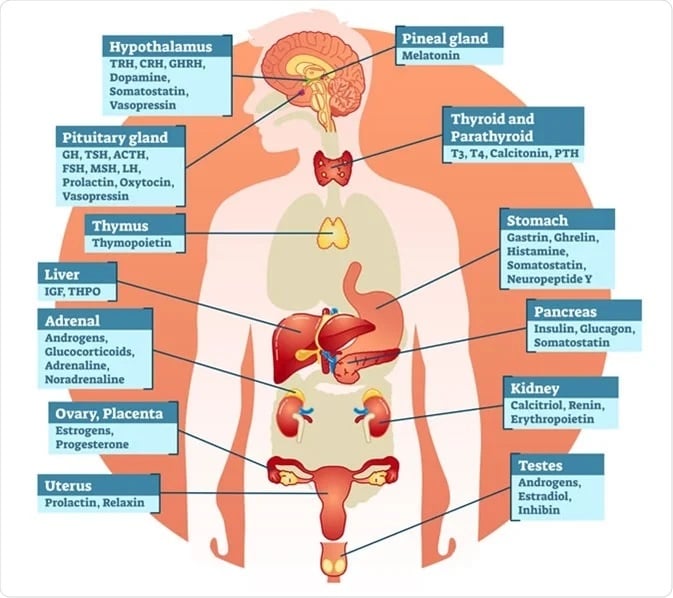
Small molecules play a pivotal role in Endocrinology Research. These are low molecular weight compounds that have a significant impact on the endocrine system, hormones, and their receptors. Here are some key aspects of how small molecules are involved in this field:
- Hormone Mimetics and Inhibitors: Small molecules are used to develop synthetic compounds that mimic the actions of hormones or inhibit their effects. For example, drugs like metformin for diabetes management and selective estrogen receptor modulators (SERMs) for breast cancer treatment are used to either mimic or block hormonal activity.
- Receptor Modulation: Small molecules can bind to hormone receptors and modulate their activity. This is crucial in developing drugs that target specific hormone receptors, like the use of small molecule agonists and antagonists to regulate thyroid hormone receptors.
- Metabolism Regulation: Endocrinology research often focuses on metabolism and how hormones like insulin regulate it. Small molecules are employed to understand and develop drugs targeting enzymes involved in metabolism, such as glucagon-like peptide-1 (GLP-1) agonists for diabetes treatment.
- Steroid Hormone Production: Small molecules may be utilized to influence the production of steroid hormones in the adrenal glands or gonads. This is essential for conditions like Cushing's syndrome or polycystic ovary syndrome (PCOS).
- Hormone Assays: In laboratory research, small molecules are used as tracers or markers in hormone assays. For instance, small molecule fluorophores can be attached to antibodies to detect hormone levels in blood samples.
Drug Development: Endocrinology research relies on small molecules as potential drug candidates. Researchers design and test small molecules for their effectiveness in modulating hormonal pathways, with the goal of developing new therapies for endocrine disorders.
In summary, small molecules are indispensable tools in Endocrinology Research, enabling scientists to better understand the endocrine system's intricacies and develop novel treatments for a wide range of hormonal disorders and conditions. Their versatility and specificity make them valuable assets in advancing our knowledge of endocrinology and improving patient care.
Endocrinology Disease Products
Endocrinology Research Products
Kisspeptin Receptor
Leptin Receptors
Melanocortin (MC) Receptors
Mineralocorticoid Receptors
Galanin Receptors
TRH Receptors
Ghrelin Receptors
Natriuretic Peptide Receptors
NPY Receptors
Motilin Receptor
PTH Receptor
