
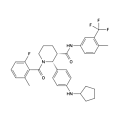
- Cat. No.
- A22202
Avacopan
Avacopan (CCX168) is an orally administered and selective C5a receptor (C5aR) antagonist.
In stock
View Details
Search by product name, CAS, target or catalog number. Press Down Arrow to reach product suggestions, Tab to move between links, and Escape to close suggestions.
CD markers are cell-surface proteins used to define and distinguish immune cell populations. Each cluster of differentiation (CD) number names one defined surface molecule, and many of these molecules also have enzymatic or signaling functions. The compounds listed here act on such molecules rather than serving as antibodies or stains. PSB-12379 and AB-680 inhibit ecto-5'-nucleotidase (CD73), which converts adenosine monophosphate (AMP) to adenosine in the extracellular space. CD38 inhibitor 1 acts on the nicotinamide adenine dinucleotide (NAD+) glycohydrolase CD38. YYA-021 and BMS-806 interfere with binding of the human immunodeficiency virus (HIV) envelope glycoprotein gp120 to CD4, while AX-024 affects T cell receptor signaling. CD73 and gp120/CD4 also exist as separate sibling categories in the same immunology section.
Avacopan (CCX168) is an orally administered and selective C5a receptor (C5aR) antagonist.
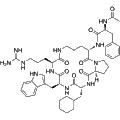
Synonyms: 3D53
PMX-53 (3D53) is a synthetic peptidic and a potent and orally active complement C5a receptor (CD88) antagonist with an IC50 of 20 nM. PMX-53 is also a low-affinity MrgX2 agonist that stimulates MrgX2-mediated mast cell degranulation. PMX-53 specifically binds to C5aR1 and does not bind to the second C5aR (C5L2) and C3aR. PMX-53 has anti-inflammatory, anticancer and antiatherosclerotic effects.
Synonyms: ALPN-101
Acazicolcept is an Fc fusion protein that serves as a dual antagonist of the inducible T cell costimulator (ICOS) and CD28. This reagent exhibits significant anti-inflammatory activity, making it valuable for research in autoimmune disorders and T cell modulation. Its unique mechanism of action positions Acazicolcept as a key tool in studying the regulation of immune responses and potential therapeutic interventions.
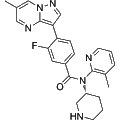
CD33 Splicing Modulator 1 is an innovative agent that targets the CD33/Siglec 3 receptor, a crucial regulator of microglial activity in the myeloid lineage. This compound enhances exon 2 skipping in cellular mRNA, thereby altering CD33 expression. It holds promise as a research tool in neurodegenerative disease studies, particularly in the context of Alzheimer's disease, facilitating a deeper understanding of the underlying mechanisms of these conditions.
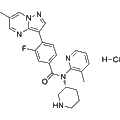
CD33 splicing modulator 1 hydrochloride is a small molecule modulator that targets CD33/Siglec 3, a myeloid cell surface receptor that regulates microglial activity. This compound promotes exon 2 skipping in cellular mRNA, making it a valuable tool for investigating the molecular mechanisms underlying neurodegenerative diseases, particularly Alzheimer's disease. It provides researchers with a means to explore potential therapeutic approaches through modulation of splicing events related to CD33.
Out of stock
All 3 sizes