- Cat. No.
- A11457
IRAK inhibitor 3
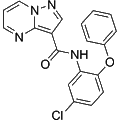
IRAK inhibitor 3 is an interleukin-1 (IL-I) receptor-associated kinase (IRAK) kinase modulator extracted from patent WO2008030579 A2.
Search by product name, CAS, target or catalog number. Press Down Arrow to reach product suggestions, Tab to move between links, and Escape to close suggestions.
IRAK inhibitors act on interleukin-1 receptor-associated kinases (IRAKs), kinases of innate immune receptor signaling. IRAK was cloned in 1996 as a serine/threonine kinase that associates with the interleukin-1 (IL-1) receptor after stimulation. Mice lacking IRAK4 showed severe defects in IL-1 and Toll-like receptor signaling, which established a central role for this family member. The adaptor myeloid differentiation primary response 88 (MyD88) recruits IRAK4, which then phosphorylates IRAK1 on the route to nuclear factor kappa B activation. Emavusertib, listed as CA-4948, and IRAK inhibitor 4 target IRAK4, while IRAK-1-4 Inhibitor I blocks both IRAK1 and IRAK4. The list also contains compounds with other targets, such as the c-Jun N-terminal kinase inhibitor JNK-IN-7.
IRAK inhibitor 3 is an interleukin-1 (IL-I) receptor-associated kinase (IRAK) kinase modulator extracted from patent WO2008030579 A2.
Synonyms: ODN 2006; PF-3512676; CpG 7909; ODN 7909
Agatolimod is a Toll-like receptor 9 (TLR9) agonist and immunomodulator with an EC50 of 180 nM. It activates TLR9 and upregulates TLR6 expression, initiating downstream signaling through IRAK4, IRF5, and IRF7. Agatolimod enhances Th1-type immune responses and promotes the activation of various immune cells, leading to increased antigen presentation, antibody regulation, cytokine secretion, apoptosis, and enhanced cytotoxicity. This compound is relevant for research into COVID-19, breast cancer, lung adenocarcinoma, HPV-related tumors, melanoma, and salmonellosis.
Synonyms: IRAK-1 (360-380)
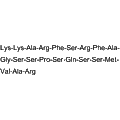
IRAK-4 Peptide substrate (IRAK-1 residues 360-380) is a bioactive peptide specifically designed to serve as a substrate for Interleukin-1 Receptor-Associated Kinase 4 (IRAK-4). This peptide facilitates the study of IRAK-4's role in signal transduction pathways associated with inflammatory responses. It is suitable for applications in cellular signaling research, particularly in the context of immune system studies and cytokine signaling.
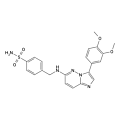
IRAK4 modulator-1 is a selective modulator of IRAK4, demonstrating an IC50 of 4.647 μM. This compound is instrumental in the exploration of IRAK-mediated signaling pathways, making it a valuable tool for investigating diseases associated with dysregulated inflammation and immune responses. Researchers can utilize IRAK4 modulator-1 to further understand the role of IRAK4 in various pathological conditions.