- Cat. No.
- A11455
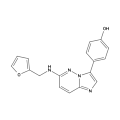
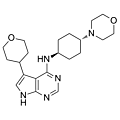
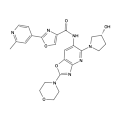
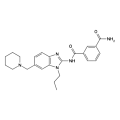
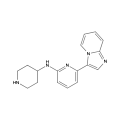
IRAK inhibitor 1
IRAK inhibitor 1 is a potent IRAK-4 inhibitor with IC50 of 216 nM, is poorly active against JNK-1 and JNK-2 with IC50 of 3.801 μM, and >10 μM, respectively.
Search by product name, CAS, target or catalog number. Press Down Arrow to reach product suggestions, Tab to move between links, and Escape to close suggestions.
IRAK inhibitors act on interleukin-1 receptor-associated kinases (IRAKs), kinases of innate immune receptor signaling. IRAK was cloned in 1996 as a serine/threonine kinase that associates with the interleukin-1 (IL-1) receptor after stimulation. Mice lacking IRAK4 showed severe defects in IL-1 and Toll-like receptor signaling, which established a central role for this family member. The adaptor myeloid differentiation primary response 88 (MyD88) recruits IRAK4, which then phosphorylates IRAK1 on the route to nuclear factor kappa B activation. Emavusertib, listed as CA-4948, and IRAK inhibitor 4 target IRAK4, while IRAK-1-4 Inhibitor I blocks both IRAK1 and IRAK4. The list also contains compounds with other targets, such as the c-Jun N-terminal kinase inhibitor JNK-IN-7.
IRAK inhibitor 1 is a potent IRAK-4 inhibitor with IC50 of 216 nM, is poorly active against JNK-1 and JNK-2 with IC50 of 3.801 μM, and >10 μM, respectively.
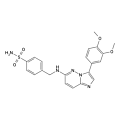
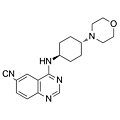
IRAK inhibitor 2 is interleukin-1 receptor associated kinase inhibitor .
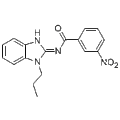
IRAK inhibitor 3 is an interleukin-1 (IL-I) receptor-associated kinase (IRAK) kinase modulator extracted from patent WO2008030579 A2.
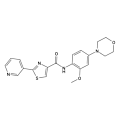
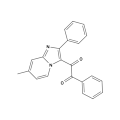
IRAK inhibitor 4 is an interleukin-1 receptor associated kinase 4(IRAK4) inhibitor.
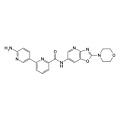
Synonyms: IRAK-IN-6
IRAK-IN-6, also known as IRAK inhibitor 6, is an interleukin-1 receptor associated kinase 4 (IRAK-4) inhibitor. IRAK-4 is reported to be essential for the activation of the intracellular signalling cascades including NF-kB and MAPK pathways, which are critical for the production of inflammatory cytokines.
Synonyms: IRAK-1/4 Inhibitor I
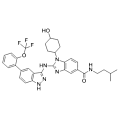
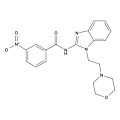
IRAK-1-4 inhibitor is a benzimidazole that disrupts the activity of IRAK-1 and -4 with IC50 values of 300 and 200 nM, respectively.
CA-4948 is a potent, and orally active interleukin-1 receptor-associated kinase 4 (IRAK4) inhibitor. CA-4948 exhibited the greatest efficacy in four of the five ABC-DLBCL PDX models tested as compared to GBC-DLBCL and ABC/GCB DLBCL PDX models.
AS-2444697 is a potent and selective interleukin-1 receptor-associated kinase 4 (IRAK4) inhibitor with IC50 value of 21 nM.
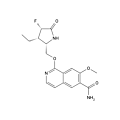
PF-06650833 is an inhibitor of Interleukin-1 receptor associated kinase 4 (IRAK4).
AZ1495 (compound 28) is an oral active inhibitor of Interleukin-1 receptor associated kinase 4 (IRAK4), with IC50 values of 5 nM and 23 nM for IRAK4 and IRAK1, respectively.
IRAK4-IN-1 is an interleukin-1 receptor associated kinase 4 (IRAK4) inhibitor with an IC50 of 7 nM.
HS-243 is an inhibitor of transforming growth factor-beta kinase. HS-243 can be used in treatment of cancer, malaria, inflammatory and other TAK1-mediated diseases.
IRAK4-IN-4 is an interleukin-1 receptor-associated kinase 4 (IRAK4) inhibitor extracted from patent CN107163044A, Compound15, has an IC50 of 2.8 nM.
Synonyms: CA-4948
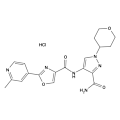
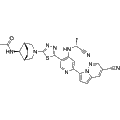
Emavusertib, also known as CA-4948 is a potent IRAK4/FLT3 inhibitor with anti-tumor activity. CA-4948 demonstrated good cellular activity in ABC DLBCL and AML cell lines. CA-4948 demonstrated moderate to high selectivity in a panel of 329 kinases as well as exhibited desirable ADME and PK profiles including good oral bioavailability in mice, rat, and dog and showed >90% tumor growth inhibition in relevant tumor models with excellent correlation with in vivo PD modulation.
Synonyms: PROTAC IRAK4 degrader-7; KYM-001
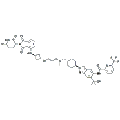
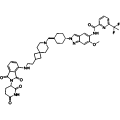
KT-474 (SAR444656) is a selective small-molecule PROTAC degrader of IRAK4, under development for the treatment of TLR/IL-1R–mediated autoimmune diseases. It effectively suppresses R848 (TLR7/8)- and LPS-induced IL-6 and IL-8 production in peripheral blood mononuclear cells (PBMCs), highlighting its potential as an anti-inflammatory therapeutic.
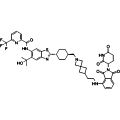
PROTAC IRAK3 Degrader-1 (Compound 23) is a potent and selective PROTAC molecule targeting IRAK3, with an IC₅₀ of 5 nM. It enables efficient degradation of IRAK3, providing a valuable tool for studying innate immune signaling and inflammatory pathways.
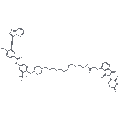
PROTAC IRAK4 Degrader-1 is a cereblon-based PROTAC targeting IRAK4, derived from US patent US20190192668A1 (Compound I-210). It induces IRAK4 degradation in OCI-LY-10 cells with 20–50% at 0.1 μM, and >50% at 1 μM.
HS-276 is an orally bioavailable, potent, and highly selective inhibitor of transforming growth factor-β–activated kinase 1 (TAK1), with a Kᵢ of 2.5 nM. It exhibits strong inhibition of TAK1 and moderate activity against a panel of other kinases, including CLK2, GCK, ULK2, MAP4K5, IRAK1, NUAK, CSNK1G2, CAMKKβ-1, and MLK1, with respective IC₅₀ values ranging from 8.25 to 5585 nM. HS-276 is a valuable tool for investigating TAK1-mediated signaling pathways and holds therapeutic potential for inflammatory conditions such as rheumatoid arthritis (RA).
KTX-582 is a potent heterobifunctional PROTAC degrader that targets interleukin-1 receptor–associated kinase 4 (IRAK4) and the transcription factor Ikaros, with DC₅₀ values of 4 nM and 5 nM, respectively. It induces apoptosis in MYD88^L265P-mutant diffuse large B-cell lymphoma (DLBCL) cells, a subtype characterized by constitutive IRAK4 signaling. In preclinical lymphoma models, KTX-582 effectively drives in vivo tumor regression, highlighting its therapeutic potential for MYD88-mutant hematologic malignancies.
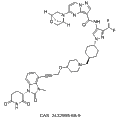
SB1-G-187 is a multifunctional PROTAC designed as a multi-kinase degrader, capable of inducing the selective degradation of multiple kinase targets through the ubiquitin–proteasome system. In addition to its targeted degradation activity, SB1-G-187 features an alkyne functional group, enabling its use as a click chemistry reagent. It can undergo copper-catalyzed azide-alkyne cycloaddition (CuAAC) with azide-containing molecules, allowing for versatile applications in chemical biology, such as probe development, conjugation, and target identification.
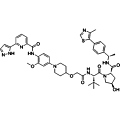
JNJ-1013 is a selective degrader of IRAK1, demonstrating potent efficacy with IC50 values of 72 nM for IRAK1, 443 nM for IRAK4, and 1071 nM for VHL. This compound induces apoptosis and promotes the cleavage of PARP, signaling significant pro-apoptotic activity. Additionally, JNJ-1013 effectively reduces the expression of IRAK1, phosphorylated IKBα, and phosphorylated STAT3 (Tyr705), making it a valuable tool for research in inflammatory pathways and therapeutic interventions targeting IRAK1.
Synonyms: KT-413
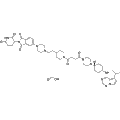
Zomiradomide is an orally bioavailable PROTAC degrader targeting IRAK4, with a DC50 of 6 nM, which effectively inhibits the NF-κB signaling pathway. In addition to its suppression of IRAK4, Zomiradomide functions as a molecular glue, facilitating the degradation of Ikaros with a DC50 of 1 nM and consequently activating the type I IFN signaling pathway. This dual action positions Zomiradomide as a valuable tool in research focused on immune modulation and inflammatory responses.
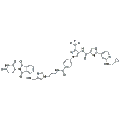
KTX-951 is a selective IRAK4 degrader that employs a PROTAC mechanism to facilitate targeted degradation of IRAK4 and IMiD substrates, including Ikaros and Aiolos. With a Kd of 3.5 nM and DC50 values of 13 nM for IRAK4, Ikaros, and Aiolos, KTX-951 demonstrates potent biological activity. It also exhibits an IC50 of 35 nM against OCl-Ly10 CTG, indicating its potential use in antitumor research applications.
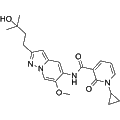
IRAK4-IN-33 is a selective and potent inhibitor of interleukin-1 receptor-associated kinase 4 (IRAK4), exhibiting an IC50 of 0.36 nM. This compound effectively disrupts the pro-inflammatory signaling pathway associated with IRAK4, leading to decreased release of inflammatory cytokines such as TNFα and IFNα. IRAK4-IN-33 demonstrates minimal inhibition of the hERG channel, with an IC50 greater than 30 μM, making it a valuable tool for studying inflammation and immunological disorders, including rheumatoid arthritis.
Out of stock
All 3 sizes
GLPG4471 is a selective inhibitor of IRAK4, demonstrating an IC50 of 1.7 nM. It exhibits potent inhibition of cytokine secretion, including TNFα and IFNα, in both cellular and whole blood assays. Notably, GLPG4471 shows significant therapeutic activity in a mouse model of collagen-induced arthritis, making it a valuable tool for researching inflammatory conditions such as arthritis.
Out of stock
All 3 sizes