STING

STING agonists and inhibitors act on an adaptor protein of the cytosolic DNA sensing pathway. Stimulator of interferon genes (STING) was described in 2008 as an endoplasmic reticulum adaptor needed for innate immune signaling and type I interferon induction. STING binds cyclic dinucleotides directly, both bacterial molecules such as cyclic di-GMP and the mammalian second messenger made by cyclic GMP-AMP synthase (cGAS) once it detects cytosolic DNA. Agonists listed here include 2',3'-cGAMP, Cyclic-di-GMP, ADU-S100 disodium salt (MIW815 disodium salt) and numbered compounds such as STING agonist-1. Inhibitors include H-151 and the mouse-directed C-176 and C-178, which belong to a class of covalent compounds that modify a cysteine of the transmembrane region.

Items 26-42 of 42

  • STING ligand-2
    Cat. No.
    A65601

    STING ligand-2

    STING ligand-2 is a selective ligand for the stimulator of interferon genes (STING) pathway. This compound is integral in the development of PROTAC degraders, specifically STING-IN-10, enabling targeted protein degradation. Its key biological activity is the enhancement of immune responses, making it valuable for research in immunotherapy and cancer treatment applications.

    Out of stock

    All 3 sizes
  • C-di-IMP
    Cat. No.
    A65605

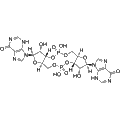
    C-di-IMP

    Synonyms: Cyclic-di-IMP

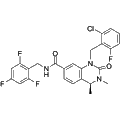
    C-di-IMP (Cyclic-di-IMP) is a small molecule that acts as a stimulator of the STING (Stimulator of Interferon Genes) pathway. It promotes immune activation and has significant implications in the study of cancer immunotherapy. This compound is valuable for research aimed at enhancing anti-tumor immunity and understanding the role of STING in modulating immune responses.

    25 mg
    $2,285.00
    50 mg
    $2,935.00
    All 3 sizes
  • STING agonist-11
    Cat. No.
    A65607

    STING agonist-11

    STING agonist-11 (Compound 92) is a potent small molecule cyclic urea that selectively activates the stimulator of interferon genes (STING) pathway. With an EC50 of 18 nM, it enhances the immune response, making it a valuable tool in immunotherapy research. Its ability to modulate STING activity positions it for potential applications in cancer treatment and infectious disease models.

    25 mg
    $1,800.00
    50 mg
    $2,285.00
    All 3 sizes
  • STING agonist-31
    Cat. No.
    A65608

    STING agonist-31

    STING agonist-31 is a potent stimulator of the STING pathway, exhibiting EC50 values of 0.24 μM for human STING (h-STING) and 39.51 μM for mouse STING (m-STING). This compound demonstrates significant antitumor activity, making it an important tool for cancer research. It is suitable for studying the mechanisms of innate immunity and potential therapeutic applications in oncology.

    Out of stock

    All 3 sizes
  • STING agonist-27
    Cat. No.
    A65609

    STING agonist-27

    STING Agonist-27 is a non-nucleotide small-molecule compound designed to activate the STING (Stimulator of Interferon Genes) pathway. This agonist showcases significant biological activity against various strains of SARS-CoV, making it valuable for research in antiviral mechanisms and immune modulation. Its application in studies targeting STING activation provides insights into therapeutic strategies for combating viral infections and enhancing innate immunity.

    Out of stock

    All 3 sizes
  • Antitumor agent-114
    Cat. No.
    A65610

    Antitumor agent-114

    Antitumor agent-114 is a potent stimulator of interferon genes (STING) agonist. It effectively activates immune responses, leading to reduced tumor volume in preclinical mouse models of breast cancer. This compound is valuable for research in immunology and cancer therapy, contributing insights into immune modulation and tumor microenvironment interactions.

    Out of stock

    All 3 sizes
  • Parent CDN
    Cat. No.
    A65620

    Parent CDN

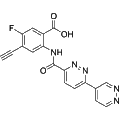
    Parent CDN is a cyclic dinucleotide that acts as a Stimulator of Interferon Genes (STING) agonist. It has demonstrated significant anti-tumor activity by enhancing the innate immune response. This compound is utilized in research aimed at understanding immune modulation and cancer immunotherapy.

    Out of stock

    All 3 sizes
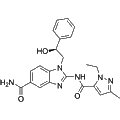
  • (S)-2-(1-Ethyl-3-methyl-1H-pyrazole-5-carboxamido)-1-(2-hydroxy-2-phenylethyl)-1H-benzo[d]imidazole-5-carboxamide
    Cat. No.
    A65623

    (S)-2-(1-Ethyl-3-methyl-1H-pyrazole-5-carboxamido)-1-(2-hydroxy-2-phenylethyl)-1H-benzo[d]imidazole-5-carboxamide

    (S)-2-(1-Ethyl-3-methyl-1H-pyrazole-5-carboxamido)-1-(2-hydroxy-2-phenylethyl)-1H-benzo[d]imidazole-5-carboxamide is a potent STING (stimulator of interferon genes) agonist. It exhibits a significant inhibitory effect on 3H-cGAMP binding to STING, with an IC50 value of 14 μM. This compound is valuable for research applications in tumor biology and immune response modulation, particularly in the context of cancer immunotherapy.

    Out of stock

    All 3 sizes
  • Clonixeril
    Cat. No.
    A65625

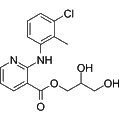
    Clonixeril

    Synonyms: NSC 335504

    Clonixeril (NSC 335504) is a non-nucleotide modulator of human STING (hSTING), exhibiting a unique dual mechanism of action. It acts as a weak agonist at micromolar concentrations while demonstrating antagonistic properties of the hSTINGWT pathway at low femtomolar and attomolar levels. Clonixeril effectively reduces hSTING oligomerization, proving useful in elucidating the complexities of STING signaling and its role in immune responses. This compound serves as a valuable tool for research in immunology and drug discovery targeting STING-related pathways.

    Out of stock

    All 3 sizes
  • STING agonist-43
    Cat. No.
    A65628

    STING agonist-43

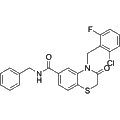
    STING Agonist-43 is a selective STING (Stimulator of Interferon Genes) agonist that activates the cGAMP-dependent STING signaling pathway, with an EC50 of 20.53 μM. This compound enhances STING oligomerization, leading to increased activation and subsequent immune response. In preclinical studies, STING agonist-43 demonstrated antitumor efficacy in a mouse melanoma model, making it a valuable tool for investigating cancer immunity and the potential for immunotherapeutic strategies.

    Out of stock

    All 3 sizes
  • STING agonist-34
    Cat. No.
    A65629

    STING agonist-34

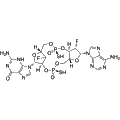
    STING agonist-34 is a potent stimulator of the STING pathway, exhibiting an IC50 value of 1.15 μM and an EC50 value of 0.38 μM in THP1 cells. This compound activates the cGAS-STING signaling pathway, promoting type I interferon production and enhancing immune responses. STING agonist-34 is applicable in cancer research and immunotherapy studies, offering potential insights into tumor microenvironments and therapeutic strategies against malignancies.

    1 mg
    $285.00
    5 mg
    $900.00
    All 3 sizes
  • STING agonist-25
    Cat. No.
    A65630

    STING agonist-25

    STING agonist-25 (CF505) is a non-nucleotide small-molecule activator of the Stimulator of Interferon Genes (STING). This compound enhances the phosphorylation of STING, TBK1, and IRF3, leading to elevated levels of pro-inflammatory cytokines such as IFN-β, IL-6, CXCL-10, TNF-α, ISG-15, and CCL-5 in tumor cells. STING agonist-25 shows potential in antiviral research, particularly against strains of SARS-CoV.

    Out of stock

    All 3 sizes
  • STING agonist-10
    Cat. No.
    A65632

    STING agonist-10

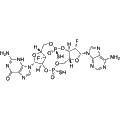
    STING agonist-10 is a potent small molecule cyclic urea that activates the Stimulator of Interferon Genes (STING) pathway, with an EC50 of 2600 nM. This compound enhances the immune response by stimulating the production of type I interferons, making it a valuable tool in immunotherapy research. Its ability to modulate STING activity holds potential for applications in the treatment of various cancers and infectious diseases.

    25 mg
    $1,800.00
    50 mg
    $2,285.00
    All 3 sizes
  • Ulevostinag (isomer 2)
    Cat. No.
    A65636

    Ulevostinag (isomer 2)

    Synonyms: MK-1454 (isomer 2)

    Ulevostinag (isomer 2) is a selective STING (Stimulator of Interferon Genes) agonist. It activates the STING pathway, leading to enhanced production of type I interferons and pro-inflammatory cytokines. This compound is primarily utilized in research focused on cancer immunotherapy, infectious diseases, and autoimmune disorders to investigate the therapeutic potential of STING activation in modulating immune responses.

    Out of stock

    All 3 sizes
  • STING modulator-7
    Cat. No.
    A65639

    STING modulator-7

    STING modulator-7 is a potent modulator of the stimulator of interferon genes (STING), enhancing the signaling pathway associated with innate immune responses. This compound exhibits significant biological activity in activating STING-dependent pathways, promoting type I interferon production and immune cell activation. It is primarily utilized in research applications focused on cancer immunotherapy, infectious disease models, and studies of immune system regulation.

    1 mg
    $55.00
    5 mg
    $130.00
    All 6 sizes
  • Ulevostinag (isomer 3)
    Cat. No.
    A65640

    Ulevostinag (isomer 3)

    Synonyms: MK-1454 (isomer 3)

    Ulevostinag (isomer 3) is a potent STING (Stimulator of Interferon Genes) agonist that functions through the activation of the STING pathway, leading to the induction of type I interferons and other cytokines. This compound has demonstrated significant biological activity in promoting anti-tumor immune responses, making it an essential tool for cancer immunotherapy research. Its ability to modulate immune signaling pathways positions Ulevostinag (isomer 3) as a valuable reagent in the study of immune activation and anti-cancer strategies.

    Out of stock

    All 3 sizes
  • Ulevostinag (isomer 4)
    Cat. No.
    A65641

    Ulevostinag (isomer 4)

    Synonyms: MK-1454 (isomer 4)

    Ulevostinag (isomer 4) is a potent STING (Stimulator of Interferon Genes) agonist that activates the STING signaling pathway, leading to the production of type I interferons and other pro-inflammatory cytokines. This compound enhances the immune response, making it valuable for research in cancer immunotherapy and infectious disease. Ulevostinag (isomer 4) serves as an important tool for studying STING-mediated pathways and their role in immune modulation.

    Out of stock

    All 3 sizes

Items 26-42 of 42

Added to your cart

View Cart Checkout

    Loading...