Phospholipids

Phospholipids, mainly glycerophospholipids, form cell membrane bilayers and give rise to lipid signaling mediators. Each glycerophospholipid carries fatty acyl or ether-linked chains on a glycerol backbone and a phosphate-containing head group. Egg phosphatidylcholines, a natural mixture of phosphatidylcholine species, are commonly used to prepare model membranes and vesicles. sn-Glycero-3-phosphocholine is the deacylated backbone of phosphatidylcholine and a water-soluble metabolite of choline metabolism. Oxidized phospholipids such as POVPC arise when polyunsaturated acyl chains in membranes and lipoproteins are oxidized. 2-O-Methyl PAF C-16 is an ether lipid analog of platelet-activating factor (PAF). A few compounds, such as the nucleotide 5-PA-dUTP, are phosphate-containing reagents rather than phospholipids.

6 Items

  • 1-Stearoyl-2-15(S)-Hpete-Sn-Glycero-3-Pe
    Cat. No.
    A27013

    1-Stearoyl-2-15(S)-Hpete-Sn-Glycero-3-Pe

    Synonyms: 1-Stearoyl-2-15(S)-HpETE-sn-glycero-3-phosphoethanolamine; 15(S)-HpETE-SAPE; 15(S)-hydroperoxyeicostetraenoic acid-SAPE

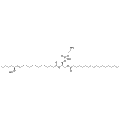
    1-Stearoyl-2-15(S)-HpETE-sn-glycero-3-Pe is a phospholipid featuring stearic acid at the sn-1 position and 15(S)-HpETE at the sn-2 position. This compound is generated through the oxidation of 1-stearoyl-2-arachidonoyl-sn-glycero-3-Pe via the enzyme 15-lipoxygenase. It is shown to enhance ferroptotic cell death in wild-type and Acsl4 knockout Pfa1 mouse embryonic fibroblasts when treated with the GPX4 inhibitor RSL3. Its unique properties make it a valuable reagent for studying ferroptosis and lipid metabolism in cellular models.

    0.05 mg
    $230.00
    0.1 mg
    $430.00
    All 2 sizes
  • rac-3-Hexadecanamido-2-methoxypropan-1-ol phosphocholine hydrate
    Cat. No.
    A76342

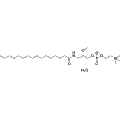
    rac-3-Hexadecanamido-2-methoxypropan-1-ol phosphocholine hydrate

    Rac-3-Hexadecanamido-2-methoxypropan-1-ol phosphocholine hydrate is a phospholipid compound that acts as an inhibitor of Protein Kinase C. This reagent is pertinent for studies investigating lipid signaling pathways and cellular processes influenced by kinase activity. Its role in modulating protein interactions makes it significant for research in cellular signaling and membrane biochemistry.

    5 mg
    $180.00
    25 mg
    $1,275.00
    All 4 sizes
  • 1,2-Dilinoleoyl phosphatidylinositol
    Cat. No.
    A77244

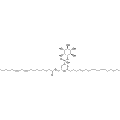
    1,2-Dilinoleoyl phosphatidylinositol

    1,2-Dilinoleoyl phosphatidylinositol serves as a substrate for Phosphatidylinositol-4-phosphate 5-kinase (PI4P5K) isoforms α, β, and γ. This phosphatidylinositol derivative is essential in studying PI4P5K activity in vitro, contributing to our understanding of signaling pathways involving phosphoinositides. Its application extends to research on lipid metabolism and membrane dynamics in cellular processes.

    Out of stock

    All 3 sizes
  • 18:1 PE-Benzylguanine ammonium
    Cat. No.
    A89591

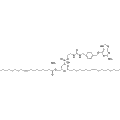
    18:1 PE-Benzylguanine ammonium

    18:1 PE-Benzylguanine ammonium is a lipid that serves as a reactive substrate for SNAP-tag protein labeling. This compound facilitates the covalent attachment of proteins to lipid membranes, enabling the study of protein localization and dynamics in live cells. It is particularly useful in applications such as cellular imaging, protein tracking, and the investigation of lipid-protein interactions.

    Out of stock

    All 3 sizes
  • 08:0 Lyso PC
    Cat. No.
    A89824

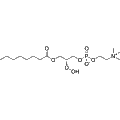
    08:0 Lyso PC

    Synonyms: 1-Octanoyl-sn-glycero-3-phosphocholine

    08:0 Lyso PC (1-Octanoyl-sn-glycero-3-phosphocholine) is a lysolecithin that serves as a substrate for Phospholipase A2 enzymatic activity. This compound is utilized in studies focusing on lipid metabolism and membrane dynamics, as well as investigations into inflammatory processes. Its hydrolysis by Phospholipase A2 makes it valuable for research into signaling pathways and cell membrane composition.

    1 mg
    $190.00
    5 mg
    $485.00
    All 3 sizes
  • Echiguanine A
    Cat. No.
    B21862

    Echiguanine A

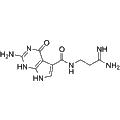
    Echiguanine A is a potent inhibitor of phosphatidylinositol 4-kinase II alpha (PI4KIIα), demonstrating an IC50 of 0.04 μg/mL. This compound effectively inhibits the enzymatic activity of phosphatidylinositol 4-kinase in cell membrane extracts, making it a valuable tool for studying lipid signaling pathways. Echiguanine A is particularly relevant in cancer research, where PI4KIIα modulation may influence tumor cell growth and proliferation.

    Out of stock

    All 3 sizes

6 Items

Added to your cart

View Cart Checkout

    Loading...