Beta-secretase (BACE)

Beta-secretase (BACE) inhibitors block the aspartic protease that starts the production of amyloid-β peptides. In 1999 beta-site amyloid precursor protein cleaving enzyme 1 (BACE1) was identified as a transmembrane aspartic protease with β-secretase activity. An independent study in the same year purified and cloned the enzyme from human brain. BACE1 cleaves amyloid precursor protein (APP) at the β-site, and γ-secretase then releases amyloid-β, the main peptide of Alzheimer disease plaques. Verubecestat, lanabecestat and LY2886721 are BACE1 inhibitors used to study amyloid-β formation in cells and animal models. LY2811376, AMG-8718 and (Rac)-AZD3839 are further examples for structure-activity and selectivity work. Related compounds for the same pathway are listed under Amyloid-β and γ-Secretase.

1 Item

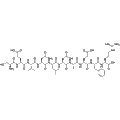
  • SEVNLDAEFR
    Cat. No.
    A78500

    SEVNLDAEFR

    SEVNLDAEFR is a specific substrate for the beta-site amyloid precursor protein cleaving enzyme 1 (BACE1). This peptide is utilized in biochemical assays to study BACE1 activity and amyloid beta peptide generation, which are crucial in Alzheimer's disease research. Its application in research facilitates the investigation of potential therapeutic strategies targeting BACE1-mediated pathways.

    Out of stock

    All 3 sizes

1 Item

Added to your cart

View Cart Checkout

    Loading...