- Cat. No.
- A17391
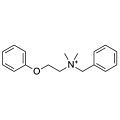
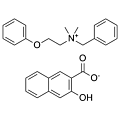
Bephenium hydroxynaphthoate
Bephenium hydroxynaphthoate is an anthelmintic agent formerly used in the treatment of hookworm infections and ascariasis; B-type AChR activator.
Search by product name, CAS, target or catalog number. Press Down Arrow to reach product suggestions, Tab to move between links, and Escape to close suggestions.
Nicotinic acetylcholine receptor (nAChR) agonists, antagonists and modulators act on ligand-gated cation channels. Each receptor is a pentamer of subunits arranged around a central pore that opens when acetylcholine binds. A refined structure of the Torpedo receptor at 4 Å resolution, published in 2005, resolved its ligand-binding, membrane and cytoplasmic regions. Muscle-type receptors mediate neuromuscular transmission, while neuronal subtypes such as α7 and α4β2 are studied in attention, memory and nicotine dependence. Agonists include PNU 282987, which is selective for α7, and the partial agonist varenicline. PNU-120596, described in 2005, is a positive allosteric modulator of α7 that enhances acetylcholine-evoked currents. Vecuronium bromide, a neuromuscular blocking agent, acts on the muscle-type receptor.
Bephenium hydroxynaphthoate is an anthelmintic agent formerly used in the treatment of hookworm infections and ascariasis; B-type AChR activator.
Bephenium is an anthelmintic agent formerly used in the treatment of hookworm infections and ascariasis; B-type AChR activator.
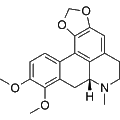
Crebanine is an isoquinoline-like alkaloid that acts as an apoptosis inducer through antagonism of the α7-nAChR, exhibiting an IC50 value of 19.1 μM. This compound suppresses cancer cell proliferation, migration, and invasion while triggering a reactive oxygen species (ROS) burst that promotes apoptosis. Additionally, Crebanine modulates critical signaling pathways including AKT/FoxO3a, NF-κB, and MAPK, and demonstrates antioxidant properties in microglia by reducing ROS and lipid peroxidation. With applications in studying hepatocellular carcinoma, cerebral ischemia, and Alzheimer's disease, Crebanine may also ameliorate cognitive deficits and ischemia-reperfusion brain damage in rodent models.
Synonyms: Wgx-50
Lemairamin, an α7nAChR activator, is a hydroxylamine compound derived from the pericarps of Zanthoxylum species. This compound is known to stimulate the expression of anti-inflammatory cytokine IL-10 and proopiomelanocortin (POMC), while concurrently reducing Akt activity. Lemairamin has demonstrated efficacy in attenuating dextran sulfate sodium (DSS)-induced intestinal inflammation and alleviating pain hypersensitivity, making it a valuable reagent for research in inflammation and pain modulation.
Out of stock
All 3 sizes
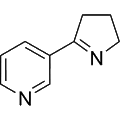
Myosmine is a specific alkaloid derived from tobacco that acts as an activator of nicotinic acetylcholine receptors (nAChR). It exhibits a relatively low affinity for the α4β2 nAChR subtype, with a Ki value of 3300 nM. Myosmine is utilized in research to explore the pharmacological effects of nAChR modulation and its implications in neurobiology and addiction studies.
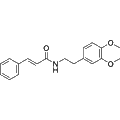
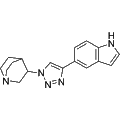
IND8 is an activator of the α7 nicotinic acetylcholine receptor (nAChR), known for its cognitive enhancement properties. This compound has demonstrated efficacy in improving spatial working memory, episodic short-term memory, and spatial long-term memory in amnesic mice induced by Scopolamine. IND8 is particularly relevant for research on Alzheimer's disease and can be utilized in studies investigating interventions for cognitive decline.