nAChR

Nicotinic acetylcholine receptor (nAChR) agonists, antagonists and modulators act on ligand-gated cation channels. Each receptor is a pentamer of subunits arranged around a central pore that opens when acetylcholine binds. A refined structure of the Torpedo receptor at 4 Å resolution, published in 2005, resolved its ligand-binding, membrane and cytoplasmic regions. Muscle-type receptors mediate neuromuscular transmission, while neuronal subtypes such as α7 and α4β2 are studied in attention, memory and nicotine dependence. Agonists include PNU 282987, which is selective for α7, and the partial agonist varenicline. PNU-120596, described in 2005, is a positive allosteric modulator of α7 that enhances acetylcholine-evoked currents. Vecuronium bromide, a neuromuscular blocking agent, acts on the muscle-type receptor.

Items 26-28 of 28

  • AZD0328
    Cat. No.
    A67738

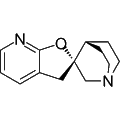
    AZD0328

    AZD0328 is a selective partial agonist of the α7 nicotinic acetylcholine receptor (nAChR). It is known to enhance midbrain dopaminergic neuronal activity and increase cortical dopamine levels, contributing to improved cognitive performance. This compound is primarily used in research related to cognitive disorders and neurological modeling.

    25 mg
    $1,275.00
    50 mg
    $1,625.00
    All 3 sizes
  • BMS-933043
    Cat. No.
    A67739

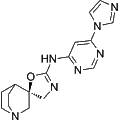
    BMS-933043

    BMS-933043 is a selective partial agonist of the α7 nicotinic acetylcholine receptor (nAChR). This compound has been shown to mitigate cognitive impairment in murine models, making it a valuable tool for research focused on cognitive dysfunction, particularly in the context of schizophrenia. Its unique mechanism facilitates the exploration of neuropsychological pathways and potential therapeutic interventions.

    25 mg
    $1,655.00
    50 mg
    $2,115.00
    All 3 sizes
  • 3-Pyr-Cytisine
    Cat. No.
    A67750

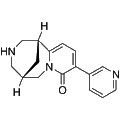
    3-Pyr-Cytisine

    Synonyms: 3-Pyr-Cyt

    3-Pyr-Cytisine is a cytisine derivative that functions as a partial agonist of the α4β2 nicotinic acetylcholine receptor (nAChR). This compound exhibits weak agonistic properties, making it of interest in antidepressant research. Its modulation of α4β2 nAChR may provide insights into therapeutic strategies for mood disorders and further understanding of cholinergic signaling pathways.

    Out of stock

    All 3 sizes

Items 26-28 of 28

Added to your cart

View Cart Checkout

    Loading...