nAChR

Nicotinic acetylcholine receptor (nAChR) agonists, antagonists and modulators act on ligand-gated cation channels. Each receptor is a pentamer of subunits arranged around a central pore that opens when acetylcholine binds. A refined structure of the Torpedo receptor at 4 Å resolution, published in 2005, resolved its ligand-binding, membrane and cytoplasmic regions. Muscle-type receptors mediate neuromuscular transmission, while neuronal subtypes such as α7 and α4β2 are studied in attention, memory and nicotine dependence. Agonists include PNU 282987, which is selective for α7, and the partial agonist varenicline. PNU-120596, described in 2005, is a positive allosteric modulator of α7 that enhances acetylcholine-evoked currents. Vecuronium bromide, a neuromuscular blocking agent, acts on the muscle-type receptor.

1 Item

  • Crebanine
    Cat. No.
    A26202

    Crebanine

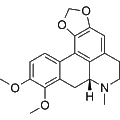
    Crebanine is an isoquinoline-like alkaloid that acts as an apoptosis inducer through antagonism of the α7-nAChR, exhibiting an IC50 value of 19.1 μM. This compound suppresses cancer cell proliferation, migration, and invasion while triggering a reactive oxygen species (ROS) burst that promotes apoptosis. Additionally, Crebanine modulates critical signaling pathways including AKT/FoxO3a, NF-κB, and MAPK, and demonstrates antioxidant properties in microglia by reducing ROS and lipid peroxidation. With applications in studying hepatocellular carcinoma, cerebral ischemia, and Alzheimer's disease, Crebanine may also ameliorate cognitive deficits and ischemia-reperfusion brain damage in rodent models.

    1 mg
    $35.00
    5 mg
    $80.00
    All 8 sizes

1 Item

Added to your cart

View Cart Checkout

    Loading...