Purinergic (P2Y) Receptors

P2Y receptor antagonists and agonists act on purinergic G protein-coupled receptors for extracellular nucleotides. The eight human P2Y receptors respond to adenosine diphosphate (ADP), adenosine triphosphate (ATP), uridine triphosphate (UTP) or related nucleotides. The first member, now called P2Y1, was cloned from chick brain in 1993 as a G protein-coupled ATP receptor. In 2001 the platelet ADP receptor P2Y12 was identified as the target of thienopyridine antithrombotic compounds. Clopidogrel hydrogen sulfate and prasugrel are thienopyridine prodrugs, whereas ticagrelor, cangrelor and AZD1283 block P2Y12 without metabolic activation. BPTU is an allosteric P2Y1 antagonist, and MRS 2578 blocks P2Y6, a receptor activated by uridine diphosphate. Ligand-gated nucleotide channels are listed separately under the sibling category P2X Receptor.

1 Item

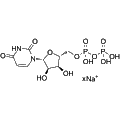
  • Uridine 5'-diphosphate sodium salt
    Cat. No.
    A37719

    Uridine 5'-diphosphate sodium salt

    Uridine 5'-diphosphate sodium salt is a specific modulator of P2Y receptors, acting as a potent native agonist for the P2Y6 receptor with an EC50 of 300 nM and a pEC50 of 6.52, while also serving as a powerful antagonist at the P2Y14 receptor (pEC50 of 7.28). This endogenous metabolite plays a crucial role in the glucuronidation process of diverse substrates and is integral to nucleic acid biosynthesis, making it a valuable reagent in biochemical and pharmacological research focused on nucleotide signaling pathways and metabolic processes.

    100 mg
    $20.00
    250 mg
    $35.00
    All 7 sizes

1 Item

Added to your cart

View Cart Checkout

    Loading...