Proteasome

Proteasome inhibitors block the 26S proteasome, the protease complex that degrades ubiquitin-tagged proteins. Its 20S core carries caspase-like, trypsin-like and chymotrypsin-like active sites on β subunits with an N-terminal threonine. In 1994, peptide aldehydes including MG-132 were shown to block degradation of most cell proteins. The same inhibitors prevented generation of peptides for major histocompatibility complex (MHC) class I molecules. Lactacystin, a Streptomyces metabolite, modifies the catalytic threonine of specific subunits. Later chemotypes include the boronates bortezomib and ixazomib and the epoxyketones carfilzomib and epoxomicin, which bind irreversibly. ONX-0914 prefers low molecular mass polypeptide 7 (LMP7), a subunit of the immunoproteasome.

2 Items

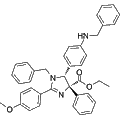
  • TCH-165
    Cat. No.
    A77297

    TCH-165

    TCH-165 is a small molecule proteasome assembly modulator that enhances the levels of the 20S proteasome. This compound facilitates 20S-mediated protein degradation, making it a valuable tool for studying protein turnover and homeostasis. TCH-165 is applicable in research involving cancer biology, neurodegenerative diseases, and cellular stress responses.

    1 mg
    $30.00
    5 mg
    $70.00
    All 7 sizes
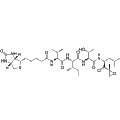
  • Biotin-epoxomicin
    Cat. No.
    A77319

    Biotin-epoxomicin

    Biotin-epoxomicin is a proteasome subunit binder that serves as an affinity reagent for the identification and purification of proteasomal catalytic subunits. This compound enables the affinity purification of active subunits, facilitating their subsequent analysis via liquid chromatography-mass spectrometry (LC-MS). Biotin-epoxomicin is particularly useful in research applications focused on solid tumors, such as those derived from B16 melanoma, providing insights into proteasome function in cancer biology.

    1 mg
    $50.00
    5 mg
    $125.00
    All 3 sizes

2 Items

Added to your cart

View Cart Checkout

    Loading...