- Cat. No.
- A18680
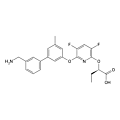
ZK824859
ZK824859 is an oral available and selective urokinase plasminogen activator (uPA) inhibitor with IC50s of 79 nM, 1580 nM and 1330 nM for human uPA, tPA, and plasmin, respectively.
Search by product name, CAS, target or catalog number. Press Down Arrow to reach product suggestions, Tab to move between links, and Escape to close suggestions.
Serine protease inhibitors act on peptidases that cleave proteins with a serine, histidine and aspartate triad. The family spans digestive enzymes such as trypsin and chymotrypsin, coagulation factors, kallikreins and neutrophil elastase. Phenylmethylsulfonyl fluoride (PMSF), 4-(2-aminoethyl)benzenesulfonyl fluoride (AEBSF HCl) and the polypeptide aprotinin are broad inhibitors often added to lysis buffers. Sivelestat sodium salt and alvelestat inhibit neutrophil elastase, which is also covered by the neighboring Elastases category. Camostat mesylate and nafamostat mesylate act on transmembrane serine protease 2 (TMPRSS2) and related trypsin-like enzymes. In 2020, camostat mesylate was reported to block TMPRSS2-dependent cell entry of severe acute respiratory syndrome coronavirus 2 (SARS-CoV-2).
ZK824859 is an oral available and selective urokinase plasminogen activator (uPA) inhibitor with IC50s of 79 nM, 1580 nM and 1330 nM for human uPA, tPA, and plasmin, respectively.
Streptokinase, derived from β-hemolytic streptococcus (Lancefield Group C), acts as a plasminogen activator. This enzyme is critical in promoting fibrinolysis, making it an important tool for studying blood-clotting disorders. Additionally, Streptokinase is utilized in research focused on enhancing reperfusion blood flow following coronary artery occlusion, contributing to insights into cardiovascular therapeutics and interventions.
Synonyms: Actilyse; Activase
Alteplase is a recombinant tissue plasminogen activator that acts primarily as a thrombolytic agent by converting plasminogen to plasmin, which leads to fibrinolysis. This compound is crucial in the management of acute ischemic stroke, pulmonary embolism, and acute myocardial infarction. Alteplase is also utilized for the treatment of occluded catheters, facilitating the restoration of vascular patency in clinical settings.
Synonyms: rEK
Recombinant enterokinase (rEK) is a serine protease that functions as the physiological activator of trypsinogen, converting it into its active form, trypsin. This enzyme is essential for various biochemical assays and applications involving protein digestion and processing. Recombinant enterokinase is widely used in research focused on proteolytic processes, enzyme activation, and protein purification techniques.
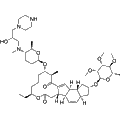
LM2I is an argininosuccinate synthase (ASS1) enzyme activator derived from Spinosyn A. This compound demonstrates significant antiproliferative activity against various colorectal cancer cell lines and xenograft tumors. LM2I effectively inhibits colorectal cancer cell growth through the EGFR signaling pathway, making it a valuable tool for research in cancer biology and therapeutic development targeting ASS1.
Synonyms: TNK-tPA
Tenecteplase is a genetically modified tissue plasminogen activator, designed to enhance thrombolytic efficacy. By introducing mutations in three specific gene loci, Tenecteplase facilitates the conversion of plasminogen to plasmin, promoting fibrinolysis. This reagent is primarily employed in research applications related to acute ischemic stroke, enabling investigations into treatment strategies and mechanisms of thrombus resolution.
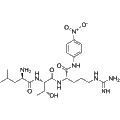
D-Leu-Thr-Arg-pNA is a specific substrate for γ-Tryptase, enabling the quantitative assessment of γ-Tryptase activity in biochemical assays. This compound is valuable for studying the inhibition effects of small molecule inhibitors on γ-Tryptase, facilitating research in areas such as allergic responses and inflammation. Its application in enzyme activity assays makes it essential for exploring therapeutic interventions related to protease-mediated diseases.
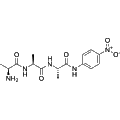
AAA-pNA is a chromogenic substrate specifically designed for the enzyme Tripeptidyl-peptidase II. This compound enables the quantification of Tripeptidyl-peptidase II activity through colorimetric analysis, facilitating studies on enzyme kinetics and functionality. It is useful in various research applications, including investigations into proteolytic processes and the role of Tripeptidyl-peptidase II in biological systems.
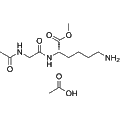
Ac-Gly-Lys-OMe acetate is a substrate for urokinase, facilitating the study of its enzymatic activity. This compound is essential for assessing the effects of small molecule inhibitors on urokinase functionality, providing valuable insights in biochemical and pharmacological research related to fibrinolysis and tissue remodeling.
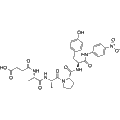
Suc-AAPY-pNA is an oligopeptide compound that serves as a substrate for various proteases. It undergoes hydrolysis at the peptide bond between tyrosine and p-nitroaniline, resulting in the release of p-nitroaniline, which can be quantified by its absorption peak at OD410. This reagent is utilized in preclinical assays to assess the activity of acidic, neutral, and alkaline proteases, making it valuable for studies on proteolytic processes.
Out of stock
All 3 sizes
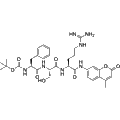
Boc-Phe-Ser-Arg-AMC is a trypsin substrate featuring a Boc protecting group. Upon cleavage by trypsin, this peptide substrate releases the fluorescent compound AMC, enabling the measurement of trypsin activity through fluorescence. It is an effective tool for studying trypsin function and kinetics in various biochemical assays and research applications.
Out of stock
All 3 sizes
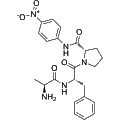
Ala-Phe-Pro-pNA is a chromogenic substrate specifically designed for tripeptidyl peptidase. This substrate allows for the assessment of tripeptidyl peptidase activity by producing a colorimetric change upon cleavage. Its properties make it a valuable tool for studying protease functions and for applications in biochemical assays involving tripeptidyl peptidases.
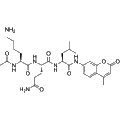
Ac-KQL-AMC is a fluorogenic substrate designed to quantify Trypsin-like activity. Upon cleavage by the proteasome, it produces a detectable fluorescence, making it a valuable tool for studying proteolytic activities in various biological contexts. This compound is particularly useful in research applications focused on protein degradation and turnover mechanisms.
Out of stock
All 3 sizes
Fluorescent Substrate for Subtilisin is designed to specifically detect the enzymatic activity of subtilisin, a bacterial serine protease. This substrate provides a sensitive and quantifiable method to evaluate subtilisin activity in various biological assays. It is suitable for applications in enzyme activity studies and protease-related research.
Out of stock
All 3 sizes
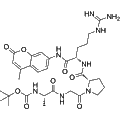
Boc-Ala-Gly-Pro-Arg-AMC is a fluorogenic substrate designed for monitoring protease activity, particularly within serine proteases. This substrate is ideal for assessing enzymatic function in research applications involving protease activity, such as studying the oligopeptide enzyme B of Trypanosoma brucei. Its fluorescence allows for sensitive detection of enzymatic events, making it a valuable tool in biochemical and molecular biology studies.
Out of stock
All 3 sizes
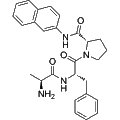
Ala-Phe-Pro-βNA is a substrate for prolyl tripeptidyl aminopeptidase derived from Porphyromonas gingivalis. This compound exhibits potent binding affinity toward H-Ala-Ile-pyrrolidin-2-yl boronic acid, demonstrating Ki values of 88.1 nM for PTP39 and 48.8 nM for the E636A mutant. It is valuable for research applications involving enzyme activity assays and studies of proteolytic processes.
Out of stock
All 3 sizes
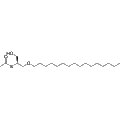
2-thioacetyl MAGE is a colorimetric substrate specifically designed for the serine hydrolase enzyme KIAA1363. This compound facilitates the assessment of KIAA1363 enzymatic activity, enabling researchers to study its biological functions and implications in various cellular processes. Its application in biochemical assays contributes to the understanding of KIAA1363's role in health and disease.
Out of stock
All 3 sizes
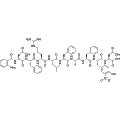
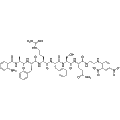
Abz-AFRFSQ-EDDnp is a substrate specifically designed for human kallikrein 6, exhibiting a catalytic efficiency of Kcat/Km = 38667 s-1 mM-1. This compound facilitates the study of kallikrein 6 activity and is instrumental in various biological assays aimed at exploring protease functionalities and related pathways. Its application is essential in research focused on cancer, neurodegenerative diseases, and other physiological processes where kallikrein 6 plays a pivotal role.
Out of stock
All 3 sizes
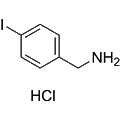
4-Iodobenzylamine hydrochloride is a chemical probe that selectively interacts with serine proteases, including trypsin and urokinase-type plasminogen activator (uPA). This reagent facilitates the study of enzyme binding patterns and can aid in understanding enzymatic roles in various biological processes. Its applications extend to research in protease activity and modulation in disease models.
Synonyms: SAK
Staphylokinase is a plasminogen activator derived from Staphylococcus aureus. This potent enzyme exhibits fibrin-specific thrombolytic activity, facilitating the conversion of plasminogen to plasmin. Staphylokinase is utilized in research focused on fibrinolysis and related cardiovascular studies, offering valuable insights into thrombus resolution mechanisms.
Out of stock
All 3 sizes
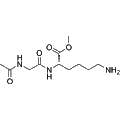
Ac-Gly-Lys-OMe is a substrate for urokinase, primarily utilized to evaluate the enzymatic activity of this serine protease. This reagent is essential for investigating the effects of small molecule inhibitors on urokinase function in various biochemical assays and research applications focused on fibrinolysis and related pathways.