c-MET

c-MET inhibitors act on the receptor tyrosine kinase for hepatocyte growth factor (HGF), also known as scatter factor. MET was first cloned in 1984 as a transforming gene from a chemically transformed human cell line. In 1991 the product of the c-met proto-oncogene was identified as the HGF receptor. HGF binding drives cell scattering, invasion and branching morphogenesis, and MET amplification occurs in several tumor types. Capmatinib and merestinib are MET-focused inhibitors, and tivantinib was first described as an inhibitor that does not compete with adenosine triphosphate. Foretinib and cabozantinib block MET together with vascular endothelial growth factor receptor 2 (VEGFR2). Crizotinib also inhibits anaplastic lymphoma kinase and is listed in the sibling ALK category as well.

5 Items

  • SJF-8240
    Cat. No.
    A24096

    SJF-8240

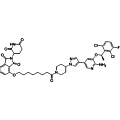
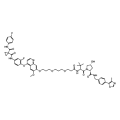
    SJF-8240 (PROTAC 7) is a proteolysis-targeting chimera (PROTAC) designed to selectively degrade the receptor tyrosine kinase c-Met. It induces polyubiquitination and subsequent proteasomal degradation of c-Met, leading to effective inhibition of downstream signaling. SJF-8240 exhibits potent antiproliferative activity in GTL16 gastric cancer cells, with an IC₅₀ of 66.7 nM, making it a promising tool for targeted cancer therapy and c-Met–driven tumor research.

    1 mg
    $162.00
    5 mg
    $486.00
    All 4 sizes
  • PRO-6E
    Cat. No.
    A24836

    PRO-6E

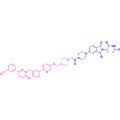
    PRO-6E is a PROTAC that targets Cereblon to induce degradation of the MET protein. It achieves up to 81.9% degradation of MET at 1 μM in MKN-45 cells, effectively inhibiting tumor growth both in vitro and in vivo. Additionally, PRO-6E promotes apoptosis and cell cycle arrest, making it a valuable tool for research on MET-related oncogenic processes.

    5 mg
    $545.00
    10 mg
    $1,005.00
    All 5 sizes
  • PROTAC c-Met Degrader-4
    Cat. No.
    A32285

    PROTAC c-Met Degrader-4

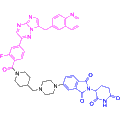
    PROTAC c-Met Degrader-4 is a potent orally active PROTAC designed to target c-MET for degradation. It exhibits remarkable intracellular degradation potency with a DC50 value of less than 0.5 nM and effectively induces cell cycle arrest and apoptosis while inhibiting cell invasion and migration. This compound is particularly useful in cancer research, demonstrating the ability to suppress proliferation and inhibit the growth of various cancers, including non-small cell lung cancer and gastric cancer. In vivo studies also highlight its effectiveness in reducing tumor growth in Hs746T xenograft models.

    Out of stock

    All 3 sizes
  • PROTAC c-Met degrader-1
    Cat. No.
    A34321

    PROTAC c-Met degrader-1

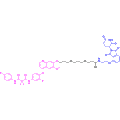
    PROTAC c-Met degrader-1 is a selective and orally active degrader targeting c-Met, exhibiting a DC50 of 6.21 nM. This compound promotes CRBN-dependent ubiquitination and subsequent proteasomal degradation of c-Met, effectively inducing G0/G1 phase arrest in c-Met-dependent cancer cells. Furthermore, PROTAC c-Met degrader-1 demonstrates significant anticancer activity by killing c-Met-dependent cells and inhibiting tumor growth in animal models, making it a valuable tool for research in gastric cancer.

    5 mg
    $535.00
    10 mg
    $880.00
    All 5 sizes
  • PROTAC c-Met degrader-2
    Cat. No.
    A34357

    PROTAC c-Met degrader-2

    PROTAC c-Met degrader-2 is a PROTAC-based degrader that selectively targets c-Met for degradation through the ubiquitin-proteasome pathway, exhibiting a DC50 of 50 nM. This compound employs a unique linkage incorporating a CRBN ligand derived from Thalidomide, facilitating targeted protein degradation. It serves as a valuable tool for researching c-Met-related pathways and their implications in various cancers, enhancing the understanding of therapeutic strategies involving c-Met modulation.

    Out of stock

    All 3 sizes

5 Items

Added to your cart

View Cart Checkout

    Loading...