
- Cat. No.
- A22279
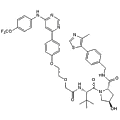
GMB475
GMB-475 is a degrader of BCR-ABL1 tyrosine kinase based on PROTAC, overcoming BCR-ABL1-dependent drug resistance.
In stock
View Details
Search by product name, CAS, target or catalog number. Press Down Arrow to reach product suggestions, Tab to move between links, and Escape to close suggestions.
Bcr-Abl inhibitors target the constitutively active fusion tyrosine kinase encoded by the Philadelphia chromosome. The translocation joins the breakpoint cluster region (BCR) gene to the Abelson tyrosine kinase gene (ABL1) on chromosome 22. Expression of the P210 form of Bcr-Abl in mouse bone marrow cells induced a disease resembling chronic myelogenous leukemia (CML) in 1990. In 1996 imatinib (CGP 57148), listed here as the base and as imatinib mesylate, was reported to inhibit Abl and Bcr-Abl-positive cell growth. Dasatinib, described in 2004, also inhibits Src family kinases and blocks many imatinib-resistant Abl mutants. Nilotinib and bafetinib are further Abl inhibitors, and ponatinib also inhibits the T315I gatekeeper mutant.
GMB-475 is a degrader of BCR-ABL1 tyrosine kinase based on PROTAC, overcoming BCR-ABL1-dependent drug resistance.
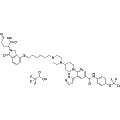
SIAIS100 TFA is a potent PROTAC degrader targeting BCR-ABL, with a DC₅₀ of 2.7 nM. It is a valuable tool for studying BCR-ABL signaling and therapeutic strategies in chronic myeloid leukemia (CML).
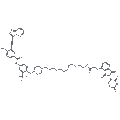
SB1-G-187 is a multifunctional PROTAC designed as a multi-kinase degrader, capable of inducing the selective degradation of multiple kinase targets through the ubiquitin–proteasome system. In addition to its targeted degradation activity, SB1-G-187 features an alkyne functional group, enabling its use as a click chemistry reagent. It can undergo copper-catalyzed azide-alkyne cycloaddition (CuAAC) with azide-containing molecules, allowing for versatile applications in chemical biology, such as probe development, conjugation, and target identification.
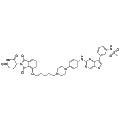
DB0614 is a PROTAC molecule utilizing a cereblon ligand, designed as a selective and potent degrader of NEK9 and other kinases. It induces the degradation of multiple kinases, including ABL1, ABL2, BLK, CDK11B, CDK4, CSK, EPHA3, FER, GAK, LIMK1, MAP3K20, MAP4K1–3, MAP4K5, MAPK14, MAPK7–9, MAPKAPK2/3, NLK, PDIK1L, PTK2B, RIPK1, RPS6KA1/3, SIK2/3, STK35, TNK2, and ULK1. DB0614 is suitable for research involving diseases or disorders driven by aberrant kinase activity.
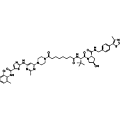
SIAIS178 is a potent and selective PROTAC BCR-ABL degrader that operates through the recruitment of Von Hippel-Lindau (VHL) E3 ubiquitin ligase, achieving an IC50 of 24 nM. This compound effectively induces degradation of the BCR-ABL protein, demonstrating significant anticancer activity. SIAIS178 is suitable for research applications focused on targeted protein degradation in cancer models.
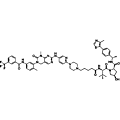
DB1113 is a bifunctional compound designed for targeted protein degradation of various kinases. It effectively induces degradation of ABL1, ABL2, BLK, CDK4, CDK11B, EPHA3, MAPK7, RIPK1, and others, facilitating the investigation of kinase-related signaling pathways. DB1113 is suitable for research focusing on diseases or disorders associated with dysregulated kinase activity, providing a valuable tool for exploring therapeutic interventions in cancer and other conditions.
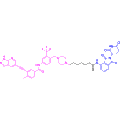
PROTAC BCR-ABL Degrader-2 is a selective degrader targeting the Bcr-AblT315 mutant, with a DC50 of 108.7 nM in Ba/F3 Bcr-AblT315I cells. This compound demonstrates a notable degradation efficacy, achieving degradation rates of 69.89% and 94.23% at concentrations of 100 nM and 300 nM, respectively. Additionally, it shows promising in vivo anti-tumor effects including significant tumor regression and induction of apoptosis in tumor cells, while maintaining a favorable safety profile. PROTAC BCR-ABL Degrader-2 is suitable for research focused on chronic myeloid leukemia (CML).
Out of stock
All 3 sizes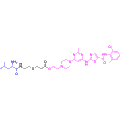
Leu-PEG1-Dasa is an efficient BCR-ABL PROTAC degrader that operates through the N-terminal canonical pathway, demonstrating a DC50 of 0.48 nM. This compound utilizes a single amino acid as the E3 ligase ligand and exhibits significant anti-proliferative effects on K562 cells. Leu-PEG1-Dasa is applicable in the research of chronic myeloid leukemia (CML) and provides insights into targeted degradation mechanisms in cancer therapy.
Out of stock
All 3 sizes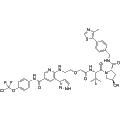
GMB-805 is a potent BCR-Abl PROTAC degrader, demonstrating a DC50 of 30 nM in K562 cells. It effectively induces antiproliferative activity, making it a valuable tool for studying chronic myeloid leukemia. Additionally, GMB-805 exhibits significant anti-tumor efficacy in vivo, coupled with a favorable safety profile, highlighting its potential for therapeutic development.
Out of stock
All 3 sizes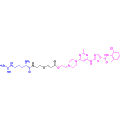
Arg-PEG1-Dasa is a mini-PROTAC designed to selectively degrade BCR-ABL, a key oncogenic driver in chronic myeloid leukemia. It demonstrates potent degradation efficacy with an EC50 of 0.85 nM, and exhibits significant antiproliferative activity in K562 cells, with an IC50 of 0.36 nM. This reagent is valuable for research applications focused on targeted therapies for BCR-ABL-driven malignancies.
Out of stock
All 3 sizes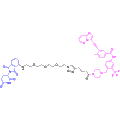
P19P is a BCR-ABL PROTAC degrader that demonstrates a DC50 value of approximately 20 nM for wild-type BCR-ABL protein. It effectively degrades various drug-resistant mutants, including T315I, E255K, H396R, and V468F, and exhibits significant anti-proliferative activity in BaF3-BCR-ABL (T315I) cells, with an IC50 of 13.1 nM against ABL (T315I). P19P is suitable for research applications related to chronic myeloid leukemia and acute lymphoblastic leukemia while showing no inhibition of vascular lumen formation in HUVEC cells.
Out of stock
All 3 sizes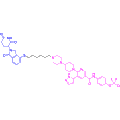
SIAIS100 is a potent BCR-ABL PROTAC degrader, exhibiting a DC50 value of 2.7 nM. This compound facilitates the targeted degradation of the BCR-ABL fusion protein, making it an important tool in the study of chronic myeloid leukemia (CML). Its ability to induce proteolytic degradation offers valuable insights for therapeutic development and understanding disease mechanisms associated with CML.
Out of stock
All 3 sizes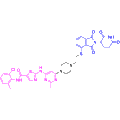
SIAIS056 is a BCR-ABL PROTAC degrader that effectively targets and degrades BCR-ABL fusion proteins, displaying a potent DC50 value of 0.18 nM. It inhibits the BCR-ABL signaling pathway in a time-dependent manner, leading to reduced phosphorylation of BCR-ABL as well as downstream effectors like STAT5 and CRKL in K562 cells. Additionally, SIAIS056 demonstrates the ability to degrade various BCR-ABL resistance mutations and exhibits significant anti-proliferative effects, resulting in marked tumor regression in K562 xenograft models. This compound is valuable for research in leukemia.
Out of stock
All 3 sizes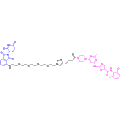
P22D is a BCR-ABL PROTAC degrader designed for targeted protein degradation, exhibiting a DC50 value of approximately 10 nM for the wild-type BCR-ABL protein. This compound effectively inhibits the proliferation of K562 cells harboring the wild-type BCR-ABL, but does not exhibit activity against BaF3-BCR-ABL (T315I) cells. P22D is valuable for research on chronic myeloid leukemia and acute lymphocytic leukemia, offering insights into the mechanisms of resistance and targeted therapies.
Out of stock
All 3 sizes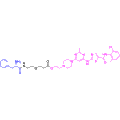
Phe-PEG1-Dasa is a BCR-ABL PROTAC degrader, demonstrating a DC50 value of 1.56 nM. This compound utilizes phenylalanine as the E3 ligase ligand and triggers the N-end rule pathway to facilitate the degradation of target proteins. Phe-PEG1-Dasa effectively suppresses the proliferation of K562 leukemia cells, making it a valuable tool for research into leukemia treatment strategies.
Out of stock
All 3 sizes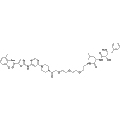
SNIPER(ABL)-020 is a PROTAC compound designed to selectively degrade the BCR-ABL fusion protein through targeted ubiquitin-proteasome pathway engagement. By conjugating Dasatinib, an ABL inhibitor, with Bestatin, an IAP ligand, SNIPER(ABL)-020 effectively promotes the protein's ubiquitination and subsequent degradation. This reagent is valuable for research focused on chronic myeloid leukemia and BCR-ABL related signaling pathways, offering insights into targeted protein degradation mechanisms in cancer therapeutics.