Src

Src inhibitors act on the Src family of non-receptor tyrosine kinases, which relay receptor and adhesion signals. Cellular Src (c-Src) is kept inactive when its Src homology 2 (SH2) domain binds a phosphorylated tyrosine in its C-terminal tail. Src family kinases regulate cell adhesion, migration, proliferation and survival, and they also transmit signals from immune receptors. Dasatinib, bosutinib and saracatinib inhibit both Src and the Abelson tyrosine kinase (Abl). PP2, a pyrazolopyrimidine compound, is a widely used Src family inhibitor in cell signaling studies. Tirbanibulin, first reported as KX2-391, is a further Src inhibitor in this category.

2 Items

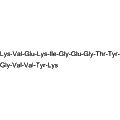
  • Tyrosine Kinase Peptide 1
    Cat. No.
    A34923

    Tyrosine Kinase Peptide 1

    Tyrosine Kinase Peptide 1 serves as a control substrate specifically designed for c-Src assay applications. Its primary mechanism involves interacting with c-Src kinase, facilitating the assessment of kinase activity. This peptide is critical for validating experimental conditions and ensuring accurate measurement of c-Src-mediated phosphorylation events in biological research.

    Out of stock

    All 3 sizes
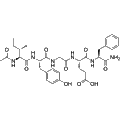
  • p60c-src substrate II
    Cat. No.
    A34954

    p60c-src substrate II

    p60c-src substrate II is a specific pentapeptide substrate designed for the tyrosine kinase pp60c-src. This substrate facilitates the study of tyrosine phosphorylation mediated by pp60c-src, enabling key insights into its role in cell signaling pathways. It is ideally suited for research applications involving cancer biology and other cellular processes regulated by pp60c-src activity.

    Out of stock

    All 3 sizes

2 Items

Added to your cart

View Cart Checkout

    Loading...