
- Cat. No.
- A13877
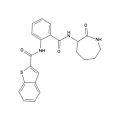
ANA-12
ANA-12 is a TrkB receptor antagonist that demonstrates a 2-site mode of action, preventing activation by BDNF non-competitively.
In stock
View Details
Search by product name, CAS, target or catalog number. Press Down Arrow to reach product suggestions, Tab to move between links, and Escape to close suggestions.
Trk receptor inhibitors act on tropomyosin receptor kinases (Trk), the receptor tyrosine kinases for neurotrophins. Tropomyosin receptor kinases A, B and C (TrkA, TrkB, TrkC) are encoded by the neurotrophic receptor tyrosine kinase genes (NTRK1, NTRK2, NTRK3). In 1991 TrkA was identified as a signal-transducing receptor for nerve growth factor (NGF). In the same year TrkB was shown to bind brain-derived neurotrophic factor (BDNF) and neurotrophin-3. The receptors support neuronal survival and synaptic plasticity, and NTRK1-3 gene fusions are studied in several tumor types. Entrectinib inhibits all three Trk receptors together with c-ros oncogene 1 (ROS1) and anaplastic lymphoma kinase (ALK). AZ 23 targets TrkA and TrkB, whereas ANA-12 is a TrkB inhibitor used to probe BDNF signaling.
ANA-12 is a TrkB receptor antagonist that demonstrates a 2-site mode of action, preventing activation by BDNF non-competitively.
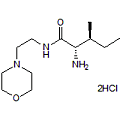
Synonyms: LM11A-31 hydrochloride; LM11A-31
LM11A-31 is a small-molecule p75NTR modulator and proNGF antagonist.
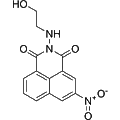
ALE-0540 is a nonpeptidic small molecule that acts as an antagonist of the nerve growth factor receptor. It effectively inhibits the binding of nerve growth factor (NGF) to the receptor tyrosine kinase A (TrkA) and the p75 neurotrophin receptor, with IC50 values of 5.88 μM and 3.72 μM, respectively. This compound is valuable for investigating the underlying mechanisms of pain and developing new therapeutic agents targeting pain pathways.
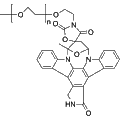
Synonyms: CT327; SNA-120
Pegcantratinib is a selective TRKA antagonist that also exhibits activity against TRKB and TRKC. This compound is valuable for research into CYLD cutaneous syndrome (CCS) and inflammatory dermatoses, including psoriasis and associated pruritus. Its targeted inhibition of TRK receptors makes it a promising tool for studying the underlying mechanisms of these conditions.