- Cat. No.
- A18720
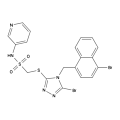
URAT1 inhibitor 1
URAT1 inhibitor 1 (1g) is a uric acid transporter 1 (URAT1) inhibitor, with an IC50 of 32 nM. URAT1 inhibitor 1 has potential to treat hyperuricemia associated with gout.
Search by product name, CAS, target or catalog number. Press Down Arrow to reach product suggestions, Tab to move between links, and Escape to close suggestions.
OAT inhibitors support research on organic anion transporters and renal handling of charged molecules. Organic anion transporters OAT1 and OAT3 belong to the solute carrier SLC22 family and participate in uptake across kidney tubule cell membranes. OAT1/3-IN-1 and OAT1/3-IN-2 are assigned here as inhibitors of these transporters. The category also includes inhibitors of urate transporter 1 and entries associated with other targets. Product-specific annotations distinguish OAT1/OAT3 reagents from the broader selection when planning renal transport studies.
URAT1 inhibitor 1 (1g) is a uric acid transporter 1 (URAT1) inhibitor, with an IC50 of 32 nM. URAT1 inhibitor 1 has potential to treat hyperuricemia associated with gout.
Synonyms: 5-FMOrn dihydrochloride
5-Fluoromethylornithine dihydrochloride is a specific irreversible inhibitor of L-ornithine:2-oxoacid aminotransferase (OAT). This compound is utilized in research focused on gyrate atrophy of the choroid and retina, providing insights into metabolic dysregulation. By inhibiting OAT, 5-FMOrn dihydrochloride aids in elucidating the biochemical pathways associated with this condition and potential therapeutic strategies.
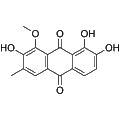
OAT1/3-IN-2 is a dual inhibitor targeting both OAT1 and OAT3. This compound exhibits the ability to reverse Cys-Hg toxicity in HEK-OAT1 cells at a concentration of 10 μM, demonstrating potential protective effects on renal function. OAT1/3-IN-2 serves as a valuable tool for investigating mercury-induced kidney damage in research settings.
Out of stock
All 3 sizes
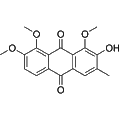
OAT1/3-IN-1 is a dual inhibitor of the organic anion transporters OAT1 and OAT3. This compound has demonstrated the ability to reverse the toxicity of cysteine-mercury complexes in HEK-OAT1 cells at a concentration of 10 μM, indicating potential protective effects against kidney damage. OAT1/3-IN-1 is a valuable tool for investigating mercury-induced nephrotoxicity and related renal pathologies.