cAMP

cAMP signaling tools act on the second messenger cyclic AMP and on the proteins that read its signal. Cyclic adenosine monophosphate (cAMP) forms when receptors coupled to stimulatory G proteins activate adenylyl cyclases. In 1968, a cAMP-dependent enzyme, now called protein kinase A (PKA), was purified from rabbit skeletal muscle. Exchange proteins directly activated by cAMP (Epac), reported in 1998, activate the small guanosine triphosphatase (GTPase) Rap1. Sp-5,6-DCl-cBIMPS and cAMPS-Sp are cell-permeant cAMP analogs that activate PKA directly. ESI-09 blocks Epac1 and Epac2, whereas ESI-05 is selective for Epac2. SQ22536 lowers cAMP production in cells by inhibiting adenylyl cyclase activity. The Adenylyl Cyclase category covers the enzymes that synthesize the messenger.

1 Item

  • ONO 1082
    Cat. No.
    A96697

    ONO 1082

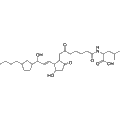
    ONO 1082 is a derivative of Prostaglandin E1 (PGE1) that functions as a cAMP inducer. By elevating cAMP levels in hepatocytes, ONO 1082 effectively counters the effects of cholestatic factors. This compound is particularly useful in studies investigating hepatic function and the biochemical pathways regulated by cAMP.

    Out of stock

    All 3 sizes

1 Item

Added to your cart

View Cart Checkout

    Loading...