Caspase

Caspase inhibitors and activators act on cysteine proteases that cleave their substrates after aspartate residues. Initiator caspases such as caspase-8 and caspase-9 activate executioner caspases, including caspase-3, to dismantle the cell during apoptosis. Caspase-1, the first family member, was identified in 1992 as the protease that processes interleukin-1β (IL-1β). Peptide fluoromethyl ketones (FMKs) are the classic inhibitor type, led by the pan-caspase inhibitor Z-VAD-FMK. Z-DEVD-FMK, Z-IETD-FMK and Z-LEHD-FMK prefer caspase-3, caspase-8 and caspase-9, respectively. Q-VD-OPh is a broad caspase inhibitor, and belnacasan inhibits the inflammatory caspases 1 and 4. PAC-1 works in the opposite direction, as a small molecule that activates procaspase-3.

Items 26-27 of 27

  • IETDC
    Cat. No.
    A44532

    IETDC

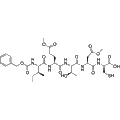
    IETDC is a specific substrate for caspase 8, designed to monitor its activity through a bioluminescent assay. Upon cleavage by activated caspase 8, IETDC releases D-cysteine, which subsequently interacts with HCBT to generate firefly luciferin, producing a detectable bioluminescent signal. This reagent is particularly valuable for investigating acute inflammation and understanding the role of caspase 8 in apoptotic signaling pathways.

    Out of stock

    All 3 sizes
  • Ac-IETD-AMC
    Cat. No.
    A44567

    Ac-IETD-AMC

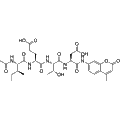
    Ac-IETD-AMC is a fluorogenic substrate specifically designed for the detection and quantification of caspase-8 activity. This compound, which includes an acetyl (Ac) moiety, serves as an efficient tool for studying apoptosis and related pathways mediated by caspase-8 and granzyme B. Its application in research allows for precise measurement of caspase-8 activity in various biological contexts, facilitating insights into cell death mechanisms and potential therapeutic targets.

    Out of stock

    All 3 sizes

Items 26-27 of 27

Added to your cart

View Cart Checkout

    Loading...