
- Cat. No.
- A16231
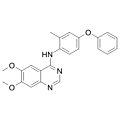
APS-2-79
APS-2-79 is an antagonist of MEK phosphorylation by RAF through direct binding of the KSR active site.
In stock
View Details
Search by product name, CAS, target or catalog number. Press Down Arrow to reach product suggestions, Tab to move between links, and Escape to close suggestions.
Ras inhibitors and related small GTPase modulators act on KRAS and on the Rac, Rho and Cdc42 proteins. Small GTPases of the Ras superfamily work as molecular switches. They cycle between an active form bound to guanosine triphosphate (GTP) and an inactive form bound to guanosine diphosphate (GDP). Oncogenic KRAS mutations such as G12C keep the protein in its signaling state. ARS-853 and KRas G12C inhibitor 4 target the mutant cysteine of KRAS G12C, while Kobe2602 interferes with binding of Ras to Raf. Salirasib, a farnesylcysteine mimetic, disrupts the membrane association of Ras. Rho-family tools include NSC 23766 and EHT 1864, which inhibit Rac, and CASIN, which targets Cdc42.
APS-2-79 is an antagonist of MEK phosphorylation by RAF through direct binding of the KSR active site.
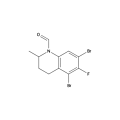
CE3F4 is a selective antagonist of exchange protein directly activated by cAMP (Epac1), with IC50s of 10.7 μM and 66 μM for Epac1 and Epac2(B), respectively.
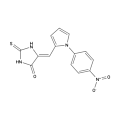
KY1220 is a compound that destabilizes both β-catenin and Ras, via targeting the Wnt/β-catenin pathway; with an IC50 of 2.1 μM in HEK293 reporter cells.
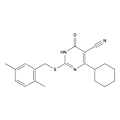
ESI-08 is a potent and selective antagonist of exchange proteins directly activated by cAMP (EPACs). It inhibits both EPAC1 and EPAC2 with an IC₅₀ of 8.4 μM, effectively blocking cAMP-induced EPAC activation while sparing cAMP-mediated protein kinase A (PKA) signaling. By selectively disrupting EPAC-dependent pathways, ESI-08 serves as a valuable tool compound for dissecting cAMP signaling mechanisms and studying EPAC-related physiological and pathological processes.
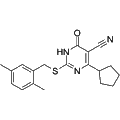
HJC0197 is a selective antagonist of Epac1 and Epac2, exhibiting an IC50 of 5.9 μM for Epac2. This compound effectively inhibits cAMP-induced activation of Epac, demonstrating a capacity to block Epac1-mediated Rap1-GDP exchange activity at a concentration of 25 μM in the presence of a corresponding concentration of cAMP. HJC0197 serves as a valuable tool for investigating the role of Epac proteins in cellular signaling pathways and cAMP-mediated biological processes.
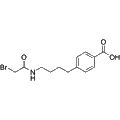
KRA-533 is a potent KRAS agonist that selectively binds to the GTP/GDP binding pocket of the KRAS protein. This interaction inhibits GTP cleavage, leading to the accumulation of constitutively active GTP-bound KRAS. Consequently, KRA-533 induces both apoptotic and autophagic cell death pathways in cancer cells, making it a valuable tool for research into cancer biology and therapeutic strategies targeting KRAS signaling.
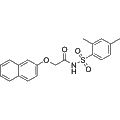
I942 is a selective non-cyclic nucleotide (NCN) agonist of EPAC1. It effectively modulates proinflammatory cytokine signaling pathways associated with various cardiovascular diseases. This compound serves as a valuable tool in research focused on understanding EPAC1-related mechanisms and developing therapeutic strategies for inflammatory cardiovascular conditions.
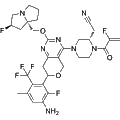
(Rac)-D3S-001 is a racemic mixture of the compound D3S-001, which serves as a potent modulator of specific biological pathways. This compound exhibits significant activity in regulating cellular processes, making it a valuable tool for investigating the underlying mechanisms of disease. It is particularly useful in pharmacological studies and in the development of therapeutic strategies targeting related biological systems.
Out of stock
All 3 sizes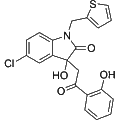
K-Ras-IN-2 is a selective antagonist of the K-Ras protein. It has demonstrated significant biological activity in inhibiting K-Ras-driven signaling pathways, making it a valuable tool for researchers studying tumor biology and oncogenic signaling. This compound is particularly useful in cancer research applications focused on K-Ras-related malignancies.
Out of stock
All 3 sizes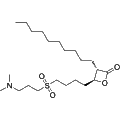
Palmostatin M is a Ras signaling modulator that specifically targets acyl-protein thioesterases 1 and 2 (APT1 and APT2), exhibiting an IC50 of 2.5 nM for APT1. By disrupting the depalmitoylation cycle of Ras, Palmostatin M effectively downregulates the Ras signaling pathway. This compound is particularly relevant for studies investigating cancer biology and the modulation of Ras-driven signaling networks.
Out of stock
All 3 sizes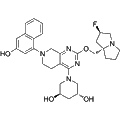
KRAS G12D modulator-1 is an effective modulator targeting the KRAS G12D mutation. It exhibits potent activity with IC50 values ranging from 1 to 10 μM against NEA-G12D, PPI-G12D, and phosphorylated ERK in AGS cells. This compound is suitable for research applications focused on cancer biology and the modulation of KRAS signaling pathways.
Out of stock
All 3 sizes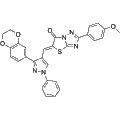
Ras Modulator-1 is a selective modulator of the Ras protein, which plays a critical role in cell signaling pathways associated with growth and differentiation. This compound has been shown to influence the activity of Ras, making it a valuable tool for investigating cancer biology and therapeutic interventions targeting Ras-driven malignancies. Research applications include studying signal transduction mechanisms and evaluating potential treatments in oncogenic signaling pathways.
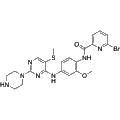
JH530 is a potent inducer of methuosis, specifically targeting triple-negative breast cancer (TNBC) cells. It triggers extensive intracellular vacuolization, leading to the inhibition of TNBC cell proliferation. With its demonstrated anti-tumor activity, JH530 serves as a valuable tool for cancer research applications.
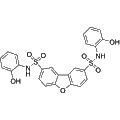
ZCL279 is a small molecule modulator that selectively inhibits the interaction between Cdc42 and intersectin (ITSN). At lower concentrations (
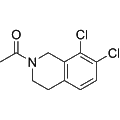
LZTR1-KRAS modulator 1 is designed to modulate the interaction between KRAS and LZTR1, thereby enhancing the recruitment of the LZTR1-KRAS complex. This compound is crucial for studies investigating the regulation of KRAS signaling pathways and their implications in cellular processes. Its application can further elucidate the role of LZTR1 in cancer biology and potential therapeutic interventions targeting KRAS-driven tumors.
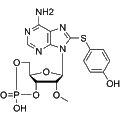
Synonyms: 8-(4-Hydroxyphenylthio)-2'-O-Me-cAMP
8-pHPT-2'-O-Me-cAMP is a cAMP analog that acts as an Epac agonist, specifically enhancing the activity of the exchange protein activated by cyclic AMP (Epac). This compound is utilized in cardiac research to explore signaling mechanisms and cellular responses associated with cardiac function and pathophysiology. Its ability to modulate Epac pathways makes it a valuable tool for investigating the roles of cAMP in cardiac health and disease.
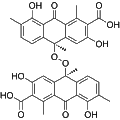
(+)-Oxanthromicin is a K-Ras localization modulator that disrupts the localization of oncogenic mutant K-Ras from the plasma membrane in intact Madin-Darby canine kidney (MDCK) cells. This compound demonstrates significant antitumor efficacy, making it valuable for research into cancer biology and potential therapeutic strategies targeting K-Ras-mediated signaling pathways. Its ability to alter K-Ras localization positions it as a promising candidate in the development of targeted cancer therapies.
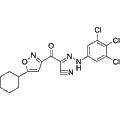
NY-0173 is an antagonist of exchange proteins directly activated by cAMP (EPAC), demonstrating IC50 values of 3.5 μM for EPAC2 and 4.0 μM for EPAC1. This reagent serves as a valuable tool for investigating the biological roles and pathways mediated by EPAC. Researchers can utilize NY-0173 to explore its impact on cellular processes influenced by EPAC signaling.