- Cat. No.
- A19937
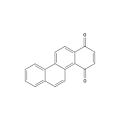
1,4-Chrysenequinone
Synonyms: Chrysene-1,4-dione
1,4-Chrysenequinone, a polycyclic aromatic quinone, acts as an activator of aryl hydrocarbon receptor (AhR).
Search by product name, CAS, target or catalog number. Press Down Arrow to reach product suggestions, Tab to move between links, and Escape to close suggestions.
Aryl hydrocarbon receptor (AhR) ligands act on a ligand-activated transcription factor of the bHLH-PAS family. Cloning of the receptor complementary DNA in 1992 showed that AhR combines a basic helix-loop-helix (bHLH) domain with a Per-Arnt-Sim (PAS) domain. The tryptophan metabolite kynurenine was later described as an endogenous agonist produced by tryptophan 2,3-dioxygenase. Antagonists of AhR were shown to support the expansion of human hematopoietic stem cells in culture, which made StemRegenin 1 a common tool in that work. CH-223191, ITE, tapinarof and L-Kynurenine complete a set that covers both receptor activation and blockade in reporter and gene expression assays.
Synonyms: Chrysene-1,4-dione
1,4-Chrysenequinone, a polycyclic aromatic quinone, acts as an activator of aryl hydrocarbon receptor (AhR).
Synonyms: YH439
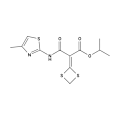
Mivotilate is a nontoxic, potent activator of the aryl hydrocarbon receptor (AhR), and acts as a hepatoprotective agent.
Synonyms: NSC-686288
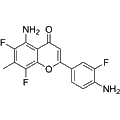
Aminoflavone is an activator of the aryl hydrocarbon receptor (AhR) with significant anti-tumor properties. It modulates the expression of ITGA6/SOX2 through the AhR-miR-125b-2-3p axis, effectively targeting breast cancer stem cells. This compound promotes the generation of reactive oxygen species (ROS) and elevates oxidative DNA damage, as indicated by increased levels of 8-oxodG and DNA-protein cross-links. Additionally, Aminoflavone induces S-phase cell cycle arrest, activates caspase pathways, and triggers apoptosis, while inhibiting HIF-1α expression independent of the AhR pathway. It serves as a valuable reagent for research into breast cancer mechanisms and therapies.
Out of stock
All 3 sizes
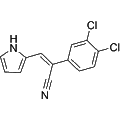
ANI-7 is an aryl hydrocarbon receptor (AhR) activator that exhibits significant cytotoxicity against various cancer cell lines. It selectively inhibits the growth of MCF-7 breast cancer cells with a GI50 of 0.56 μM. ANI-7 activates the AhR pathway, leading to the induction of CYP1-metabolizing mono-oxygenases, DNA damage, kinase activation, and S-phase cell cycle arrest, ultimately resulting in cell death in sensitive breast cancer cell lines.
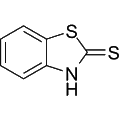
2-Mercaptobenzothiazole is an activator of the aryl hydrocarbon receptor (AhR), functioning as an inhibitor of thyroid hormone synthesis and dopamine beta-hydroxylase activity. This compound promotes the invasion of bladder cancer cells by activating AhR transcription and upregulating the expression of CYP1A1 and CYP1B1, implicated in carcinogenesis. Additionally, 2-Mercaptobenzothiazole exhibits inhibition of thyroid peroxidase activity with an IC50 of 11.5 μM and induces significant histological changes in Xenopus laevis, including delayed metamorphosis. It also increases chromosomal aberrations in Chinese hamster ovary cells and inhibits norepinephrine synthesis in murine models, demonstrating its relevance in carcinogenic studies and neurobiological research.
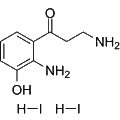
3-OH-Kynurenamine (dihydroiodide) is an aryl hydrocarbon receptor (AhR) activator that modulates the immune response. It enhances the expression levels of indoleamine 2,3-dioxygenase 1 (Ido1) and transforming growth factor-beta 1 (Tgfb1). Research indicates that it can alleviate skin inflammation in psoriasis mouse models and mitigate kidney damage in nephrotoxic lupus mouse models, making it a valuable tool in studying immune-related conditions.
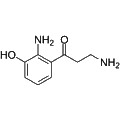
3-OH-Kynurenamine is an aryl hydrocarbon receptor (AhR) activator that modulates immune responses. This compound enhances the expression of immune regulatory genes such as Ido1 and Tgfb1, demonstrating therapeutic potential in reducing skin inflammation in psoriasis mouse models, as well as alleviating kidney damage in nephrotoxic lupus mouse models. Its unique biological activity makes it valuable for research involving immune modulation and inflammatory diseases.
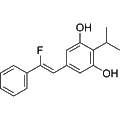
AhR modulator-2 is an AHR activator with an EC50 of 0.028 μM in HepG2-Lucia cells. This compound is valuable for investigating the role of the aryl hydrocarbon receptor (AHR) in various diseases, including skin disorders and cancer. Its ability to modulate AHR activity makes it a useful tool in the study of AHR-mediated signaling pathways and associated pathologies.
Out of stock
All 3 sizes
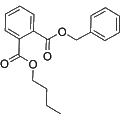
Benzyl butyl phthalate is an aryl hydrocarbon receptor (AhR) activator that plays a significant role in cellular signaling. It has been shown to promote the migration and invasion of hemangioma (HA) cells through the upregulation of Zeb1. In breast cancer cells, Benzyl butyl phthalate activates the SPHK1/S1P/S1PR3 pathway, contributing to the formation of metastasis-initiating breast cancer stem cells (BCSCs). This compound is instrumental for research in cancer biology and cellular signaling.