Carboxylesterase (CES)

Carboxylesterase (CES) inhibitors and substrates act on serine hydrolases that cleave ester bonds. Mammalian carboxylesterases hydrolyze endogenous esters and many ester-containing drugs and prodrugs, as a 1998 review summarized. Human CES1 is abundant in liver, whereas CES2 predominates in the small intestine. Nevadensin is a natural flavone reported to inhibit human carboxylesterase 1 (hCE1), and WZU-13 is a further carboxylesterase inhibitor. CEMT is listed as a carboxylesterase substrate with mitochondria-targeting properties. Carboxylesterase-IN-2 and Carboxylesterase-IN-3 inhibit Notum, a secreted carboxylesterase shown in 2015 to remove the palmitoleate group that Wnt proteins need for signaling. The set is mixed and also includes loperamide hydrochloride and tefinostat, whose main targets lie elsewhere.

7 Items

  • Miltirone
    Cat. No.
    A30275

    Miltirone

    Synonyms: Rosmariquinone

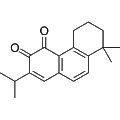
    Miltirone is a partial agonist of the central benzodiazepine receptor, exhibiting an IC50 value of 0.3 μM. This natural compound, derived from the root of Salvia miltiorrhiza, demonstrates significant biological activity by inducing ROS- and p53-dependent apoptosis. Additionally, Miltirone effectively inhibits carboxylesterase 2 (CES2) with a Ki of 0.04 μM and the main protease (Mpro) of SARS-CoV, making it valuable for research involving apoptosis, enzymatic regulation, and virology.

    1 mg
    $110.00
    5 mg
    $175.00
    All 6 sizes
  • CEMT
    Cat. No.
    A43764

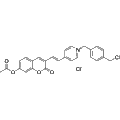
    CEMT

    CEMT is a selective substrate for carboxylesterases, functioning as a ratiometric two-photon fluorescent reporter probe. Upon hydrolysis by carboxylesterases, CEMT generates HMT, which facilitates mitochondrial pH sensing through ratiometric fluorescence changes in response to pH fluctuations. This compound specifically targets and covalently binds to mitochondria, minimizing leakage during acidification, thereby enabling in situ imaging of mitochondrial dynamics and pH variations within biological systems.

    Out of stock

    All 3 sizes
  • DDAO phosphate diammonium
    Cat. No.
    A45350

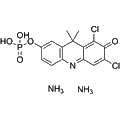
    DDAO phosphate diammonium

    DDAO phosphate diammonium is a fluorescent phosphatase substrate that serves as a sensitive probe for enzyme activity. With tunable excitation wavelengths ranging from 600 to 650 nm and a long emission wavelength of 656 nm, it facilitates the detection of various enzymes including β-galactosidase, sulfatase, protein phosphatase 2A, carboxylesterase 2, human albumin, and esterase. This reagent is ideal for applications in enzymology and biochemistry research, enabling real-time monitoring of enzyme activities in different biological systems.

    Out of stock

    All 3 sizes
  • Tripropionin
    Cat. No.
    A69569

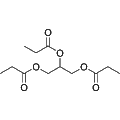
    Tripropionin

    Synonyms: Glycerol tripropionate

    Tripropionin, a triglyceride, acts as a substrate for carrot carboxylesterase. It exhibits key biological activity as a hydrolyzable ester, making it suitable for applications in lipid nanoemulsion formulation. This compound can effectively serve as the oil phase for creating high-performance lipid nanoemulsion droplets, facilitating the encapsulation, stable storage, and controlled release of bioactive compounds such as Combretastatin A4.

    50 mg
    $45.00
    100 mg
    $65.00
    All 2 sizes
  • Dibutyl malate
    Cat. No.
    A69588

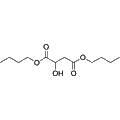
    Dibutyl malate

    Synonyms: DL-Malic acid dibutyl ester

    Dibutyl malate serves as a substrate for carboxylesterase, an enzyme critical in the hydrolysis of ester bonds. This compound is particularly useful in biochemical studies investigating enzymatic activity and substrate specificity. It is also applicable in drug metabolism and pharmacokinetic research, aiding in the understanding of ester-containing pharmaceuticals.

    Out of stock

    All 3 sizes
  • Esterase, pig liver
    Cat. No.
    A71170

    Esterase, pig liver

    Synonyms: CESs

    Esterase, pig liver is a type of carboxylesterase known for its role in the hydrolysis of a wide range of endogenous and exogenous substrates. This enzyme catalyzes the breakdown of carboxylic acid esters into corresponding alcohols and carboxylic acids, facilitating important biochemical reactions. Its extensive distribution in mammalian liver makes it a valuable tool in biochemical research, particularly for studies involving ester metabolism and enzyme kinetics.

    1 mg
    $60.00
    All 1 sizes
  • 3-Indoxyl butyrate
    Cat. No.
    A88597

    3-Indoxyl butyrate

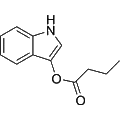
    3-Indoxyl butyrate serves as a chromogenic substrate for carboxylesterase (CES), leading to the generation of a blue precipitate upon enzymatic cleavage. This reaction makes it a valuable tool for detecting and quantifying CES activity in biological samples. Its sensitivity and specificity enhance research applications in enzyme kinetics and drug metabolism studies.

    50 mg
    $50.00
    100 mg
    $75.00
    All 5 sizes

7 Items

Added to your cart

View Cart Checkout

    Loading...