- Cat. No.
- A19228
SHIN1
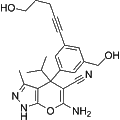
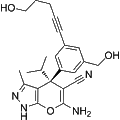
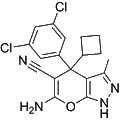
SHIN1 (RZ-2994) is a human serine hydroxymethyltransferse 1 and 2 (SHMT1/2) inhibitor with IC50s of 5 and 13 nM, respectively, in an in vitro assay.
Search by product name, CAS, target or catalog number. Press Down Arrow to reach product suggestions, Tab to move between links, and Escape to close suggestions.
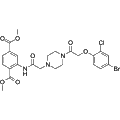
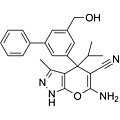
SHMT inhibitors target serine hydroxymethyltransferase, the enzyme that feeds one-carbon metabolism. Serine hydroxymethyltransferase (SHMT) converts serine and tetrahydrofolate into glycine and 5,10-methylenetetrahydrofolate. Human cells express a cytosolic isoform, SHMT1, and a mitochondrial isoform, SHMT2. SHIN1, a pyrazolopyran inhibitor of both isoforms, was reported in 2017 and revealed a glycine-import defect in diffuse large B-cell lymphoma cells. A 2021 study used the related compound SHIN2 together with methotrexate in T-cell acute lymphoblastic leukemia models. The set lists (+)SHIN2 and (Rac)-SHIN2, together with (+)-SHIN1, SHMT-IN-1 and SHMT-IN-2. Lometrexol, an inhibitor of glycinamide ribonucleotide formyltransferase (GARFT), and the multitargeted antifolate AGF347 act on related folate-dependent steps.
SHIN1 (RZ-2994) is a human serine hydroxymethyltransferse 1 and 2 (SHMT1/2) inhibitor with IC50s of 5 and 13 nM, respectively, in an in vitro assay.
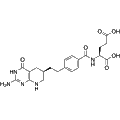
Synonyms: DDATHF
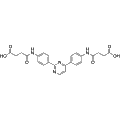
Lometrexol, a potent GARFT inhibitor, effectively blocks glycinamide ribonucleotide formyltransferase activity, thereby disrupting de novo purine synthesis. This inhibition leads to abnormal cell proliferation, apoptosis, and potential cell cycle arrest, demonstrating its anticancer properties. Additionally, Lometrexol acts as an inhibitor of human serine hydroxymethyltransferase 1 and 2 (hSHMT1/2), further influencing metabolic processes in cancer research applications.
(Rac)-SHIN2 is a pyrazolopyran derivative that functions as a selective inhibitor of serine hydroxymethyltransferase (SHMT). This compound demonstrates significant antibacterial activity, effectively targeting both vancomycin-susceptible and vanA-type vancomycin-resistant Enterococcus, while exhibiting low cytotoxicity towards Hep2 cells. The potential applications of (Rac)-SHIN2 include investigation into bacterial resistance mechanisms and the development of novel antibacterial therapeutics.
(+)SHIN2 is a selective inhibitor of serine hydroxymethyltransferase (SHMT), a key enzyme involved in folate metabolism and one-carbon metabolism. This compound has been shown to enhance survival in mouse models of NOTCH1-driven acute lymphoblastic leukemia (T-ALL) when used in conjunction with Methotrexate. Additionally, (+)SHIN2 features an alkyne group that facilitates its use in click chemistry applications, allowing for copper-catalyzed azide-alkyne cycloaddition (CuAAc) with azide-containing molecules.
SHMT-IN-2 is a stereospecific inhibitor of human serine hydroxymethyltransferases SHMT1 and SHMT2, exhibiting IC50 values of 13 nM and 66 nM, respectively. This compound effectively inhibits the proliferation of various human cancer cell lines and demonstrates notable sensitivity towards B-cell lymphomas. SHMT-IN-2 serves as a valuable tool for research investigating metabolic pathways involved in cancer cell growth and treatment response.
SHMT-IN-1 is a potent inhibitor of plasmodial serine hydroxymethyltransferase (SHMT). This compound demonstrates significant antitumor activity, making it a valuable tool for research focused on cancer therapeutics and metabolic pathways. Its efficacy in inhibiting SHMT highlights its potential application in the study of malaria and related biological processes.
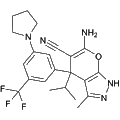
SHMT-IN-3 is a selective inhibitor of serine hydroxymethyltransferases SHMT1 and SHMT2, with an IC50 of 0.53 µM for human SHMT1. This compound demonstrates noncompetitive inhibition against serine, making it a valuable tool for studying metabolic pathways involving one-carbon metabolism. SHMT-IN-3 is useful for investigating the role of SHMT in various biological processes and may have applications in cancer research and other metabolic disorders.
SHMT-IN-4 is an inhibitor of serine hydroxymethyltransferase (SHMT1), demonstrating an IC50 value of 193.8 g a.i./ha. This compound interferes with amino acid synthesis and metabolism in plants by binding to SHMT1, leading to inhibited plant growth. Importantly, SHMT-IN-4 exhibits minimal toxicity to maize and honeybees, making it a viable option for agricultural research applications focusing on selective herbicide development.