
- Cat. No.
- A22673
SU 4942
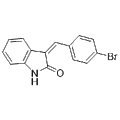
SU 4942 is a tyrosine kinase signal transduction modulator, targeting VEGF and ECGF.
In stock
View Details
Search by product name, CAS, target or catalog number. Press Down Arrow to reach product suggestions, Tab to move between links, and Escape to close suggestions.
Tyrosinase inhibitors act on the copper-containing oxidase that catalyzes the first steps of melanin synthesis. Tyrosinase hydroxylates L-tyrosine to L-3,4-dihydroxyphenylalanine (L-DOPA) and oxidizes L-DOPA to dopaquinone, which then forms melanin pigments. Together with the tyrosinase-related proteins, it sets the type and amount of melanin made in mammalian melanocytes. Mushroom tyrosinase from Agaricus bisporus is a common assay enzyme, and its crystal structure with the inhibitor tropolone was reported in 2011. Arbutin, α-arbutin and deoxyarbutin are hydroquinone glycosides used in pigmentation and skin biology research. 4-Butylresorcinol, aloin and the cinnamic acid ester methyl cinnamate are further tyrosinase inhibitors in the list. The list also contains kinase inhibitors such as XMD8-87, which targets tyrosine kinase non-receptor 2 (TNK2).
SU 4942 is a tyrosine kinase signal transduction modulator, targeting VEGF and ECGF.
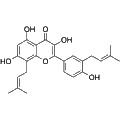
Broussoflavonol F is a modulator of the HER2-RAS-MEK-ERK signaling pathway and an inhibitor of mushroom tyrosinase, exhibiting an IC50 of 82.3 μM against the latter. This compound effectively reduces protein expression levels of RAS, HER2, phosphorylated BRAF, phosphorylated MEK, and phosphorylated ERK, leading to the induction of apoptosis and G0/G1 phase cell cycle arrest. It demonstrates notable cytotoxicity against colon cancer cells, making it a valuable tool for research focused on colon cancer and related signaling pathways.