- Cat. No.
- A10036
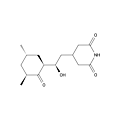
Cycloheximide
Synonyms: Actidione
Cycloheximide (also known as actidione) is used as an selective antibiotic. It inhibits the protein synthesis (DNA-dependent RNA) of saprobic fungi eukaryotes. by binding with the 80S ribosome, while inactive against dermatophytes and systemic fungi.
In stock
- Jian Gu, .et al. , Cell, 2026, Jan 22;189(2):418-434 PMID: 41448182
- Xiao-Yi Zhang, .et al. , Free Radic Biol Med, 2025, Aug 25:S0891-5849(25)00940-2 PMID: 40865778
- Wan-Cheng Liu, .et al. , Nat Commun, 2025, Jun 3;16(1):5154 PMID: 40461504
- Xingmei Shu, .et al. , Chin Med J (Engl), 2025, May 23 PMID: 40405358
- Jing Wang, .et al. , Mol Cell, 2025, May 15;85(10):1999-2016.e11 PMID: 40328247
- Yang Liao, .et al. , Cell Signal, 2025, Jul:131:111735 PMID: 40081551
- Xiangdong Qiu, .et al. , Cardiovascular Toxicology, 2025, 25: 427-440
- Tianfeng Huang, .et al. , Mol Neurobiol, 2024, Sep 13 PMID: 39271624
- Han Xiao, .et al. , JPA, 2023, Apr 19 PMID: 37440912
- Shuanghui Lu, .et al. , Chem Biol Interact, 2022, Dec 1;368:110219 PMID: 36243147
- Ke Chen, .et al. , Cancer Commun (Lond), 2021, Apr; 41(4): 316-332 PMID: 33591636
- Zhiyuan Qin, .et al. , Cancers (Basel), 2021, Feb 4;13(4):618 PMID: 33557163
- Hua Xu, .et al. , Cancers (Basel), 2020, Apr; 12(4): 831 PMID: 32235588
View Details