Nucleoside Antimetabolite/Analog

Nucleoside analogs and antimetabolites are modified nucleosides resembling the natural building blocks of DNA and RNA. Changes to the base or the sugar let them interfere with nucleotide metabolism and nucleic acid synthesis. After phosphorylation in cells, many are incorporated into DNA or RNA, or inhibit polymerases and cause chain termination. Cytarabine hydrochloride, which carries an arabinose sugar, is used to study inhibition of DNA synthesis. Zalcitabine, a dideoxynucleoside, is used in research on viral reverse transcriptase. The category also covers naturally modified nucleosides such as 3-methylcytidine and N6,N6-dimethyladenosine. These serve as reference compounds in studies of RNA modification and DNA damage.

7 Items

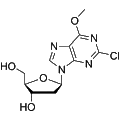
  • 2-Chloro-2'-deoxy-6-O-methylinosine
    Cat. No.
    A55478

    2-Chloro-2'-deoxy-6-O-methylinosine

    2-Chloro-2'-deoxy-6-O-methylinosine is a hypoxanthine analog that serves as a potent modulator of various biological pathways. This compound exhibits significant anti-inflammatory properties and functions as a potential endogenous poly(ADP-ribose) polymerase (PARP) inhibitor, providing cytoprotection by inhibiting PARP activity and mitigating peroxynitrite-induced mitochondrial depolarization and superoxide production. Additionally, this analog can be utilized as an indicator of hypoxia in research settings, making it valuable for studies related to cellular response under low oxygen conditions.

    Out of stock

    All 3 sizes
  • 7α,25-Dihydroxy-4-cholesten-3-one
    Cat. No.
    A55610

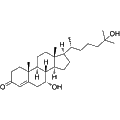
    7α,25-Dihydroxy-4-cholesten-3-one

    7α,25-Dihydroxy-4-cholesten-3-one is a sterol metabolite that functions primarily as a modulator of various biological processes. This compound is formed through the 7α-hydroxylation and subsequent oxidation of 25-hydroxycholesterol, influencing cholesterol metabolism and immune response pathways. It is instrumental in research focused on lipid biology, neuroinflammation, and sterol-related signaling mechanisms.

    Out of stock

    All 3 sizes
  • 5’-O-(4,4’-Dimethoxytrityl)-3’-O-t-butyldimethylsilyl adenosine
    Cat. No.
    A55678

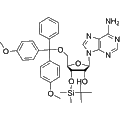
    5’-O-(4,4’-Dimethoxytrityl)-3’-O-t-butyldimethylsilyl adenosine

    5’-O-(4,4’-Dimethoxytrityl)-3’-O-t-butyldimethylsilyl adenosine is an adenosine analog that serves as a key modulator of adenosine receptors. This compound exhibits vasodilatory effects on smooth muscle and has potential applications in cancer research due to its ability to inhibit tumor progression. It is particularly useful for studies investigating the roles of adenosine in vascular biology and oncology.

    Out of stock

    All 3 sizes
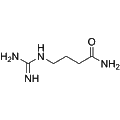
  • 4-Guanidinobutanamide
    Cat. No.
    A55783

    4-Guanidinobutanamide

    4-Guanidinobutanamide is a nucleoside metabolite that acts as a key modulator in various biochemical pathways. It has demonstrated significant biological activity in studies related to nucleoside metabolism and cellular signaling. This compound is primarily utilized in research applications focused on metabolic regulation and the investigation of nucleoside-related processes.

    Out of stock

    All 3 sizes
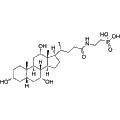
  • Ciliatocholate
    Cat. No.
    A56001

    Ciliatocholate

    Synonyms: Ciliatocholic acid

    Ciliatocholate, a nucleoside metabolite, acts as a potent modulator of cellular signaling pathways. This compound has demonstrated biological activity in various research applications, including studies related to nucleic acid metabolism and cellular functions. Its role in cellular processes makes it a valuable tool for investigating the mechanisms underlying nucleoside metabolism and related biological phenomena.

    Out of stock

    All 3 sizes
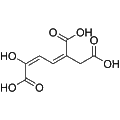
  • (2Z,4E)-5-Hydroxypenta-2,4-diene-1,2,5-tricarboxylic acid
    Cat. No.
    A56250

    (2Z,4E)-5-Hydroxypenta-2,4-diene-1,2,5-tricarboxylic acid

    (2Z,4E)-5-Hydroxypenta-2,4-diene-1,2,5-tricarboxylic acid is a tricarboxylic acid that demonstrates potential as a biochemical modulator. This compound is of interest for its ability to participate in metabolic pathways, particularly in the regulation of cellular energy states. It has applications in biochemical research, particularly in studies concerning metabolic diseases and the functioning of the tricarboxylic acid cycle.

    Out of stock

    All 3 sizes
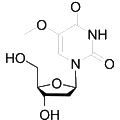
  • 2′-Deoxy-5-methoxyuridine
    Cat. No.
    B18778

    2′-Deoxy-5-methoxyuridine

    2′-Deoxy-5-methoxyuridine is a uridine analog that acts as a modulator of nucleotide metabolism. This compound exhibits potential antiepileptic properties and serves as a valuable tool in studying anticonvulsant and anxiolytic activities. Additionally, it can be utilized in research focused on developing novel antihypertensive agents.

    Out of stock

    All 3 sizes

7 Items

Added to your cart

View Cart Checkout

    Loading...