
- Cat. No.
- A22008
MK-0354
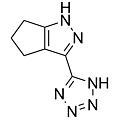
MK-0354 is a partial agonist of GPR109a receptor, for hGPR109a/ mGPR109a with EC50 of 1.65/1.08 μM, showed no activation of GPR109b.
In stock
View Details
Search by product name, CAS, target or catalog number. Press Down Arrow to reach product suggestions, Tab to move between links, and Escape to close suggestions.
GPR agonists and antagonists act on numbered G protein-coupled receptors (GPRs), many first described as orphans. Several of these receptors sense nutrients and metabolites, which links them to glucose and lipid metabolism research. GPR40, also called free fatty acid receptor 1 (FFAR1), was shown in 2003 to be activated by medium- and long-chain fatty acids. On pancreatic beta cells, GPR40 mediates fatty acid enhancement of glucose-stimulated insulin secretion. GPR119 was deorphanized in 2006 as a receptor for the lipid amide oleoylethanolamide. Fasiglifam is a GPR40 agonist and MBX-2982 a GPR119 agonist. TC-G-1008 activates the zinc-sensing receptor GPR39, and MK-6892 is an agonist of GPR109A.
MK-0354 is a partial agonist of GPR109a receptor, for hGPR109a/ mGPR109a with EC50 of 1.65/1.08 μM, showed no activation of GPR109b.
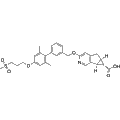
MK-8666 is a potent and selective partial agonist of GPR40, with an EC50 of 0.54 nM for human GPR40. This compound exhibits significant selectivity over other G-protein-coupled receptors, including GPR119, GPR43, GPR41, and GPR120. MK-8666 has demonstrated the ability to lower glucose levels in rodent models, making it a valuable tool in type 2 diabetes research and related metabolic studies.
Out of stock
All 3 sizes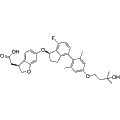
BI-2081 is a GPR40 (FFAR1) partial agonist with an EC50 of 4 nM. This compound stimulates glucose-dependent insulin secretion and effectively lowers plasma glucose levels. BI-2081 is valuable for research applications focused on metabolic diseases, particularly type 2 diabetes.
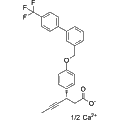
AMG 837 hemicalcium is a potent partial agonist targeting the GPR40/FFA1 receptor, demonstrating high oral bioavailability. This compound inhibits [3H]AMG 837 binding at the human FFA1 receptor with a pIC50 value of 8.13. Research indicates that AMG 837 hemicalcium may enhance insulin secretion and help regulate glucose levels in rodent models, making it valuable for studies in metabolic disorders and diabetes research.