
- Cat. No.
- A12948
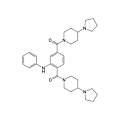
UNC1215
UNC1215 is a potent, selective antagonist of L3MBTL3 with cellular activity.
In stock
View Details
Search by product name, CAS, target or catalog number. Press Down Arrow to reach product suggestions, Tab to move between links, and Escape to close suggestions.
Epigenetic reader domain inhibitors, mostly bromodomain inhibitors, block recognition of acetylated histone lysines. Structural work on a histone acetyltransferase bromodomain first showed that this module binds acetylated lysine. Proteins of the bromodomain and extra-terminal (BET) family, such as bromodomain-containing protein 4 (BRD4), link histone acetylation to gene transcription. The thienodiazepine (+)-JQ1 was described in 2010 as a selective BET inhibitor that displaces BRD4 from chromatin. PFI-1, GSK1324726A and CPI-203 provide further BET inhibitor chemotypes for comparative studies. Other entries reach beyond BET binding, such as SGC-CBP30 for a non-BET bromodomain and the BRD4-degrading compound ARV-825.
UNC1215 is a potent, selective antagonist of L3MBTL3 with cellular activity.
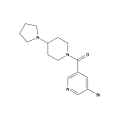
UNC669 is a small-molecule antagonist of methyl-lysine (KMe) reader protein with selectivity for L3MBTL1 and L3MBTL3 (IC50 of 4.2μM and 3.1μM respectively)
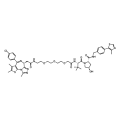
MZ1 is a potent inducer of reversible, long-lasting and selective removal of BRD4 over BRD2 and BRD3.
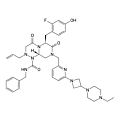
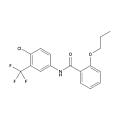
TTK21 is a CBP/p300 histone acetyltransferase activator.
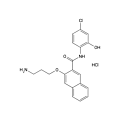
653-47 hydrochloride is a potentiator that significantly enhances the CREB (cAMP-response element-binding protein) inhibitory activity of 666-15. It also functions as a very weak CREB inhibitor on its own, with an IC₅₀ of 26.3 μM.
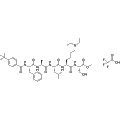
UNC3866 TFA is a selective antagonist of the CBX7-H3 interaction, exhibiting a potency with an IC50 value of 66±1.2 nM as determined by AlphaScreen assays. This compound shows over 100-fold selectivity for CBX7 compared to other members of the methyl-lysine reader panel. UNC3866 TFA is valuable for research applications focused on elucidating the role of CBX7 in epigenetic regulation and potential therapeutic strategies targeting this pathway.
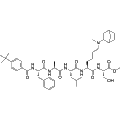
UNC4976 is a positive allosteric modulator of the CBX7 chromodomain, targeting nucleic acid binding. It functions by antagonizing the H3K27me3-specific recruitment of CBX7 to target genes while enhancing non-specific binding to DNA and RNA. This compound is valuable for research focused on chromatin regulation and the epigenetic mechanisms involved in gene expression.
Out of stock
All 3 sizes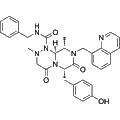
C-82 is a selective antagonist of CBP/β-catenin interaction, designed to inhibit the binding of β-catenin to CBP while promoting its association with p300. This compound effectively modulates the Wnt signaling pathway, making it a valuable tool for research in cancer biology and developmental processes. C-82 serves as an important reagent for studies investigating the role of β-catenin in transcriptional regulation and related disease mechanisms.
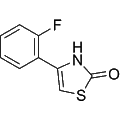
BRD4 Inhibitor-37 is a selective antagonist of the Epigenetic Reader Domain BRD4, demonstrating significant anticancer activity. With an IC50 ranging from 0.05-0.1 μM in binding assays and a GI50 of 0.1-0.3 μM in cellular models, this compound effectively impedes the c-Myc signaling pathway, a critical downstream target of BRD4. Its selectivity across multiple bromodomain proteins positions BRD4 Inhibitor-37 as an important tool for investigating BET protein functions in cancer research and therapeutic development.