- Cat. No.
- A24434
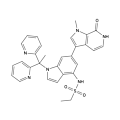
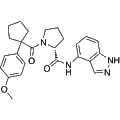
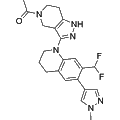
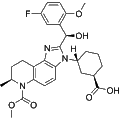
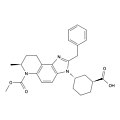
CBP/p300-IN-8
CBP/p300-IN-8 is a potent inhibitor of the CBP/p300 family of bromodomains, with an IC₅₀ of 0.01–0.1 µM for CBP. It also inhibits BRD4 activity with significantly lower potency (IC₅₀ = 1–1000 µM).
Search by product name, CAS, target or catalog number. Press Down Arrow to reach product suggestions, Tab to move between links, and Escape to close suggestions.
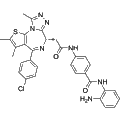
Epigenetic reader domain inhibitors, mostly bromodomain inhibitors, block recognition of acetylated histone lysines. Structural work on a histone acetyltransferase bromodomain first showed that this module binds acetylated lysine. Proteins of the bromodomain and extra-terminal (BET) family, such as bromodomain-containing protein 4 (BRD4), link histone acetylation to gene transcription. The thienodiazepine (+)-JQ1 was described in 2010 as a selective BET inhibitor that displaces BRD4 from chromatin. PFI-1, GSK1324726A and CPI-203 provide further BET inhibitor chemotypes for comparative studies. Other entries reach beyond BET binding, such as SGC-CBP30 for a non-BET bromodomain and the BRD4-degrading compound ARV-825.
CBP/p300-IN-8 is a potent inhibitor of the CBP/p300 family of bromodomains, with an IC₅₀ of 0.01–0.1 µM for CBP. It also inhibits BRD4 activity with significantly lower potency (IC₅₀ = 1–1000 µM).
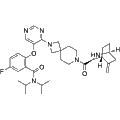
XP-524 is a potent dual inhibitor of BET and EP300, exhibiting strong antitumor activity in vivo. It prevents KRAS-induced neoplastic transformation and prolongs survival in two transgenic mouse models of aggressive pancreatic ductal adenocarcinoma (PDAC). XP-524 also enhances self-peptide presentation and promotes tumor infiltration by cytotoxic T lymphocytes, supporting its potential for PDAC research.
Synonyms: DSP-5336
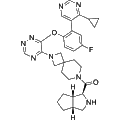
Enzomenib is an inhibitor of menin, a protein encoded by the multiple endocrine neoplasia (MEN) gene. It disrupts the interaction between menin and mixed lineage leukemia (MLL) fusion proteins and is applicable in the study of hematological malignancies.
Synonyms: Menin-MLL inhibitor 27; BNM-1192
BN-104 (BNM-1192) is an orally active and selective brain-penetrant menin inhibitor that disrupts the menin-MLL interaction, leading to degradation of the menin protein. It exhibits antitumor activity and is applicable in cancer research, including studies on acute myeloid leukemia. BN-104 is a weak hERG inhibitor, with an IC₅₀ greater than 100 μM.
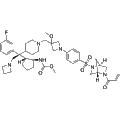
M-1121 is a covalent, orally active inhibitor of the menin-MLL interaction, capable of inducing complete and sustained tumor regression.
XX-650-23 is a potent inhibitor of CREB that disrupts the CBP-CREB interaction to suppress CREB function. It is suitable for research in acute myeloid leukemia (AML).
GSK8814 is a potent and selective chemical probe and inhibitor of the ATAD2 bromodomain, with an IC₅₀ of 0.059 μM, a pK\_d of 8.1, and a pK\_i of 8.9 in BROMOscan. It binds to ATAD2 and BRD4 BD1 with pIC₅₀ values of 7.3 and 4.6, respectively, demonstrating over 500-fold selectivity for ATAD2. GSK8814 is suitable for research in cancers associated with ATAD2 bromodomain activity.
Synonyms: EP31670
NEO2734 (EP31670) is an orally active dual inhibitor of p300/CBP and BET bromodomains, with IC₅₀ values of
PI3Kα-IN-28 is a potent dual-target inhibitor of PI3K and BRD4. This compound effectively suppresses cell proliferation in various cancer cell lines, including KYSE180 and KYSE450, while also inhibiting migration and colony formation. Additionally, PI3Kα-IN-28 induces G0/G1 phase cell cycle arrest and promotes cellular senescence by enhancing the proportion of senescent cells. Mechanistically, it decreases the levels of p-AKT and c-Myc, while activating the AMPK-p27 pathway, making it a valuable tool for cancer research, particularly in esophageal cancer studies.
Out of stock
All 3 sizes
TW9 is a potent dual inhibitor that targets bromodomain and extraterminal (BET) proteins and histone deacetylases (HDAC) with KDs of 0.069 μM and 0.231 μM for BRD4(1) and BRD4(2), respectively, and an IC50 of 0.29 μM for HDAC1. This compound is a novel derivative of the BET inhibitor (+)-JQ1 and the class I HDAC inhibitor CI994. TW9 demonstrates significant anti-tumor activity in pancreatic ductal adenocarcinoma (PDAC) and enhances the efficacy of the chemotherapeutic agent Gemcitabine, making it a valuable tool for cancer research applications.
MS37452 is a selective inhibitor of the CBX7 chromodomain, effectively disrupting its binding to the histone modification H3K27me3 with a Kd of 27.7 μM. This compound has been shown to derepress transcription of the polycomb repressive complex target gene p16/CDKN2A, facilitating the displacement of CBX7 from the INK4A/ARF locus in prostate cancer cells. MS37452 serves as a valuable tool for investigating the regulatory roles of CBX7 and the implications of polycomb group proteins in cancer biology.
CBP/EP300 bromodomain receptor-IN-1 is a selective inhibitor of the CBP/EP300 bromodomain. This compound demonstrates high-affinity binding to bromodomain-containing proteins at nanomolar concentrations. Its primary application lies in research focused on epigenetic regulation and oncogenesis, making it a valuable tool for studying gene expression modulation and therapeutic interventions in cancer biology.
Out of stock
All 3 sizes
CBP/p300/BRD4 ligand-1 is a small-molecule inhibitor that specifically targets the bromodomain and extraterminal (BET) family members BRD4, as well as the acetyltransferases CBP and p300. This compound functions by competitively binding to the functional domains of these proteins, preserving critical interactions. CBP/p300/BRD4 ligand-1 is suitable for the development of dual-target PROTAC degraders, making it valuable for research in prostate cancer and various other malignancies.
Out of stock
All 3 sizes
CBP/p300-IN-17 is a potent inhibitor of the EP300 and CBP histone acetyltransferases (HATs), exhibiting IC50 values of 0.18 µM and 0.69 µM for EP300 and LK2 H3K27, respectively. This compound demonstrates significant biological activity in modifying histone acetylation, making it valuable for research in epigenetics, cancer biology, and transcriptional regulation. Its selective inhibition of EP300 and CBP provides a critical tool for investigating their roles in various cellular processes and disease states.
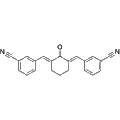
(E/Z)-NiCur is the active isomer of NiCur, functioning as a potent inhibitor of CBP histone acetyltransferase (HAT). By targeting this enzyme, (E/Z)-NiCur plays a significant role in modulating histone acetylation, thereby influencing gene expression and cellular processes. This compound is useful in research applications focused on epigenetics and cancer biology, providing insights into the role of histone modifications in various diseases.
CBP/p300-IN-19 is a potent inhibitor of the histone acetyltransferase (HAT) activity of p300 and CBP, exhibiting IC50 values of 1.4 µM and 2.2 µM, respectively, while showing limited inhibition of PCAF and Myst3 (>100 µM). This compound demonstrates significant anti-tumor activity, making it valuable for research into cancer biology and epigenetic regulation. Its ability to selectively target p300/CBP HAT provides a useful tool for investigating the role of acetylation in various cellular processes and disease states.
EP300/CBP-IN-1 is a highly selective inhibitor targeting the EP300 and CBP bromodomain proteins, exhibiting IC50 values of 2.3 nM and 2.1 nM for CBP and EP300, respectively. This compound demonstrates significant anti-proliferative effects on CWR22RV1 prostate cancer cells, making it a valuable tool for research in cancer biology and epigenetic regulation. Its application extends towards elucidating the roles of EP300 and CBP in various cellular processes and disease states.
Out of stock
All 3 sizes
CBP/p300 Ligand 3 is a selective inhibitor targeting the CBP/p300 proteins, which function as histone acetyltransferases (HATs). By binding to specific domains within CBP/p300, this compound effectively inhibits their enzymatic activity and modulates interactions with transcription factors. This inhibition alters chromatin structure and gene expression, making CBP/p300 Ligand 3 a valuable tool for studying the role of CBP/p300 in various biological processes, including cancer progression and neurodegenerative diseases, where dysregulation of CBP/p300 is implicated.
PU141 is a selective inhibitor of the histone acetyltransferases CBP and p300. This compound induces cellular histone hypoacetylation, leading to significant inhibition of cell growth in various neoplastic cell lines derived from multiple tissue types. PU141 is primarily utilized in cancer research to explore mechanisms of transcriptional regulation and therapeutic interventions.
CBP/p300-IN-19 hydrochloride is a selective inhibitor of the histone acetyltransferases (HAT) p300 and CBP, exhibiting IC50 values of 1.4 µM and 2.2 µM, respectively. It demonstrates significant antitumor activity, making it a valuable tool for cancer research. This compound can be applied in studies investigating the roles of acetylation in gene regulation and cell proliferation, as well as in the development of targeted therapies.
NiCur is a potent and selective inhibitor of CBP histone acetyltransferase (HAT) with an IC50 value of 0.35 μM. By targeting CBP HAT activity, NiCur effectively downregulates p53 activation in response to genotoxic stress. This compound is suitable for mechanistic studies, allowing researchers to investigate pathways involving histone acetylation without altering the expression of target proteins.
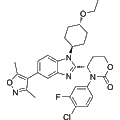
Pocenbrodib is a potent inhibitor of the P300/CBP transcriptional coactivators. By blocking the function of these coactivators, Pocenbrodib effectively inhibits the acetylation of both histone and non-histone proteins, impacting gene expression regulation. This compound is particularly valuable for research into castration-resistant prostate cancer and other cancer types that are associated with dysregulated acetylation processes.
CBP/p300-IN-5 is a potent inhibitor of p300/CBP histone acetyltransferase, demonstrating an IC50 value of 18.8 nM. This compound serves as a valuable tool for studying the role of histone acetylation in gene regulation and various biological processes. Its application is significant in cancer research and therapeutic development, where modulation of acetylation pathways is of interest.
B026 is a selective and potent inhibitor of the p300/CBP histone acetyltransferase (HAT) with IC50 values of 1.8 nM for p300 and 9.5 nM for CBP. This compound exhibits significant anticancer activity against androgen receptor-positive (AR+) prostate cancer cell lines, making it a valuable tool for research in cancer biology and epigenetic regulation. Its oral bioavailability enables easy administration for in vivo studies targeting p300/CBP-mediated pathways.
Out of stock
All 6 sizes
CBP/p300-IN-20 is a selective inhibitor of the p300/CBP transcriptional coactivators, displaying a high potency with a pIC50 of 10.1 for p300. This compound is useful in cancer research, providing insights into the role of p300/CBP in oncogenic transcriptional regulation and potential therapeutic interventions. Its specificity towards p300 allows for targeted studies in related signaling pathways and tumor biology.