- Cat. No.
- A13136
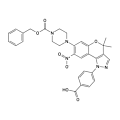
Lin28-let-7a antagonist 1
Lin28-let-7a antagonist 1 shows a clear antagonistic effect against the Lin28-let-7a interaction with an IC50 of 4.03 μM for Lin28A-let-7a-1 interaction.
Search by product name, CAS, target or catalog number. Press Down Arrow to reach product suggestions, Tab to move between links, and Escape to close suggestions.
MicroRNA (miRNA) inhibitors are small molecules that interfere with the maturation or activity of miRNAs. These noncoding RNAs of about 22 nucleotides pair with messenger RNAs (mRNAs) and repress their translation or stability. Targapremir-210, MIR96-IN-1 and SID 3712249 are listed as inhibitors of miR-210, miR-96 and miR-544. Other compounds act on the RNA-binding protein LIN28, which blocks let-7 maturation by binding its precursor and directing terminal uridylation. LIN28 inhibitor LI71 and Lin28-let-7a antagonist 1 belong to this group. The set is mixed and also contains compounds with other main targets, such as camptothecin and the peptidylarginine deiminase (PAD) inhibitor Cl-amidine.
Lin28-let-7a antagonist 1 shows a clear antagonistic effect against the Lin28-let-7a interaction with an IC50 of 4.03 μM for Lin28A-let-7a-1 interaction.
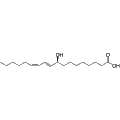
Synonyms: Alpha-dimorphecolic acid
9S-HODE is a potent modulator of miR-361-3p, primarily derived from Linoleic acid. This compound has been shown to reduce cancer cell viability and induce apoptosis in various cancer cell lines. It presents valuable applications in the study of acute myeloid leukemia and may provide insights into therapeutic strategies targeting miRNA regulation in cancer.
Synonyms: Temavirsen
RG-101 is a miR-122 antagonist designed to inhibit the function of miR-122, which is a crucial host factor for the replication of hepatitis C virus (HCV). This hepatocyte-targeted N-acetylgalactosamine conjugated oligonucleotide can be utilized in research focused on HCV biology and the development of antiviral therapies. Its ability to modulate miR-122 activity provides valuable insights into potential therapeutic strategies for hepatitis C infections.
Out of stock
All 3 sizes
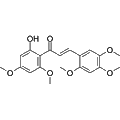
Rubone is a chalcone analog that functions as a modulator of miR-34a, promoting its expression in a p53-dependent manner. This modulation results in the downregulation of key oncogenic targets, including Bcl-2 and Cyclin D1, thereby inhibiting growth in hepatocellular carcinoma (HCC) models. Additionally, Rubone enhances the efficacy of Paclitaxel in resistant prostate cancer cell lines by reversing the expression of miR-34a downstream targets, making it a valuable tool for cancer research applications.