- Cat. No.
- A15928
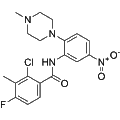
WDR5-0103
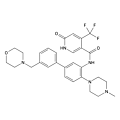
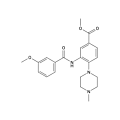
WDR5-0103 is a small molecule that binds a peptide-binding pocket on WDR5 (Kd = 450 nM), inhibiting the catalytic activity of the MLL core complex in vitro (IC50 = 39 M).
Search by product name, CAS, target or catalog number. Press Down Arrow to reach product suggestions, Tab to move between links, and Escape to close suggestions.
WDR5 inhibitors and degraders act on WD repeat domain 5 (WDR5), a chromatin scaffold protein. WDR5 is a core subunit of the mixed-lineage leukemia (MLL) complexes that methylate lysine 4 of histone H3 (H3K4). A 2005 study showed that WDR5 binds methylated H3K4 and is required for this methylation and for vertebrate development. In 2015 WDR5 was also shown to help the transcription factor c-Myc recognize its target genes. OICR-9429, MM-589 and WDR5-0103 block the interaction between WDR5 and MLL. MS67 and MS33 are degraders that remove WDR5 protein from cells instead of only occupying a binding site.
WDR5-0103 is a small molecule that binds a peptide-binding pocket on WDR5 (Kd = 450 nM), inhibiting the catalytic activity of the MLL core complex in vitro (IC50 = 39 M).
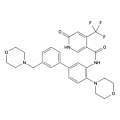
OICR-9429 is a novel small-molecule antagonist of the Wdr5-MLL interaction with IC50 of 5 uM. inhibit proliferation and induce differentiation .
OICR-0547 is a closely related derivative of OICR-9429. OICR-9429 is a novel small-molecule antagonist of the Wdr5-MLL interaction, while OICR-0547 cannot bind to WDR5.
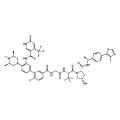
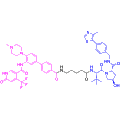
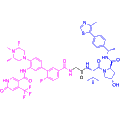
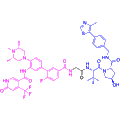
MS67 is a highly potent and selective PROTAC degrader of WD40 repeat domain protein 5 (WDR5), exhibiting minimal activity against other protein methyltransferases, kinases, GPCRs, ion channels, and transporters. Its strong anticancer activity highlights its utility as a targeted tool for studying WDR5-related epigenetic regulation and cancer therapy.
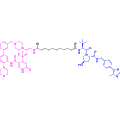
MS33 is a potent WDR5 degrader that functions through E3 ligase VHL-mediated degradation. It exhibits binding affinities of 870 nM for VCB and 120 nM for WDR5, effectively targeting this protein for proteasomal degradation. MS33 is primarily utilized in research related to acute myeloid leukemia, aiding in the understanding of WDR5's role in cancer biology.
PROTAC WDR5 degrader 1 is a bifunctional degrader that selectively targets WDR5, promoting its proteasomal degradation via a VHL-type E3 ligase mechanism. This compound consists of a WDR5 ligand, a VHL ligand, and a PROTAC linker, facilitating the targeted degradation of WDR5 in cellular environments. Its distinct mechanism of action makes it a valuable tool for investigating WDR5-related biological pathways and their involvement in various diseases, including cancer and developmental disorders. Researchers can utilize this reagent for studies in targeted protein degradation and gene regulation.
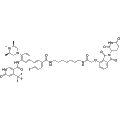
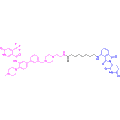
WDR5 Degrader-1 is a cereblon (CRBN)-recruiting compound designed to selectively induce degradation of the WDR5 protein. This degrader effectively targets WDR5 while sparing the CRBN neo-substrate IKZF1, facilitating precise manipulation of WDR5 levels in cellular systems. It is a valuable tool for investigating the biological roles of WDR5 in transcriptional regulation and potential therapeutic strategies in diseases associated with dysregulated WDR5 expression.
XF067-68 is a PROTAC designed for the targeted degradation of the WD40 repeat domain protein 5 (WDR5). This compound facilitates the specific elimination of WDR5, making it a valuable tool for investigating diseases associated with WDR5 dysregulation. Researchers can employ XF067-68 to elucidate the biological roles of WDR5 and explore potential therapeutic interventions in related disorders.
WDR5-47 is a potent WDR5 antagonist that specifically disrupts the WDR5-MLL1 interaction. This compound demonstrates significant biological activity with a dissociation constant (Kd) of 0.3 μM, showcasing its effectiveness in inhibiting WDR5-mediated functions. WDR5-47 is ideal for research applications focusing on epigenetic regulation and will aid in the investigation of oncogenic processes involving the MLL1 complex.
XF056-132 free base is a potent WDR5 (WD40 repeat domain protein 5) degrader that utilizes the proteolysis-targeting chimeric (PROTAC) mechanism. This compound effectively promotes the selective degradation of WDR5, which is implicated in various cancers and transcriptional regulation processes. XF056-132 serves as a valuable tool for research into targeted protein degradation and its therapeutic potential in oncological studies.
Out of stock
All 3 sizes
MS40 is a WDR5 PROTAC degrader with a Kd of 125 nM, which facilitates the ubiquitination and subsequent degradation of the WDR5 protein. The degradation of WDR5 causes the dissociation of the MLL/KMT2A complex from chromatin, leading to reduced levels of H3K4me2. This compound is instrumental in investigating the mechanistic pathways involved in primary leukemia.
Out of stock
All 3 sizes