
- Cat. No.
- A15924
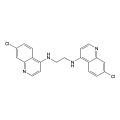
NSC5844
Synonyms: RE640
NSC5844 is a bisquinoline compound with C-C chemokine receptor type 1 (CCR1)-agonistic properties.
In stock
View Details
Search by product name, CAS, target or catalog number. Press Down Arrow to reach product suggestions, Tab to move between links, and Escape to close suggestions.
CC chemokine receptor (CCR) antagonists block G protein-coupled receptors that guide leukocyte migration. CCR2, a receptor for monocyte chemoattractant protein 1 (MCP-1), was cloned in 1994 as two splice variants. CCR5 was identified in 1996 as a fusion cofactor for macrophage-tropic human immunodeficiency virus type 1 (HIV-1). Maraviroc, described in 2005 as a selective small-molecule CCR5 inhibitor, blocks this route of viral entry. Other CCR5 antagonists include vicriviroc malate and aplaviroc, while INCB3344 and MK-0812 target CCR2. Cenicriviroc blocks both CCR2 and CCR5, and GSK2239633A is a CCR4 antagonist for studies of T cell trafficking.
Synonyms: RE640
NSC5844 is a bisquinoline compound with C-C chemokine receptor type 1 (CCR1)-agonistic properties.
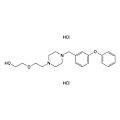
ZK-756326 is a potent, selective and non-peptide CCR8 chemokine receptor agonist. ZK 756326 inhibited the binding of the CCR8 ligand I-309 (CCL1), with an IC(50) value of 1.8 μM.
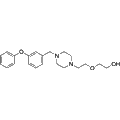
ZK 756326 is a nonpeptide agonist specifically targeting the CC chemokine receptor CCR8. It exhibits potent activity in modulating chemokine signaling pathways, making it a valuable tool in studies related to immune response and inflammation. This compound is useful for researchers investigating the role of CCR8 in various biological processes and potential therapeutic applications.
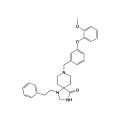
LMD-009 is a selective CCR8 nonpeptide agonist. LMD-009 mediates chemotaxis, inositol phosphate accumulation, and calcium release in high potencies with EC50s from 11 to 87 nM.
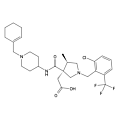
E6130 is an orally available and highly selective CX3CR1 modulator, that may be effective for treatment of inflammatory bowel disease.
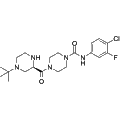
AZD2423 functions as a negative allosteric modulator of the CCR2 chemokine receptor, exhibiting potent selectivity and oral bioavailability. With an IC50 value of 1.2 nM for CCR2-mediated Ca2+ flux, this compound is valuable for investigating the role of CCR2 in various physiological and pathological processes. AZD2423 is useful in research applications related to inflammation, cancer, and immune system modulation.
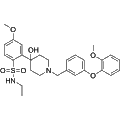
LMD-902 is a potent CCR8 agonist with an EC50 of 15 nM, demonstrating enhanced binding capacity influenced by critical residues such as PheVI:16. This compound is instrumental in researching inflammatory diseases, including bronchial asthma, as well as central nervous system disorders such as multiple sclerosis. Its specificity and efficacy make LMD-902 a valuable tool for advancing understanding in these therapeutic areas.
Out of stock
All 3 sizes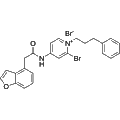
CH0076989 is a selective agonist of the CCR3 receptor that activates eosinophils and transfectants expressing both wild-type CCR3 and a CCR1:CCR3 chimeric receptor lacking the CCR3 amino-terminus. This compound exhibits a direct interaction with the transmembrane helices of CCR3; activity is abolished by mutations of key residues Y41, Y113, and E287. CH0076989 is ideal for research into inflammation and allergic diseases, including asthma, making it a valuable tool for understanding these pathological conditions.
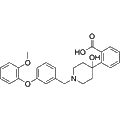
LMD-584 is a selective agonist of CCR8, a chemokine receptor involved in immune responses and inflammation. This compound demonstrates significant biological activity in modulating CCR8 signaling pathways, making it a valuable tool for research applications focused on immune cell trafficking and related pathologies. LMD-584 may aid in understanding the role of CCR8 in various diseases, including cancer and autoimmune disorders.
Out of stock
All 3 sizes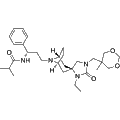
CCR5 modulator-1 is a selective modulator of the CCR5 chemokine receptor. This compound plays a significant role in the regulation of inflammatory processes and can be applied in research aimed at understanding various inflammatory diseases. Its use may provide insights into therapeutic strategies targeting CCR5-related pathways.
Out of stock
All 3 sizes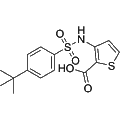
CCR9 modulator-1 is a selective modulator of the chemokine receptor CCR9, primarily involved in T-cell trafficking and immune response regulation. This compound demonstrates significant potential in influencing CCR9-mediated immune pathways, making it a valuable tool for the study of inflammatory diseases such as Crohn's disease and other gastrointestinal disorders. Researchers can utilize CCR9 modulator-1 to explore therapeutic strategies targeting CCR9 in various immunological contexts.
Out of stock
All 3 sizes