- Cat. No.
- A16962
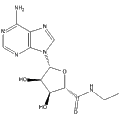
NECA
Synonyms: 5'-N-Ethylcarboxamidoadenosine
NECA is a high-affinity adenosine receptor agonist (Ki values are 6.2, 14, and 20 nM for human A3, A1 and A2A receptors respectively; EC50 = 2.4 μM for human A2B).
Search by product name, CAS, target or catalog number. Press Down Arrow to reach product suggestions, Tab to move between links, and Escape to close suggestions.
CD markers are cell-surface proteins used to define and distinguish immune cell populations. Each cluster of differentiation (CD) number names one defined surface molecule, and many of these molecules also have enzymatic or signaling functions. The compounds listed here act on such molecules rather than serving as antibodies or stains. PSB-12379 and AB-680 inhibit ecto-5'-nucleotidase (CD73), which converts adenosine monophosphate (AMP) to adenosine in the extracellular space. CD38 inhibitor 1 acts on the nicotinamide adenine dinucleotide (NAD+) glycohydrolase CD38. YYA-021 and BMS-806 interfere with binding of the human immunodeficiency virus (HIV) envelope glycoprotein gp120 to CD4, while AX-024 affects T cell receptor signaling. CD73 and gp120/CD4 also exist as separate sibling categories in the same immunology section.
Synonyms: 5'-N-Ethylcarboxamidoadenosine
NECA is a high-affinity adenosine receptor agonist (Ki values are 6.2, 14, and 20 nM for human A3, A1 and A2A receptors respectively; EC50 = 2.4 μM for human A2B).
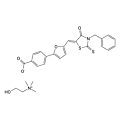
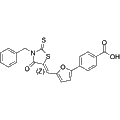
Synonyms: (Z)-Leukadherin-1 choline
ADH-503 ((Z)-Leukadherin-1 choline) is an orally active, allosteric agonist of CD11b, an integrin subunit expressed on myeloid cells. By activating CD11b, ADH-503 promotes the repolarization of tumor-associated macrophages (TAMs) toward a pro-inflammatory phenotype, reduces the infiltration of immunosuppressive myeloid cells into tumors, and enhances dendritic cell responses. These immunomodulatory effects support its potential use in cancer immunotherapy.
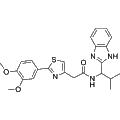
MG-C-30 is a potent oral agonist of CD27, demonstrating an EC50 of 0.84 μM. This compound activates natural killer (NK) cells and enhances T cell co-stimulatory signals, thereby augmenting the immune response. MG-C-30 has also shown significant antitumor efficacy in the EG7-OVA mouse model, making it a valuable tool for research in immunotherapy and cancer treatment.
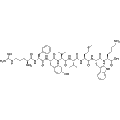
Thrombospondin-1 (1016-1023) is a peptide derived from the C-terminal region of Thrombospondin-1 (TSP-1) and functions as a CD47 agonist. This peptide plays a crucial role in modulating immune responses and promoting cell survival by interacting with the CD47 receptor. It is widely utilized in research focusing on immunology, cancer biology, and the study of cell migration and adhesion.
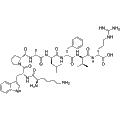
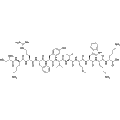
Synonyms: D-P8RI
P8RI is a biomimetic peptide that acts as a CD31 agonist. By binding to the juxtamembrane amino acid sequence of the ectodomain of CD31, P8RI restores the CD31 inhibitory pathway, exhibiting significant immunosuppressive effects. This compound is useful for research applications focused on immune modulation and the exploration of CD31-related pathways in cellular processes.
Synonyms: ADH-503 free base
(Z)-Leukadherin-1 is a potent allosteric agonist of CD11b that exhibits oral bioavailability. This compound effectively repolarizes tumor-associated macrophages, diminishes the presence of immunosuppressive myeloid cells within tumors, and enhances the activation of dendritic cells. It serves as a valuable reagent for research in immuno-oncology, exploring mechanisms of immune modulation and macrophage plasticity.
Synonyms: Cys-txCD47
Cys-PKHB1 is a CD47 agonist peptide designed to mimic thrombospondin-1. This compound has demonstrated antitumor efficacy by inducing mitochondrial alterations, the generation of reactive oxygen species (ROS), and calcium-dependent cell death in breast cancer cells. Cys-PKHB1 also promotes immune activation through immunogenic cell death, making it a valuable tool for research in cancer immunotherapy and tumor biology.
Out of stock
All 3 sizes
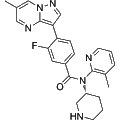
CD33 Splicing Modulator 1 is an innovative agent that targets the CD33/Siglec 3 receptor, a crucial regulator of microglial activity in the myeloid lineage. This compound enhances exon 2 skipping in cellular mRNA, thereby altering CD33 expression. It holds promise as a research tool in neurodegenerative disease studies, particularly in the context of Alzheimer's disease, facilitating a deeper understanding of the underlying mechanisms of these conditions.
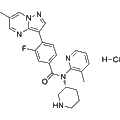
CD33 splicing modulator 1 hydrochloride is a small molecule modulator that targets CD33/Siglec 3, a myeloid cell surface receptor that regulates microglial activity. This compound promotes exon 2 skipping in cellular mRNA, making it a valuable tool for investigating the molecular mechanisms underlying neurodegenerative diseases, particularly Alzheimer's disease. It provides researchers with a means to explore potential therapeutic approaches through modulation of splicing events related to CD33.
Out of stock
All 3 sizes