
- Cat. No.
- A12986
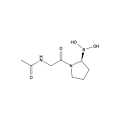
Ac-Gly-BoroPro
Ac-Gly-BoroPro is a selective FAP inhibitor with a Ki of 23 nM.
In stock
View Details
Search by product name, CAS, target or catalog number. Press Down Arrow to reach product suggestions, Tab to move between links, and Escape to close suggestions.
Fibroblast activation protein (FAP) inhibitors and ligands target a protease of activated fibroblasts. FAP was described in 1990 as a cell surface glycoprotein of reactive stromal fibroblasts in human epithelial cancers. Its cloning in 1994 placed it in the serine protease family, close to dipeptidyl peptidase IV (DPP-IV). FAP cleaves peptides after proline residues, both as a dipeptidyl peptidase and as an endopeptidase. Ac-Gly-BoroPro and talabostat are boronic acid dipeptides, and talabostat also inhibits DPP-IV and related peptidases. FAPI-4, reported in 2018, is a quinoline-based FAP ligand developed for imaging research. Simlukafusp alfa is an immunocytokine that fuses an anti-FAP antibody to a variant interleukin-2 (IL-2).
Ac-Gly-BoroPro is a selective FAP inhibitor with a Ki of 23 nM.
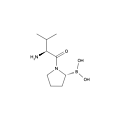
Synonyms: Val-boroPro; PT100
Talabostat (Val-boroPro; PT100) is an orally active and nonselective dipeptidyl peptidase IV (DPP-IV) inhibitor (IC50 < 4 nM; Ki = 0.18 nM) and the first clinical inhibitor of fibroblast activation protein (FAP) (IC50 = 560 nM).
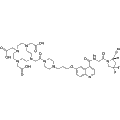
Synonyms: DOTA-fapi-04
FAPI-4 is a potent inhibitor of fibroblast activation protein (FAP), targeting FAP with high specificity. This compound demonstrates significant potential in cancer research, particularly in improving diagnostic imaging. The use of 68Ga-FAPI-4 in PET/CT scans offers enhanced tumor-to-background contrast ratios, making it an effective tool for visualizing various types of tumors.
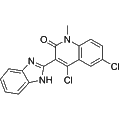
TFAP2β modulator-1 is a potent modulator of the transcription factor TFAP2β, promoting its condensation through the induction of conformational changes within its intrinsically disordered region. This compound exhibits significant anti-tumor activity by inducing apoptosis in esophageal squamous cell carcinoma (ESCC) cells, as well as in relevant mouse models and organoids. TFAP2β modulator-1 serves as a valuable tool for investigating the role of TFAP2β in ESCC research and therapeutic development.
Out of stock
All 3 sizes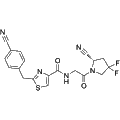
BR103354 is a selective inhibitor of fibroblast activation protein (FAP) with an IC50 of 14 nM against human FAP. It effectively restores levels of phosphorylated ERK and Glut1, reduces non-fasting blood glucose concentrations, and enhances glucose tolerance, while also decreasing hepatic triglyceride content. This compound demonstrates potential in alleviating hepatic steatosis and fibrosis, making it a valuable tool for research into type 2 diabetes and non-alcoholic steatohepatitis.
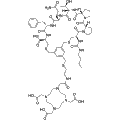
3BP-3940 is a highly potent and selective peptide inhibitor targeting fibroblast activation protein (FAP) in cancer-associated fibroblasts (CAFs) within the tumor microenvironment. This reagent exhibits significant potential for tumor imaging when labeled with radionuclides such as Ga-68 and for targeted anticancer therapies using Lu-177. 3BP-3940 selectively accumulates in tumor lesions, making it valuable for the diagnosis and treatment of various solid tumors and conditions related to CAFs.
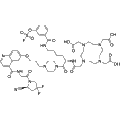
FAPI-mFS is an irreversible inhibitor of fibroblast activation protein (FAP), which targets FAP's enzymatic activity to enhance cancer cell uptake and retention through covalent binding. This compound is particularly useful for cancer imaging and therapy when labeled with radioisotopes such as 68Ga or 177Lu. Additionally, FAPI-mFS serves as a valuable tool in the synthesis and research of radionuclide-drug conjugates (RDCs), facilitating advancements in targeted cancer treatments.
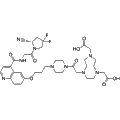
NOTA-FAPI is a fibroblast activation protein (FAP) inhibitor designed for targeted tumor imaging. This compound effectively binds to FAP, facilitating the visualization of tumors with high detection efficacy. NOTA-FAPI demonstrates superior imaging quality, making it a valuable tool for cancer research and diagnostic applications.
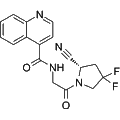
UAMC-1110 is a highly potent and selective inhibitor of fibroblast activation protein (FAP), exhibiting an IC50 of 3.2 nM. In addition to FAP inhibition, UAMC-1110 also affects prolyl oligopeptidase (PREP) with an IC50 of 1.8 μM. This compound is primarily utilized in research applications targeting tumor microenvironment modulation and fibroblast-related pathologies.
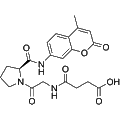
Suc-Gly-Pro-AMC is a fluorescent substrate designed specifically for the fibroblast activation protein (FAP). It is capable of reacting with recombinant porcine prolyl oligopeptidase, facilitating the study of FAP and prolyl endopeptidase (PREP) activity. This reagent is particularly valuable in glioma research, providing insights into the enzymatic functions associated with tumor progression and microenvironmental interactions.
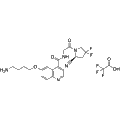
NH2-UAMC1110 TFA is an aminobutoxy derivative of the fibroblast activation protein (FAP) inhibitor UAMC1110, designed for use as a precursor compound in the synthesis of FAP inhibitor probes. This compound incorporates an active amino group, enabling the formation of covalent bonds with various molecules, such as DOTA and radionuclide chelators, to create targeted molecular imaging probes. NH2-UAMC1110 TFA selectively binds to the FAP active site, inhibiting its serine protease activity and thereby blocking FAP-mediated tissue remodeling processes. It is particularly relevant for diagnostic imaging studies of tumors expressing FAP, including colorectal and pancreatic cancers, as well as research into FAP-related diseases like fibrosis and arthritis.
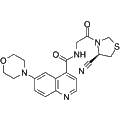
AZD2389 is a potent and orally active inhibitor of fibroblast activation protein (FAP). It has demonstrated significant efficacy in research related to metabolic dysfunction-associated steatohepatitis. This compound serves as a valuable tool for studying the role of FAP in metabolic diseases and may aid in the development of therapeutic strategies aimed at targeting metabolic liver disorders.
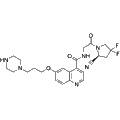
FAP-IN-2 is a selective inhibitor of fibroblast activation protein (FAP), characterized by its isonitrile structure. This compound exhibits significant potential for therapeutic applications aimed at cancer treatment as well as for imaging purposes. When labeled with technetium-99m (99mTc), FAP-IN-2 can be utilized for targeted tumor single-photon emission computed tomography (SPECT) imaging, enhancing the visualization of FAP-expressing tumors.
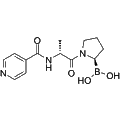
ARI-3099 is a selective fibroblast activation protein (FAP) inhibitor that targets the proteolytic activity of FAP, preventing the cleavage of human FGF-21 between residues P171 and S172. By inhibiting this activity, ARI-3099 extends the half-life of circulating human FGF-21 in murine models. This compound is relevant for research focused on type 2 diabetes and various metabolic disorders, making it a valuable tool for investigating therapeutic strategies in these areas.
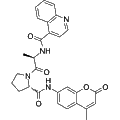
ARI-3144 is a specific substrate for fibroblast activation protein (FAP), designed for effective detection and quantification. When coupled with the fluorophore 7-Amino-4-methylcoumarin (AMC), this substrate facilitates sensitive analysis of FAP activity in various biological samples. ARI-3144 is valuable in research applications related to cancer biology and tissue remodeling, enabling deeper insights into FAP functions and its role in disease progression.
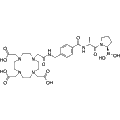
PNT6555 is a selective inhibitor of fibroblast activation protein-α (FAP), with notable antitumor activity. This compound is particularly valuable in the study of FAP-positive tumors, facilitating imaging applications that aid in tumor characterization and monitoring. Its specificity for FAP makes it a significant tool for cancer research, advancing the understanding of tumor microenvironments and potential therapeutic strategies.

DOTAGA-FAP-2286-ALB is a selective inhibitor of fibroblast activation protein (FAP) with an IC50 value of 67.5 nM. This compound enhances tumor retention through its interaction with albumin, thereby prolonging blood circulation and increasing the stability of radiometal complexes such as 111In and 225Ac. DOTAGA-FAP-2286-ALB is of particular interest for research applications in radionuclide therapy (TRT) targeting FAP-positive solid tumors.
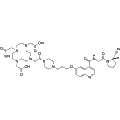
FAPI-2 is a quinoline-based inhibitor targeting fibroblast activation protein (FAP). It exhibits rapid tracer kinetics and is suitable for use as a PET tracer in cancer diagnosis, labeled with 68Ga. Notably, FAPI-2 does not require fasting preparation and remains effective regardless of blood glucose levels, making it a valuable tool for oncological research and imaging applications.
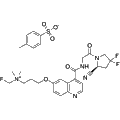
FAP-IN-4 is a fibroblast activation protein (FAP) inhibitor that serves as an 18F-labeled PET tracer targeting FAP. This compound demonstrates significant potential in cancer research by facilitating the visualization of FAP-expressing tumors, thereby aiding in the understanding of tumor biology and treatment responses. It can be utilized in studies focused on tumor microenvironments and therapeutic interventions targeting FAP.
Out of stock
All 3 sizes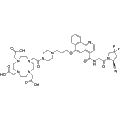
SB03178 is a selective inhibitor of fibroblast activation protein-alpha (FAP). This compound demonstrates significant potential in cancer research, particularly in modulating tumor microenvironments and enhancing the efficacy of cancer therapies. Additionally, SB03178 can be conjugated with DOTA for further applications in targeted imaging and therapeutic strategies.
Out of stock
All 3 sizes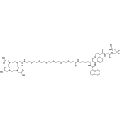
FAP-IN-1 is a selective fibroblast activation protein (FAP) inhibitor that demonstrates potent activity with an IC50 value of 3.3 nM. This compound is valuable for investigating the role of FAP in the tumor microenvironment and its implications in cancer biology. FAP-IN-1 can be utilized in various research applications aimed at elucidating the mechanisms of tumor progression and the development of targeted therapeutic strategies.
Out of stock
All 3 sizes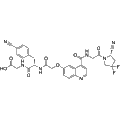
QI-18 is a potent inhibitor of fibroblast activation protein (FAP) with an IC50 of 0.50 nM, exhibiting 6.5-fold increased potency compared to UAMC-1110. Its high affinity makes QI-18 suitable for the development of radiotracers with enhanced tumor selectivity and dosage for tumor diagnosis and research applications. This compound plays a significant role in studies focusing on tumor microenvironments and potential therapeutic interventions targeting FAP.
Out of stock
All 3 sizes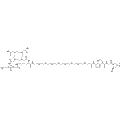
FAPI-P8PN is a selective inhibitor of fibroblast activation protein (FAP), exhibiting an IC50 value of 3.6 nM. This compound is particularly useful for investigating FAP-overexpressing solid tumors, providing insights into tumor microenvironments and potential therapeutic approaches. Its targeted activity makes it a valuable tool in cancer research aimed at developing FAP-focused therapies.
Out of stock
All 3 sizes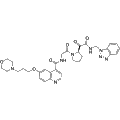
FAP-IN-8 is a selective inhibitor of fibroblast activation protein (FAP) and prolyl endopeptidase (PREP), exhibiting pIC50 values of 10.08 and 8.99 for these targets respectively. With IC50 values of 1 nM for FAP and 0.08 nM for PREP, FAP-IN-8 demonstrates potent inhibition that supports its utility in cancer research. This compound is valuable for studying tumor microenvironment interactions and the therapeutic targeting of cancer-associated fibroblasts.
Out of stock
All 3 sizes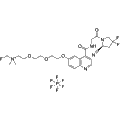
FAP-IN-7 is a selective inhibitor of fibroblast activation protein (FAP), a serine protease implicated in tumor progression and immune modulation. This compound effectively hinders FAP activity, contributing to the investigation of cancer-associated fibroblasts in the tumor microenvironment. FAP-IN-7 is valuable for research applications focused on understanding cancer biology, developing therapeutic strategies, and exploring the role of FAP in various disease states.
Out of stock
All 3 sizes