
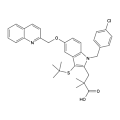
- Cat. No.
- A15163
Quiflapon (MK-0591)
Synonyms: MK0591
MK-0591 is a selective and specific 5-Lipoxygenase-activating protein (FLAP) inhibitor with an IC50 value of 1.6 nM in a FLAP binding assay.
Search by product name, CAS, target or catalog number. Press Down Arrow to reach product suggestions, Tab to move between links, and Escape to close suggestions.
FLAP inhibitors act on 5-lipoxygenase-activating protein (FLAP), which is needed for leukotriene synthesis. FLAP is a nuclear membrane protein that presents arachidonic acid to 5-lipoxygenase, and it was identified as the membrane target of the leukotriene inhibitor MK-886. The crystal structure of human FLAP bound to inhibitors shows a binding pocket within the membrane. FLAP inhibitors are used to study leukotriene-driven inflammation in airway, vascular and immune cell models. Listed compounds include MK-886 sodium salt, quiflapon, fiboflapon, AZD6642 and AM679.
Synonyms: MK0591
MK-0591 is a selective and specific 5-Lipoxygenase-activating protein (FLAP) inhibitor with an IC50 value of 1.6 nM in a FLAP binding assay.
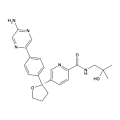
AZD6642 is an inhibitor of 5-Lipoxygenase Activating Protein (FLAP) for the treatment of inflammatory diseases.
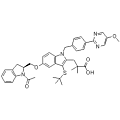
AM679 is a potent and selective FLAP inhibitor with IC50s of 2.2 nM/0.6 nM/154 nM for FLAP binding/hLA/hWB respectively.
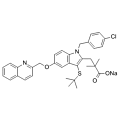
Synonyms: MK-591
Quiflapon sodium (MK-591 sodium) is selective and specific inhibitor of 5-Lipoxygenase-activating protein (FLAP).
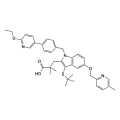
Synonyms: AM-803; GSK2190915
GSK2190915 is a potent FLAP(5-Lipoxygenase-activating protein) inhibitor with binding IC50 of 2.9 nM.
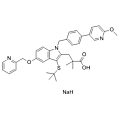
AM 103 is a potent and selective FLAP inhibitor, with an IC50 value of 4.2 nM.
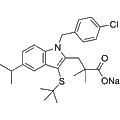
Synonyms: L 663536 sodium salt
MK-886 sodium salt is a potent inhibitor of the 5-lipoxygenase-activating protein (FLAP), exhibiting an IC50 of 30 nM. It effectively inhibits leukotriene biosynthesis with IC50 values of 3 nM in intact leukocytes and 1.1 μM in human whole blood. Additionally, MK-886 acts as a non-competitive antagonist of PPARα and can induce apoptosis, making it a valuable tool for research in inflammatory diseases and apoptosis pathways.
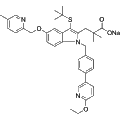
Synonyms: GSK2190915 sodium salt; AM-803 sodium
Fiboflapon sodium is a potent inhibitor of the 5-lipoxygenase-activating protein (FLAP) with a binding affinity of 2.9 nM. It has an IC50 value of 76 nM for the inhibition of leukotriene B4 (LTB4) in human blood. This compound is valuable in research applications focused on inflammation and related diseases by modulating leukotriene synthesis. Its oral bioavailability makes it suitable for in vivo studies investigating FLAP-related pathways.
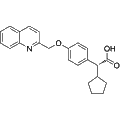
Synonyms: BAY X 1005; DG-031
Veliflapon is a selective 5-lipoxygenase activating protein (FLAP) inhibitor. This compound effectively inhibits the synthesis of leukotrienes B4 and C4, thereby modulating inflammatory responses. Its primary application lies in research focused on asthma, allergies, and other inflammatory conditions, making it a valuable tool for studying leukotriene-mediated pathways.
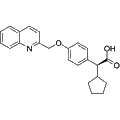
Synonyms: (S)-BAY X 1005; (S)-DG-031
(S)-Veliflapon is a potent inhibitor of leukotriene biosynthesis targeting the 5-lipoxygenase activating protein (FLAP). It effectively inhibits the formation of leukotriene B4 (LTB4) in rat, mouse, and human leukocytes with IC50 values of 0.026 µM, 0.039 µM, and 0.22 µM, respectively. Additionally, (S)-Veliflapon demonstrates enantioselectivity in human whole blood, making it a valuable reagent for research in inflammation and related biological processes.
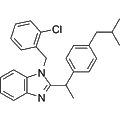
BRP-7 is a highly selective FLAP inhibitor with an IC50 of 0.31 μM. By targeting the 5-lipoxygenase activating protein (FLAP), BRP-7 effectively interrupts the co-localization of FLAP and 5-lipoxygenase, inhibiting the transfer of arachidonic acid and consequently reducing leukotriene production (IC₅₀ = 0.15 μM). It does not inhibit cyclooxygenase (COX-1/COX-2) or microsomal prostaglandin E₂ synthase-1 (mPGES-1), and maintains cell viability. BRP-7 has demonstrated significant anti-inflammatory properties in rodent models of pleurisy and peritonitis, making it a valuable tool for investigating inflammatory diseases.
Out of stock
All 3 sizes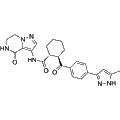
Synonyms: AZD5718
Atuliflapon (AZD5718) is a potent, orally active inhibitor of FLAP (5-Lipoxygenase Activating Protein), exhibiting an IC50 of 2 nM. This compound is primarily utilized in research related to inflammatory processes, particularly in the context of coronary artery disease. Its selective inhibition of FLAP contributes to the regulation of leukotriene biosynthesis, making it a valuable tool for investigating therapeutic strategies for cardiovascular conditions.
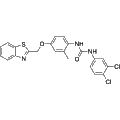
Diflapolin is a potent dual inhibitor of 5-lipoxygenase-activating protein (FLAP) and soluble epoxide hydrolase (sEH), demonstrating significant anti-inflammatory effects and high target selectivity. It effectively inhibits the formation of 5-LOX products in human monocytes and neutrophils with IC50 values of 30 nM and 170 nM, respectively, while also inhibiting isolated sEH with an IC50 of 20 nM. This compound is valuable for research into inflammatory pathways and related therapeutic interventions.
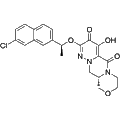
MSC778 is a potent and orally bioavailable inhibitor of flap endonuclease 1 (FEN1), exhibiting an IC50 of 3 nM and a KD of 2.9 nM. It demonstrates significant selectivity with 145-fold, 516-fold, and 65-fold greater inhibition over EXO1, GEN1, and XPG, respectively. MSC778 preferentially induces apoptosis in BRCA2-deficient cells and enhances the efficacy of Niraparib in tumor stasis within BRCA2 knockout DLD-1 mouse xenografts. This compound is valuable for research focused on colorectal cancer.
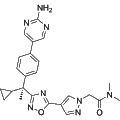
(S)-BI 665915 is a potent FLAP (5-lipoxygenase-activating protein) inhibitor with an IC50 of 1.7 nM, effectively targeting FLAP binding. This compound demonstrates functional inhibition of FLAP in human whole blood with an IC50 of 45 nM and exhibits favorable drug metabolism and pharmacokinetics (DMPK) across species. (S)-BI 665915 provides dose-dependent inhibition of leukotriene B4 (LTB4) production, making it a valuable tool for research into inflammatory responses and related biological pathways.
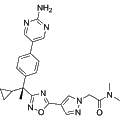
BI 665915 is a potent oral inhibitor of the 5-lipoxygenase-activating protein (FLAP). By inhibiting FLAP, this compound effectively blocks the biosynthesis of leukotriene B4 (LTB4), making it a valuable tool for exploring inflammatory pathways. BI 665915 has potential applications in research related to various inflammatory diseases, including those affecting the respiratory and cardiovascular systems.
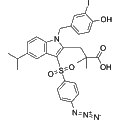
L-669083 is a potent FLAP (5-lipoxygenase-activating protein) inhibitor that specifically targets leukotriene biosynthesis. It is structurally derived from a combination of indole and quinoline, showcasing significant activity in disrupting leukotriene production. Research applications include studying inflammatory responses and evaluating the role of leukotrienes in various disease models, making L-669083 a valuable tool in pharmacological investigations related to inflammation and related pathologies.
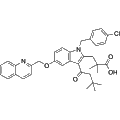
L 689037 is a potent leukotriene biosynthesis inhibitor that targets the 5-lipoxygenase-activating protein (FLAP). This compound effectively disrupts the synthesis of leukotrienes, which are mediators of inflammation. L 689037 is valuable for research applications related to asthma and inflammatory bowel disease, aiding in the investigation of therapeutic strategies to mitigate these inflammatory conditions.
Out of stock
All 3 sizes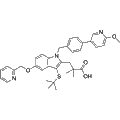
AM103 (free acid) is a selective inhibitor of 5-lipoxygenase activating protein (FLAP), effectively blocking the initial step of the leukotriene biosynthetic pathway. This compound demonstrates significant inhibition of leukotriene B4 and cysteinyl leukotriene production, exhibiting notable anti-inflammatory properties in murine models of chronic lung inflammation. Additionally, AM103 (free acid) has been shown to enhance survival in mice challenged with platelet-activating factor, making it a valuable tool for research into respiratory disorders, including asthma.
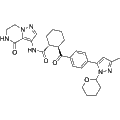
FLAP-IN-1 is a potent 5-lipoxygenase-activating protein (FLAP) inhibitor, exhibiting an IC50 value of 654 nM. This compound is useful for investigating the role of FLAP in inflammatory pathways and its potential implications in cardiovascular disease research. Researchers can leverage FLAP-IN-1 to explore therapeutic strategies targeting leukotriene biosynthesis and related conditions.